The Best Museums in the Netherlands
Twenty-four collections ranked by what they actually hold — from the Night Watch to a hidden church in an attic and a working street organ in a medieval nave
The Netherlands is a small country carrying an unreasonable number of first-rank paintings, and the reason is structural. The seventeenth-century Republic had no court and no great church commissions to speak of; merchants bought art privately, in volume, for ordinary rooms. What survives is therefore a national collection built at domestic scale — the interior, the winter landscape, the militia group portrait, the single figure by a window — rather than the dynastic altarpieces that fill museums elsewhere. It is art that was made to be seen close up, and Dutch museums are still, mostly, arranged that way.
The scale of the museum sector is genuinely unusual for a country of eighteen million people. Statistics Netherlands counted almost 32 million individual museum visits in 2024, two million fewer than in 2019 and still short of pre-pandemic levels.[1] The Museums Association counted 30.8 million visits across its 473 member museums the same year — and noted that Amsterdam's five largest museums alone took 6.7 million of them, 22 per cent of all museum visits in the country.[2] That concentration is real. It is also a trap. Some of the best rooms in the Netherlands are in Haarlem, Utrecht, The Hague and Rotterdam, all of them twenty to forty minutes from Amsterdam Centraal on a train that leaves every few minutes.
This list ranks twenty-four museums on what their permanent collections hold, on the art-historical weight of the buildings they hold it in, and only then on attendance. Two absences are worth naming at the top. The Kröller-Müller Museum in the Hoge Veluwe national park — the second-largest collection of Van Gogh paintings in the world, in a Henry van de Velde building of 1938, with a sculpture garden of more than thirty hectares — is not in the Caleido catalog and so cannot be ranked here; it would otherwise sit in the top five.[39] The Amsterdam Museum is in the catalog, but its main building on the Kalverstraat is closed for renovation and it is currently reduced to two satellite sites, so it has been left out rather than recommended.[40] Several strong regional museums, among them the Van Abbemuseum in Eindhoven and the Netherlands Open Air Museum in Arnhem, are likewise not yet catalogued.
Amsterdam
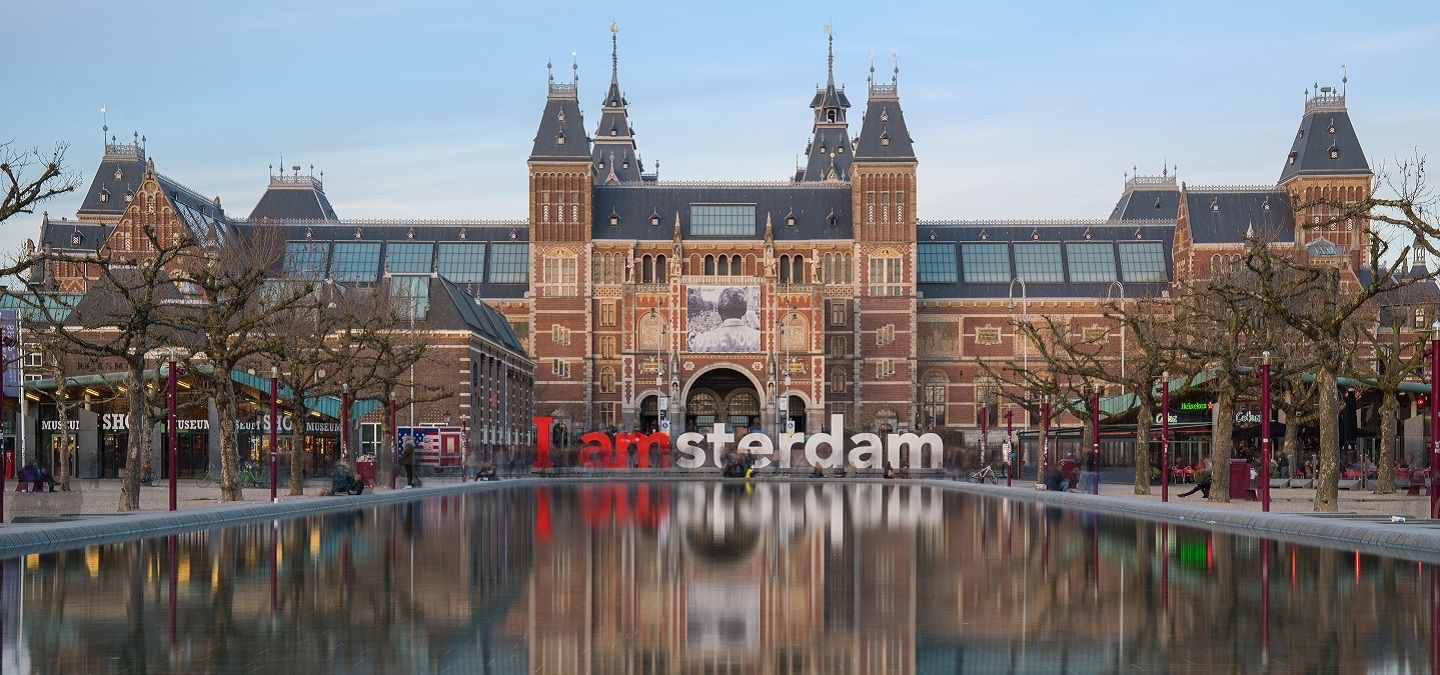
Amsterdam | Reopened 2013 | National art and history museum | 4.7★ (108,738 Google reviews)
The national collection runs to about a million objects, of which roughly 8,000 are shown at a time, and the Gallery of Honour concentrates the argument: Rembrandt's Night Watch at the far end, Hals and Steen along the way, and four Vermeers — The Milkmaid, The Little Street, Woman Reading a Letter and The Love Letter.[3][4] Cuypers's 1885 building reopened in April 2013 after a ten-year, €375-million rebuild.[3] Nothing else in the country approaches this density of first-rank Dutch painting.
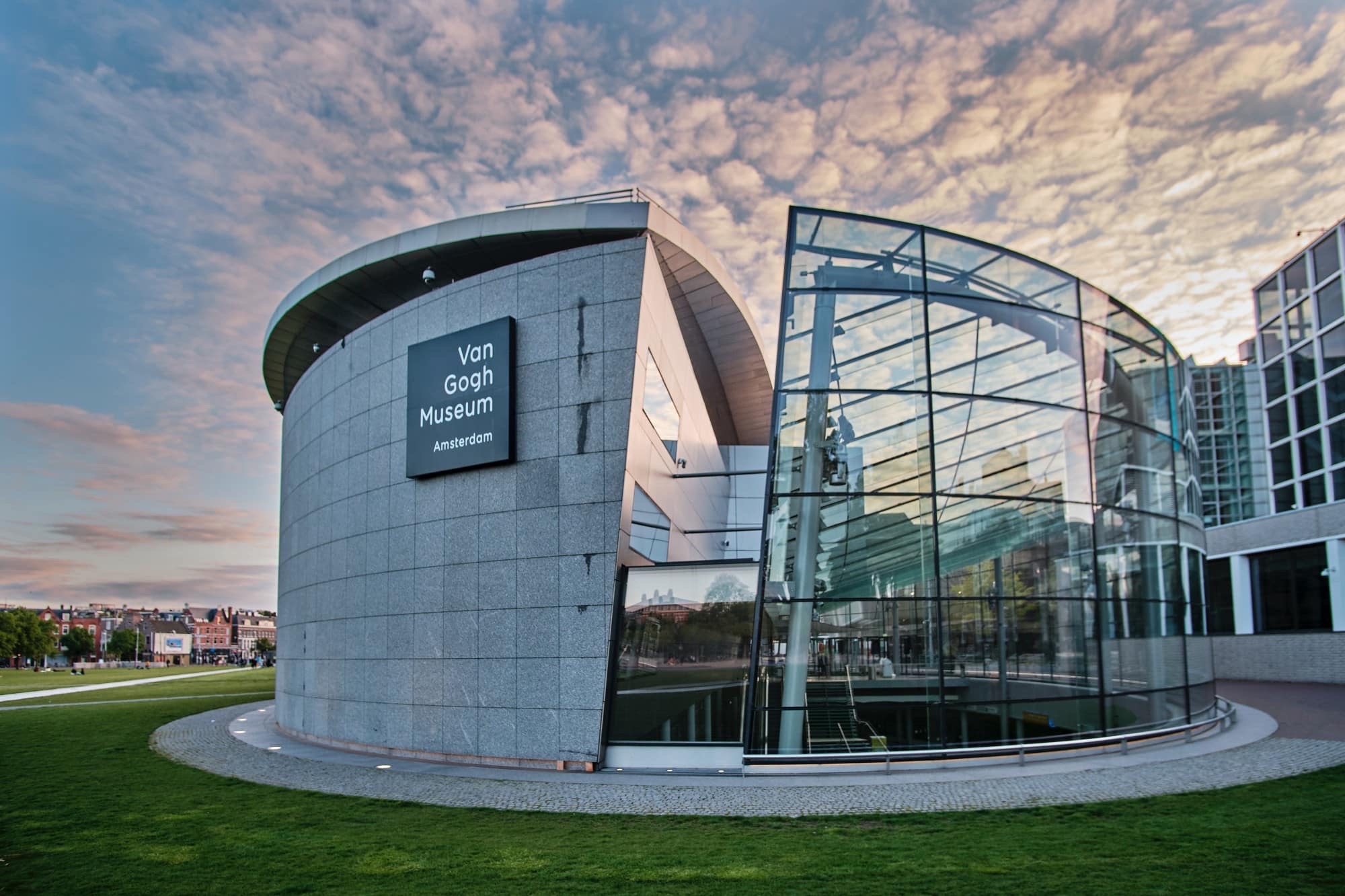
Amsterdam | 1973 | Single-artist museum | 4.6★ (101,768 Google reviews)
Around 200 paintings, 400 drawings and 700 letters — the largest Van Gogh holding anywhere, descended through the estate of his brother Theo and transferred to a foundation in 1962.[5][6] The Potato Eaters, The Yellow House, a Sunflowers and Wheatfield with Crows hang in Gerrit Rietveld's building of 1973, extended by Kisho Kurokawa in 1999.[5] The letters carry as much weight as the canvases: they let you read the pictures in the painter's own words. A €104m building programme is scheduled for 2028–31 and is the subject of a funding dispute with the Dutch state.[6]

Amsterdam | 1895 | Modern and contemporary art museum | 4.4★ (14,850 Google reviews)
About 90,000 objects of modern and contemporary art and design.[14] The core is the largest Malevich holding outside Russia, acquired in 1958, alongside serious De Stijl, Bauhaus, CoBrA and post-war American rooms — De Kooning, Pollock, Warhol.[14] The design collection is unusually rigorous for an art museum. Weissman's neo-Renaissance building of 1895 was joined in 2012 by Benthem Crouwel's white composite extension, universally called the Bathtub and roundly disliked by critics.[14] It drew 574,244 visitors in 2024.[14]

Amsterdam | 1960 | Historic site and biographical museum | 4.5★ (73,577 Google reviews)
Prinsengracht 263: the warehouse, the office, the hinged bookcase, and the Secret Annexe behind it where eight people hid from July 1942 until their arrest.[15] A museum since 3 May 1960, it keeps the annexe rooms bare and puts the diary and the documentary material in the adjoining houses, with a permanent exhibition on persecution and discrimination.[15] It received 1,208,327 visitors in 2024, making it one of the most-visited museums in the country.[15] It ranks on the weight of the site, not on objects.

Amsterdam | 1911 | Artist's house museum | 4.5★ (14,404 Google reviews)
Rembrandt bought this house on the Jodenbreestraat on 5 January 1639 for thirteen thousand guilders; he was declared insolvent in 1656 and the house was auctioned in 1658.[16] The rooms were furnished from the inventory his creditors drew up in 1656, so the studio, the collector's cabinet and the etching press are reconstructions with unusually good evidence behind them. The museum owns an almost complete set of Rembrandt's etchings and some of his original copper plates — precisely the part of his output that was made in this building.[16]

Amsterdam | Completed 1665 | Palace and civic monument | 4.6★ (25,754 Google reviews)
Jacob van Campen's town hall, begun in 1648 and completed in 1665 on 13,659 wooden piles, is the most ambitious secular building of the Dutch Golden Age.[17] Artus Quellinus's sculptural programme and the paintings by Ferdinand Bol, Govert Flinck and Jan Lievens are still in the rooms they were commissioned for — the Citizens' Hall, once freely open to every citizen of Amsterdam, the Moses Room, the Vierschaar tribunal.[17][18] Louis Bonaparte converted it to a palace in 1808, and his Empire furniture is still here and still used.[19]

Amsterdam | Reopened 2011 | Maritime museum | 4.5★ (12,787 Google reviews)
The Admiralty's storehouse of 1656 by Daniël Stalpaert, its courtyard roofed with a glass canopy patterned on the compass rose and rhumb lines of old sea charts, reopened on 2 October 2011.[28] Inside are Blaeu atlases, ship models, world maps, portraits of Michiel de Ruyter, and a surviving copy of Maximilianus Transylvanus's De Moluccis Insulis, the first published account of Magellan's circumnavigation.[28] A full-size replica of the East Indiaman Amsterdam, built between 1985 and 1990, lies at the quay outside.[28]

Amsterdam | 1888 | House museum with hidden church | 4.7★ (4,186 Google reviews)
A canal house of 1630 whose top three floors were converted between 1661 and 1663 into a complete Catholic church — galleries, altar, organ — entirely invisible from the street, built when Catholic worship was barred from public view.[29] It has been a museum since 28 April 1888, making it the second-oldest in Amsterdam after the Rijksmuseum, and it received a European Heritage Label in 2024.[29] The domestic rooms below are as instructive as the church: this is what Dutch religious tolerance looked like in practice.

Amsterdam | 1864 | World cultures museum | 4.3★ (5,716 Google reviews)
Founded in Haarlem in 1864 as the Koloniaal Museum, renamed Tropenmuseum in 1950 and Wereldmuseum Amsterdam in 2023.[30] The 1926 building by the Van Nieukerkens took eleven years to finish, delayed by the First World War and strikes, and its galleried central hall is the whole point of the interior.[30] Now part of a national world-cultures group holding some 340,000 objects and photographs, it is the most direct place in the country to watch a colonial collection being reinterpreted and re-labelled.[30]

Amsterdam | 1985 | History museum | 4.6★ (3,327 Google reviews)
Opened on 19 November 1985 in the Lekstraat synagogue and moved on 29 April 1999 to the Plancius building of 1876, in the Plantage district.[33] Its permanent exhibition was rebuilt from scratch and reopened on 1 December 2022, structured around individual stories of the occupation — the honest way to present a subject in which collaboration, accommodation and resistance ran through the same streets and sometimes the same families.[33] Documentary rather than object-led, and unusually unwilling to flatter its own country.
The Hague and Wassenaar

The Hague | 1822 | State art museum | 4.7★ (18,700 Google reviews)
A small classical house built between 1636 and 1641 by Jacob van Campen and Pieter Post, holding about 854 works, almost all of them good.[7] Vermeer's Girl with a Pearl Earring, Rembrandt's Anatomy Lesson of Dr Nicolaes Tulp, Fabritius's Goldfinch, Potter's Young Bull of 1647.[7] It opened to the public in 1822 and reopened on 27 June 2014 after an underground expansion.[7] The scale is the point: you can see the whole collection properly in an afternoon, which is not true of the Rijksmuseum.

The Hague | 1866 | Municipal art museum | 4.6★ (8,311 Google reviews)
The largest Mondrian collection in the world, including the unfinished Victory Boogie-Woogie; Sal Slijper's bequest of 1971 alone added 190 Mondrians.[8] Berlage's yellow-brick building of 1931–35 is his last major work, its proportions governed throughout by the number eleven — even the bricks measure 5.5 by 22 by 11 centimetres.[8] Beyond Mondrian: Persian ceramics and glass, Delftware, some 50,000 prints and drawings, a fashion collection shown in rotation for conservation reasons, and a large holding of musical instruments.[8] 385,740 visitors in 2024, excluding its two satellite venues.[8]

Wassenaar | 2016 | Private contemporary art museum | 4.6★ (7,955 Google reviews)
Joop van Caldenborgh's Caldic collection, the largest private art holding in the Netherlands, opened to the public on 10 September 2016 in a purpose-built pavilion on the Voorlinden estate at Wassenaar — woods, dunes and gardens.[20] Bourgeois, Kusama, Cindy Sherman, Hirst, Turrell; the daylit galleries are among the best-proportioned modern museum rooms in the country. The family's Clingenbosch sculpture garden nearby holds Gormley, Kapoor, Sol LeWitt and Henry Moore and is visited by appointment.[20] Worth the trip out of The Hague.

The Hague | Panorama painted 1881 | Panorama and painting collection | 4.7★ (5,011 Google reviews)
A cylindrical seascape more than 14 metres high and 120 metres in circumference, painted in 1881 by Hendrik Willem Mesdag with his wife Sientje Mesdag-van Houten and assistants including George Hendrik Breitner — and the oldest surviving panorama still standing in the building made for it.[27] You climb into a viewing gallery and stand in the dunes above Scheveningen as they were before the resort arrived. The museum also holds paintings by both Mesdags. One object, essentially, but there is no substitute anywhere for it.

The Hague | Collection begun 1934 | Automobile museum | 4.8★ (11,692 Google reviews)
Around 275 vehicles, begun in 1934 when Pieter Louwman bought a twenty-year-old Dodge, and holding the largest collection of cars built in 1910 or earlier anywhere in the world.[31] Fifteen Dutch Spykers, the only surviving Eysink, and the 1913 Bugatti Type 18 'Black Bess', first owned by the flying ace Roland Garros.[31] Michael Graves designed the building, which has over 10,000 square metres of exhibition space and was opened by Queen Beatrix on 3 July 2010.[31] Ranked on the collection rather than on enthusiasm.

The Hague | 2002 | Single-artist museum | 4.6★ (8,332 Google reviews)
Escher's woodcuts and lithographs — Sky and Water, Belvedere, Waterfall, Drawing Hands, and three versions of Metamorphosis, the largest seven metres long and hung in the round — in Queen Emma's former winter palace on the Lange Voorhout, with fifteen chandeliers commissioned from Hans van Bentem.[34] It is ranked with a caveat: in 2015 de Volkskrant reported that more than 150 of the prints on permanent display were high-quality facsimiles.[35] The museum said its contract permitted this and that it posted a notice; the Escher Foundation disputed both.[36]
Haarlem

Haarlem | 1784 | Art and science museum | 4.5★ (5,263 Google reviews)
Continuously open since 1784 and the oldest museum in the Netherlands.[9] Leendert Viervant's neoclassical Oval Room survives virtually unaltered — daylight from above, the fossils and instruments still in their original cases.[9][10] Some 214,000 objects include drawings by Michelangelo and Raphael, among the first Archaeopteryx fossils ever found, and the electrostatic generator built for Martin van Marum in 1784, the largest in the world at the time.[10] It is a museum of what a museum was before museums were standardised: the display case as an Enlightenment argument, preserved intact.

Haarlem | 1862 | Municipal art museum | 4.5★ (3,121 Google reviews)
The largest collection of Frans Hals paintings in the world, hung in the Oudemannenhuis, an almshouse founded in 1609.[11][12] Five civic-guard group portraits are here, beginning with the St George militia piece of 1616, along with the two regent pieces of 1664 painted when Hals was in his eighties — the loose, almost abraded handling that later fascinated the Impressionists.[12] Judith Leyster and other Haarlem painters fill out the rooms. The modern-art annexe HAL on the Grote Markt showed its last exhibitions in August 2025; everything is now on Groot Heiligland.[13]
Rotterdam

Rotterdam | 1849 | Art museum (closed for rebuilding) | 4.4★ (4,218 Google reviews)
Closed since mid-2019 and not reopening before 2029 at the earliest — the museum's own timeline says mid-2029, other published reports say 2030, so check before planning anything around it.[23][24] Founded on 3 July 1849, it holds over 151,000 works: Bruegel the Elder's 'Little' Tower of Babel of about 1563, Bosch's Wayfarer, Rembrandt, Rubens's Achilles tapestries, and the country's strongest Surrealist holding, with Dalí's The Face of War and Magritte's On the Threshold of Liberty.[24] It ranks here on the collection alone.

Rotterdam | Opened 2021 | Open collection store | 4.4★ (5,112 Google reviews)
The world's first publicly accessible art storage facility: more than 155,000 objects in fourteen compartments across five climate zones, and visitors walk through all of it.[25] MVRDV's mirrored bowl — 39.5 metres tall, 1,664 reflective panels, €94 million — opened on 5 November 2021.[26] You get racks, crates, display cases and conservation work in open view rather than a curated hang, which is the entire point of the building. While the main museum is shut, this is the only route to the Boijmans collection.[25]

Rotterdam | 1874 | Maritime museum | 4.3★ (6,959 Google reviews)
Founded in 1874 by Prince Henry of the Netherlands and holding some 850,000 objects spanning six centuries of maritime history.[37] The outstanding piece is the Mataró model, the oldest surviving ship model in Europe at more than six hundred years old, shown alongside East India Company sea charts by Joan Blaeu and pen-and-ink drawings by Willem van de Velde.[37] The Maritime Museum Harbour, merged into the museum in 2014, adds steam tugs, cranes and a working grain elevator in the old inner harbour.[37]
Utrecht

Utrecht | 1838 | Municipal art museum | 4.2★ (2,965 Google reviews)
Founded in 1838 and, by its own account, the oldest municipal museum in the Netherlands.[21][22] Two holdings are unrepeatable: by a long way the largest collection of the Mannerist Joachim Wtewael anywhere, and the Utrecht Caravaggisti — Hendrick ter Brugghen and Gerard van Honthorst, who went to Rome in the early 1600s and carried Caravaggio's lighting north.[21] The museum also administers Rietveld's Schröder House of 1924.[21] Read its numbers carefully: the foundation's 342,893 visitors in 2023 covered three sites; the main museum itself had 93,666.[21]

Utrecht | 1956 | Mechanical music museum | 4.5★ (3,603 Google reviews)
Self-playing musical instruments — music boxes, musical clocks, pianolas, the large Dutch street organs, a turret clock with a carillon — and most of them still work and are played for visitors.[32] The collection grew out of an exhibition held in Utrecht in the summer of 1956 and has occupied the medieval Buurkerk since 1984.[32] Its restoration workshops are among the leading ones in the field, and its 2006 jubilee exhibition borrowed from the Hermitage, the Louvre and the Metropolitan.[32] A museum you listen to.

Utrecht | 1927 | Railway museum | 4.5★ (15,759 Google reviews)
The national railway collection, founded in 1927 and installed since 1954 in Maliebaan station, a passenger terminus that had closed in 1939 and stood unused until the museum remodelled it.[38] Steam, electric and diesel locomotives, carriages and trams, including a CC50 of 1928 built for the Indonesian railways, the largest engine in the collection.[38] It reopened in June 2005 after a major remodelling, when Maliebaan also returned to service as a working station, and drew about 355,000 visitors in 2012.[38] The station building is the better artefact.
How this list was made
Three criteria, applied in this order.
First, the permanent collection, and specifically whether it can be seen anywhere else. This is why the Mauritshuis, with roughly 850 works, ranks above museums many times its size, and why Museum Boijmans Van Beuningen ranks thirteenth despite being shut: the collection is the asset, and it has not gone anywhere. It is also why single-subject museums — Panorama Mesdag, Louwman, Museum Speelklok — rank as high as they do. A subject held completely beats a subject held partially.
Second, the building and the site. Work still standing in the room it was made for counts heavily. That is the whole case for the Royal Palace Amsterdam, where Quellinus's sculpture and the paintings by Bol, Flinck and Lievens have never left the halls they were commissioned for; for Teylers, whose Oval Room of 1784 is effectively unaltered; and for Our Lord in the Attic, where the hidden church is the exhibit.
Third, corroborated visitor evidence — national attendance statistics where they exist, and Google rating and review volume together where they do not. Review counts measure footfall, not holdings, and were never allowed to set the order. Where a figure covers a museum group rather than one building it is labelled as such: the Centraal Museum foundation's 342,893 visitors in 2023 span three sites, of which the main museum accounted for 93,666.
What was excluded, and why. Replica-and-experience venues hold no collection and were left out regardless of how well they review: Madame Tussauds, Ripley's Believe It or Not!, the Banksy Museum, Fabrique des Lumières, WONDR Experience, Nxt Museum, Moco, Body Worlds and the Torture Museum among them. Science centres and living-collection venues — NEMO, ARTIS, Micropia — are excellent and are not museums of objects. Exhibition halls without permanent collections were excluded on the same principle, which removes the Kunsthal Rotterdam, Foam and the H'ART Museum, all of which programme other institutions' loans. Churches were excluded as churches: the Oude Kerk, the Nieuwe Kerk, St Lawrence and the Dom Tower. Our Lord in the Attic is the deliberate exception, admitted because it has been a ticketed museum since 1888 and the church inside it is a preserved seventeenth-century interior rather than a working parish. Castles, the Kinderdijk windmill landscape and the Zaanse Schans workshops are heritage sites and belong on a different list. Being small or quiet disqualifies nothing here; holding no collection disqualifies everything.
One caveat was applied rather than an exclusion. In 2015 de Volkskrant reported that more than 150 of the prints on permanent display at Escher in the Palace were high-quality facsimiles rather than originals. The museum said its contract with the Escher Foundation permitted this and that a notice was posted; the Foundation denied both. The dispute has not been publicly resolved in any source that could be verified for this guide, so the museum stays, ranked twenty-second, with the caveat stated in its entry rather than buried here.
No opening hours, ticket prices or temporary exhibitions appear anywhere in this guide. They change faster than any list can track, and every museum publishes them. Long-term closures are a different matter and are stated, because search engines and mapping apps routinely report a museum closed for years as open: Boijmans has been shut since mid-2019 and will not reopen before 2029, the Frans Hals Museum's HAL annexe showed its last exhibitions in August 2025, and the Van Gogh Museum has a building programme scheduled for 2028–31. Check the museum's own site before you travel.
References
- 1.Fewer museum visits in 2024 than before pandemic. Statistics Netherlands (CBS), 2025 ↗
- 2.Museumcijfers 2024. Museumvereniging (Dutch Museums Association), 2025 ↗
- 3.Rijksmuseum. Wikipedia ↗
- 4.Johannes Vermeer in the Rijksmuseum collection. Rijksmuseum ↗
- 5.Van Gogh Museum. Wikipedia ↗
- 6.Van Gogh Museum in funding mediation with Dutch government following threats of closure. The Art Newspaper, 2026 ↗
- 7.Mauritshuis. Wikipedia ↗
- 8.Kunstmuseum Den Haag. Wikipedia ↗
- 9.The oldest museum in the Netherlands. Teylers Museum ↗
- 10.Teylers Museum. Wikipedia ↗
- 11.About us. Frans Hals Museum ↗
- 12.Frans Hals Museum. Wikipedia ↗
- 13.Our locations. Frans Hals Museum ↗
- 14.Stedelijk Museum Amsterdam. Wikipedia ↗
- 15.Anne Frank House. Wikipedia ↗
- 16.Rembrandt House Museum. Wikipedia ↗
- 17.Royal Palace of Amsterdam. Wikipedia ↗
- 18.Citizens' Hall. Royal Palace Amsterdam ↗
- 19.About the Palace. Royal Palace Amsterdam ↗
- 20.Museum Voorlinden. Wikipedia ↗
- 21.Centraal Museum. Wikipedia ↗
- 22.About the Collection. Centraal Museum Utrecht ↗
- 23.Renovating for the future. Museum Boijmans Van Beuningen ↗
- 24.Museum Boijmans Van Beuningen. Wikipedia ↗
- 25.The Depot of Museum Boijmans Van Beuningen. Museum Boijmans Van Beuningen ↗
- 26.Depot Museum Boijmans Van Beuningen. Wikipedia ↗
- 27.Panorama Mesdag. Wikipedia ↗
- 28.Het Scheepvaartmuseum. Wikipedia ↗
- 29.Our Lord in the Attic. Wikipedia ↗
- 30.Wereldmuseum Amsterdam. Wikipedia ↗
- 31.Louwman Museum. Wikipedia ↗
- 32.Museum Speelklok. Wikipedia ↗
- 33.History of the museum. Verzetsmuseum Amsterdam ↗
- 34.Escher in the Palace. Wikipedia ↗
- 35.Expert Says M.C. Escher Museum Is Full of Replicas. Hyperallergic, 2015 ↗
- 36.A Dutch museum is under fire for showing fakes. Fortune, 2015 ↗
- 37.Maritiem Museum Rotterdam. Wikipedia ↗
- 38.Spoorwegmuseum. Wikipedia ↗
- 39.Kröller-Müller Museum. Wikipedia ↗
- 40.Amsterdam Museum. Amsterdam Museum ↗
No comments yet — be the first.