8 essential works from the master of the psychological novel
CE
Caleido Editorial TeamJune 1, 202618 min read0 views
Fyodor Dostoevsky (1821-1881) plunged deeper into the human psyche than perhaps any novelist before or since. His characters are tormented, contradictory, philosophically extreme — and devastatingly real. From the feverish guilt of Raskolnikov to the spiritual wrestling of the Karamazov brothers, Dostoevsky mapped the darkest territories of consciousness with an intensity that anticipated Freud, existentialism, and the modern novel.
Hidden Gems & Little-Known Facts
While Crime and Punishment and The Brothers Karamazov dominate his reputation, several works are unjustly overlooked. Poor Folk (1846), his debut novel written as an epistolary exchange between two impoverished souls, made him famous overnight — the critic Belinsky proclaimed 'A new Gogol has appeared!' before the book was even published. Notes from Underground (1864), a poisonous monologue by a bitter, self-aware narrator, is now recognized as the prototype of existentialist literature — Nietzsche, Sartre, and Camus all acknowledged their debt to it. The Adolescent (1875), sandwiched between Demons and The Brothers Karamazov, is the most overlooked of his five major novels — a coming-of-age story about an illegitimate son seeking his father's approval that contains some of Dostoevsky's most autobiographical writing.
In 1849, Dostoevsky was arrested for participation in a radical intellectual circle and sentenced to death by firing squad. He stood before the rifles, heard the command to aim — and was reprieved at the last possible moment in a calculated mock execution staged by Tsar Nicholas I. This experience of facing death permanently altered his worldview and infuses all his subsequent work. He suffered from severe epilepsy, which he gave to several of his characters (notably Prince Myshkin in The Idiot), and was consumed by a ruinous gambling addiction that kept him perpetually in debt — he once dictated The Gambler in just 26 days to pay off creditors.
Dostoevsky's epistolary debut novel, an exchange of letters between an aging copy clerk and a poor young woman in St. Petersburg, examining poverty and human dignity in the tradition of Russian social realism.
Fyodor Dostoevsky · Fiction, Psychological fiction, Russian literature
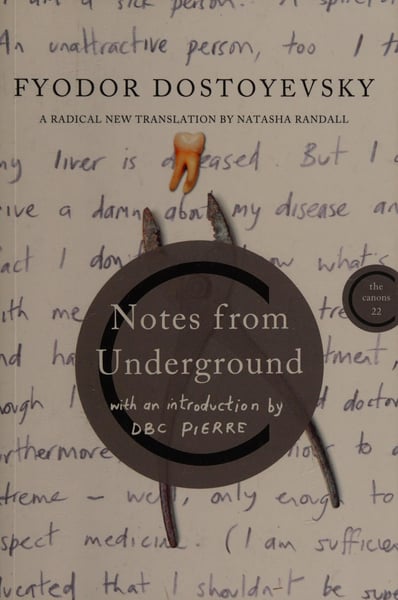
A two-part work narrated by an isolated, spiteful former civil servant whose confessions attack rationalism and utopian determinism. Often regarded as a foundational text of existentialist literature.
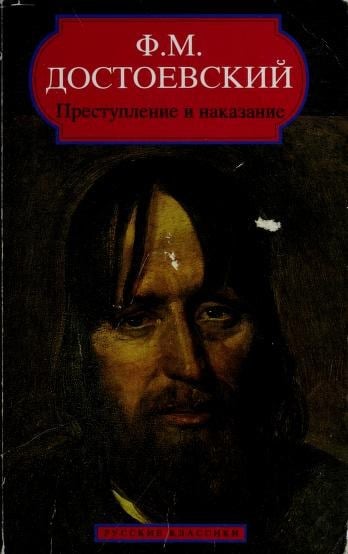
The story of Rodion Raskolnikov, an impoverished St. Petersburg student who murders a pawnbroker to test a theory that extraordinary men stand above moral law, and is consumed by guilt. A landmark of psychological fiction.
A short novel about a young tutor in the household of a Russian general at a German resort who is drawn into compulsive roulette, drawing on Dostoevsky's own gambling addiction. Written under deadline to settle his debts.
Fyodor Dostoevsky · Russian fiction, Princes, Good and evil
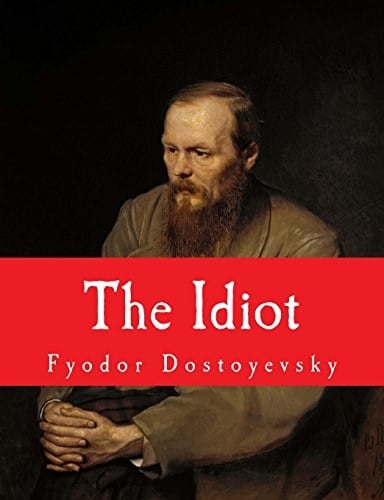
The story of the guileless, epileptic Prince Myshkin, whose Christlike innocence collides with the cynicism and passion of St. Petersburg society, drawing him into a tragic romantic rivalry. Explores whether genuine goodness can survive in the world.
Fyodor Dostoevsky · Russian fiction, Nihilism, Politics in fiction
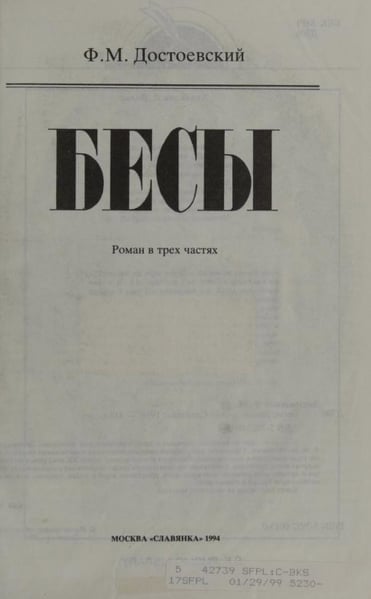
Dostoevsky's most overtly political novel, depicting a provincial town overtaken by a circle of nihilist revolutionaries. Inspired by a real political murder, it satirizes radical ideology and its destructive consequences.
Fyodor Dostoevsky · Russian fiction, Identity (Philosophical concept), Social conditions
Narrated by the young illegitimate Arkady Dolgoruky, the novel traces his troubled search for identity and his fraught relationship with his charismatic father, against the social disorder of post-reform Russia.
Fyodor Dostoevsky · Russian fiction, Brothers, Fathers and sons
Dostoevsky's final novel, centering on the murder of a dissolute father and the moral and spiritual struggles of his three sons. A profound exploration of faith, doubt, free will, and moral responsibility.


No comments yet — be the first.