9 works including the 7 volumes of the longest novel ever written
CE
Caleido Editorial TeamJune 1, 202622 min read0 views
Marcel Proust (1871-1922) devoted the last fifteen years of his life to a single monumental creation: In Search of Lost Time (A la recherche du temps perdu), a seven-volume novel spanning roughly 4,000 pages that is widely considered the greatest achievement in modern fiction. Through the narrator's journey from childhood innocence to artistic maturity, Proust explored memory, time, love, jealousy, art, and the nature of consciousness itself with unprecedented psychological depth.
Hidden Gems & Little-Known Facts
Beyond the seven volumes, two posthumously published works offer fascinating insights. Jean Santeuil (published 1952), an unfinished novel Proust abandoned around 1900, is essentially a proto-version of In Search of Lost Time — written in the third person rather than the first, it covers much of the same autobiographical ground and is endlessly fascinating to compare with the final masterwork. Against Sainte-Beuve (published 1954) is a collection of critical essays in which Proust crystallized his artistic philosophy, particularly his revolutionary argument that a writer's biography is irrelevant to understanding their work. Among the seven volumes, In the Shadow of Young Girls in Flower (1919) won the Prix Goncourt and is often considered the most perfectly self-contained volume, accessible even to readers who have not begun the cycle.
Proust famously wrote in a cork-lined bedroom at 102 Boulevard Haussmann, sealing out noise and light to create his hermetic writing environment. The madeleine dipped in tea — the involuntary memory that triggers the narrator's vast recollection — is arguably the most famous single scene in all of literature. Proust never saw the final three volumes (The Prisoner, The Fugitive, Time Regained) published; they appeared posthumously, edited from his manuscripts. At approximately 1.2 million words, In Search of Lost Time holds the Guinness record as the longest novel ever published.
Marcel Proust · Continental european fiction, Social life and customs, Fiction
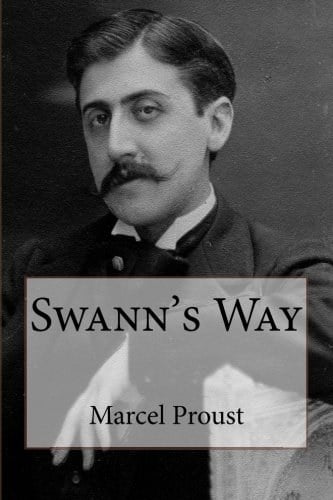
The first volume of Proust's In Search of Lost Time, introducing the involuntary-memory motif of the madeleine and tracing the narrator's Combray childhood alongside the story of Swann's jealous love for Odette.
Marcel Proust · Continental european fiction, Social life and customs, Fiction
The second volume of In Search of Lost Time, which won the Prix Goncourt; it follows the narrator's adolescence, his disillusion with the actress Berma and the writer Bergotte, and his seaside summer at Balbec where he meets Albertine.
Marcel Proust · Continental european fiction, Social life and customs, Upper class
The third volume of In Search of Lost Time, in which the narrator enters the aristocratic salons of Parisian high society and observes the manners, snobbery, and decline of the Guermantes circle.
Marcel Proust · Continental european fiction, Homosexuality, Social life and customs
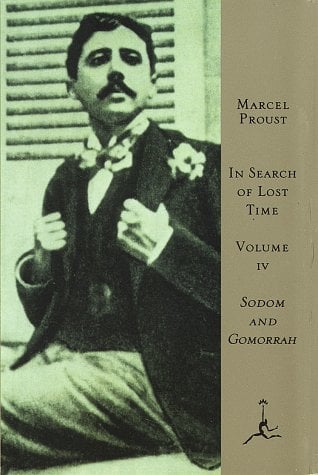
The fourth volume of In Search of Lost Time, examining same-sex desire in Proust's society through figures such as the Baron de Charlus, while deepening the narrator's relationship with and growing jealousy over Albertine.
Marcel Proust · Continental european fiction, Social life and customs, Jealousy
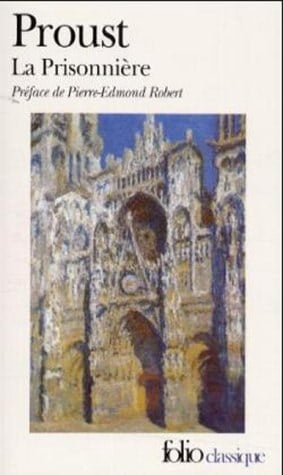
The fifth volume of In Search of Lost Time, published posthumously, centering on the narrator's possessive cohabitation with Albertine in Paris and the corrosive jealousy and doubt that define their relationship.
Marcel Proust · Continental european fiction, French literature, Social life and customs
The sixth volume of In Search of Lost Time, published posthumously, in which Albertine's sudden departure and death plunge the narrator into grief, jealousy, and the gradual work of forgetting.
Marcel Proust · Continental european fiction, Social life and customs, Memory
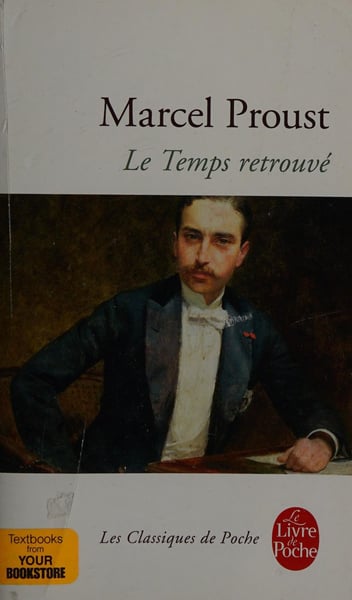
The final volume of In Search of Lost Time, published posthumously, in which the narrator, amid a wartime and postwar Paris, experiences a series of involuntary memories that reveal his vocation as a writer and the redemptive power of art over time.
Marcel Proust · Continental european fiction, French literature, Self in literature
An unfinished early novel, left in draft and published posthumously in 1952, tracing a young man's growth in turn-of-the-century French society and prefiguring many themes and techniques of In Search of Lost Time.
Marcel Proust · French literature, Literary criticism, Essays
A posthumously assembled work blending criticism and narrative, in which Proust attacks the biographical method of critic Sainte-Beuve and argues that a writer's books spring from a self distinct from the social personality, anticipating his great novel.


No comments yet — be the first.