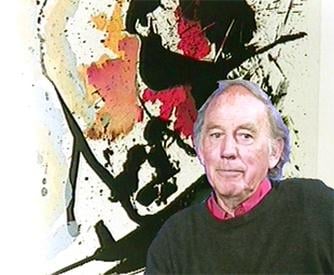
Jean Miotte
Jean Miotte was a French abstract painter, in the style known as L'Art Informel. His work was preserved and studied by the Miotte Foundation and is in the collections of museums including: MoMA and the Guggenheim in New York, Musée d'Art Moderne de Paris and Haus der Kunst in Munich.
Is this you, or do you represent them?
Expert analysis of Jean Miotte
Art Informel
Jean Miotte (Artist)
Style: Art Informel
Genre: Abstract
Known Works: 19 artworks
Biographical & Critical Profile
Jean Miotte stands as a significant figure within the post-war European movement of Art Informel, a style that rejected formal composition in favor of spontaneous, gestural abstraction. With only 19 known artworks, his output appears concentrated, suggesting a disciplined, highly focused practice rather than prolific breadth.
Artistic Significance & Style Development
Miotte’s work embodies the core tenets of Art Informel: liberation from geometric order, embrace of chance and instinct, and a physical, often raw mark-making that prioritizes process over predetermined form. His abstract canvases are characterized by vigorous brushstrokes, tonal transparency, and an organic sense of motion—hallmarks of the “informal” aesthetic that emerged in France as a counterpart to American Abstract Expressionism. While specific stylistic phases are undocumented, the consistency of his genre (always abstract) and style (always Art Informel) implies a coherent evolution within this unruly, expressive vocabulary rather than abrupt shifts.
Major Contributions
As a practitioner of Art Informel, Miotte contributed to the movement’s key dialogues: the tension between controlled gesture and automatic release, the role of materiality (pigment, surface), and the search for universal, pre-verbal imagery. The fact that his works are specifically counted (19) underscores their rarity and the artist’s selective legacy—each piece likely served as a deliberate statement within the Informel canon.
Lasting Influence
Though Miotte may not be as widely recognized as some peers (e.g., Wols, Dubuffet, Fautrier), his limited but pure engagement with Art Informel preserves him as a reference point for scholars studying the movement’s lesser-known voices. His abstract language continues to resonate with contemporary artists exploring improvisation, embodied painting, and the liberating power of formless gesture.