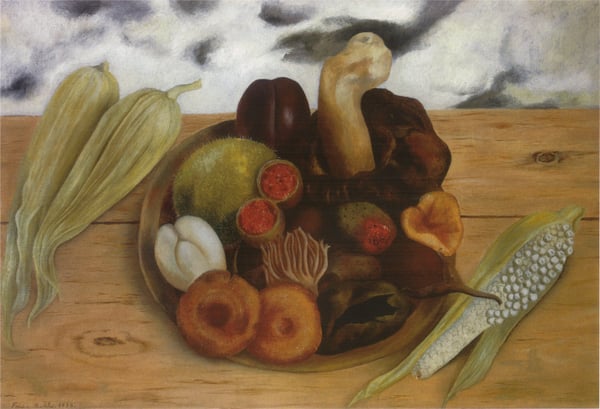
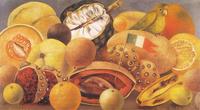
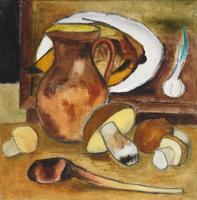
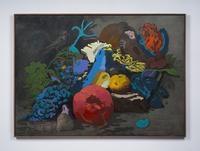
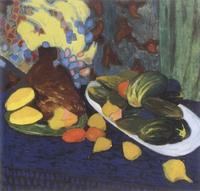
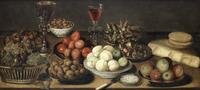
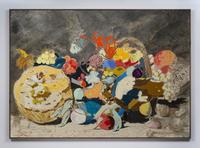
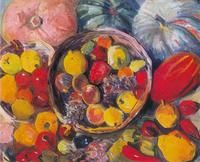
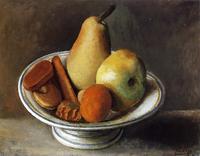
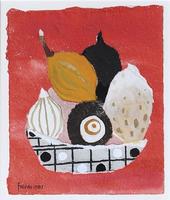
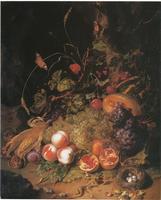
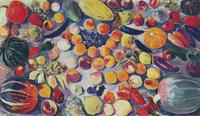
As an artwork within the Naïve Art (Primitivism) style, Frida Kahlo's Fruits of the Earth achieves significance through its direct, unpretentious treatment of the still life genre. The work exemplifies key Naïve characteristics—a flattened perspective, bold outlines, and vibrant, unmodulated color—that reject academic conventions in favor of a more intuitive, folk-inspired vision.
For Kahlo, this approach was not merely aesthetic but deeply personal and cultural: the fruits of the earth become potent symbols of Mexican identity, fertility, and life cycles. By applying a childlike, primal clarity to a traditional genre, she transforms a simple arrangement into a charged emblem of the natural world's abundance and mortality. The painting stands as a testament to how Naïve Art can elevate still life from decorative object to a vessel for raw emotional and symbolic power, rooted in the artist’s unique perspective and heritage.