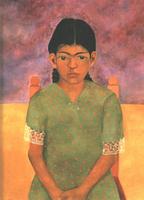
Analysis of "Memory (The Heart)" by Frida Kahlo
Style: Naïve Art (Primitivism), Surrealism | Genre: Self-portrait, symbolic painting
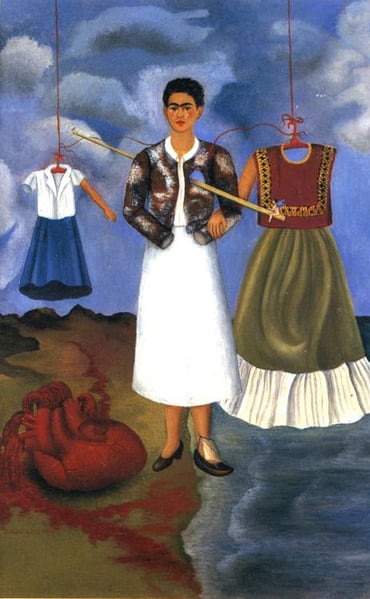
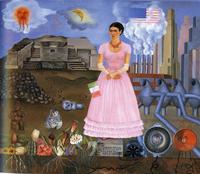
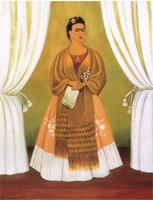
This work is significant as a quintessential fusion of Naïve Art’s raw, unpolished directness and Surrealism’s psychological depth, channeled through the intensely personal lens of self-portraiture. Kahlo’s use of a flattened, folk‑inspired visual language (characteristic of Primitivism) strips away academic artifice, making the symbolic content—here, the exposed heart as a metaphor for emotional pain and memory—immediately visceral. The self‑portrait genre becomes a vehicle for autobiographical symbolism, where the body is both subject and canvas for interior experience. By grounding surrealist dream‑logic in the concrete symbols of Mexican folk tradition (the heart, the dress, the landscape), Kahlo creates a unique hybrid that transcends mere illustration of psychic states. The work’s power lies in its refusal to separate the personal from the archetypal, the naïve from the surreal, establishing Kahlo as a singular voice who transformed self‑representation into a universal language of suffering and resilience.