Expert Analysis of "Portrait of Eva Frederick" by Frida Kahlo
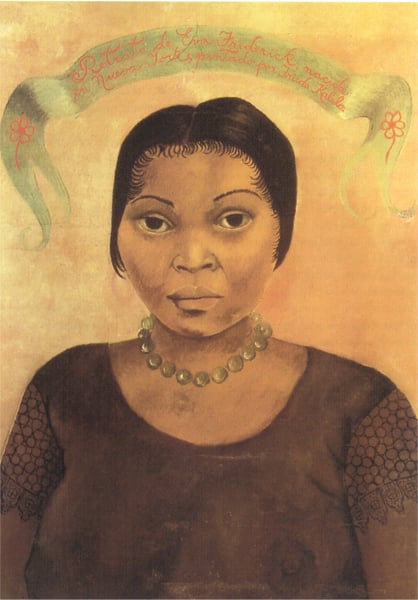
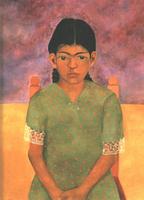
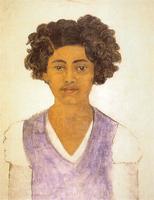
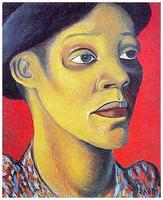
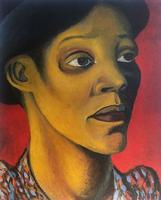
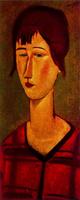
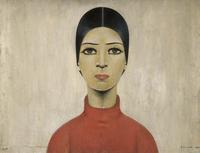
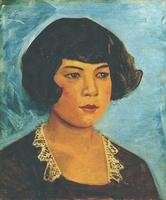
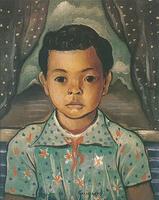
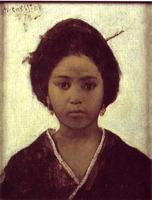
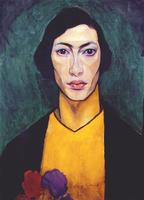
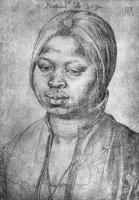
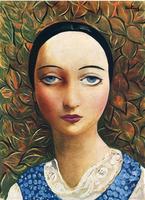
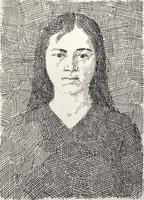
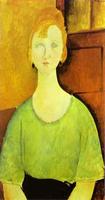
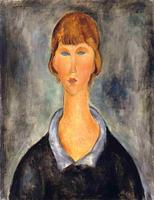
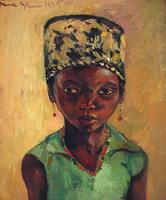
This work is a significant example of Naïve Art (Primitivism) within the portrait genre. The style’s hallmark—a deliberate rejection of academic naturalism in favor of simplified forms, flat perspective, and vibrant, unmodulated color—is embodied here. Kahlo’s treatment of the sitter likely emphasizes direct emotional expression over anatomical precision, a core value of Naïve Art that challenges conventional portraiture. The painting’s significance lies in how it aligns with the Primitivist movement’s goal to access "pure" or instinctive visual language, stripping away Renaissance-derived techniques to achieve a more raw, personal immediacy. Within Kahlo’s broader oeuvre, such portraits also reflect her engagement with Mexican folk art, which often shares these Naïve qualities. This piece stands as a testament to the power of Primitivism to transform portraiture from a tool of status documentation to a deeply expressive, symbolically charged form.