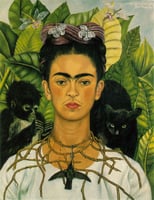
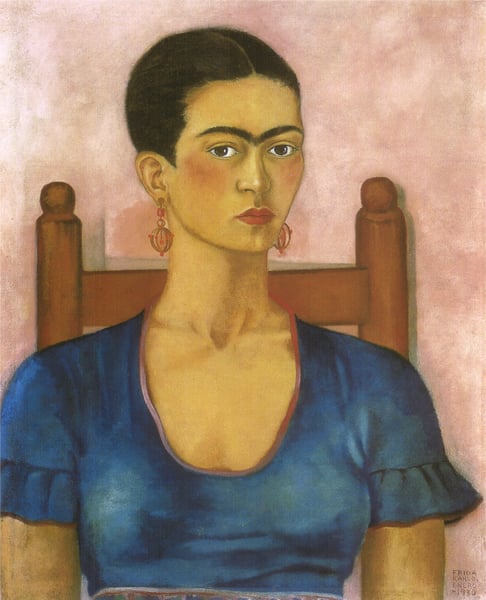
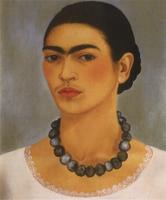
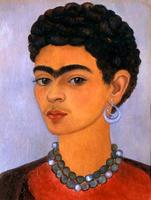
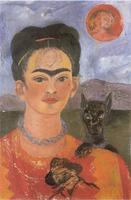
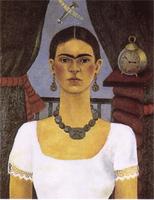
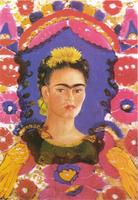
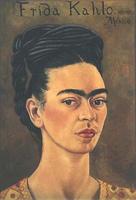
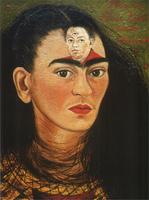
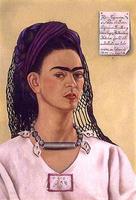
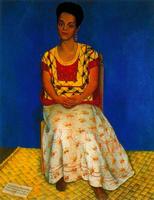
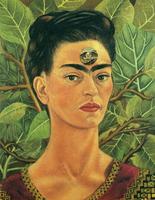
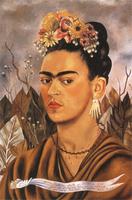
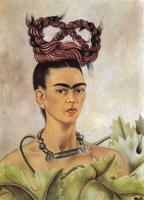
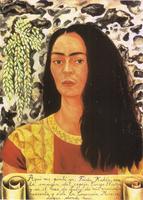
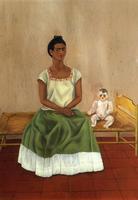
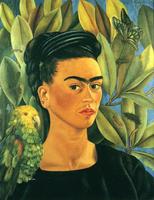
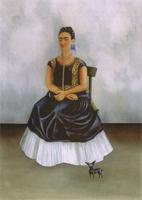
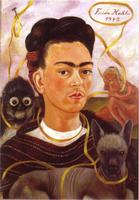
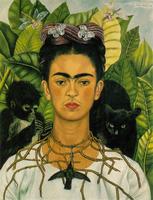
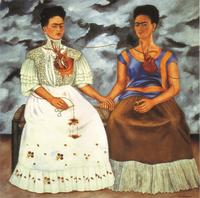
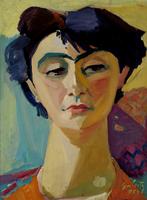
Frida Kahlo’s Self Portrait is a landmark within Naïve Art (Primitivism), a style that deliberately eschews academic precision in favor of raw, direct expression. As a self‑portrait, the work becomes a powerful vehicle for personal and cultural identity. Its significance lies in how Kahlo harnesses the flattened perspective, bold color, and simplified forms of Primitivism to make the intimate autobiographical subject feel both intensely personal and universally symbolic. By rejecting naturalistic detail, she focuses attention on the emotional and psychological presence of the sitter, transforming a traditional genre into a manifesto of individuality and resilience—a signature achievement that redefined the possibilities of the self‑portrait within modern art.