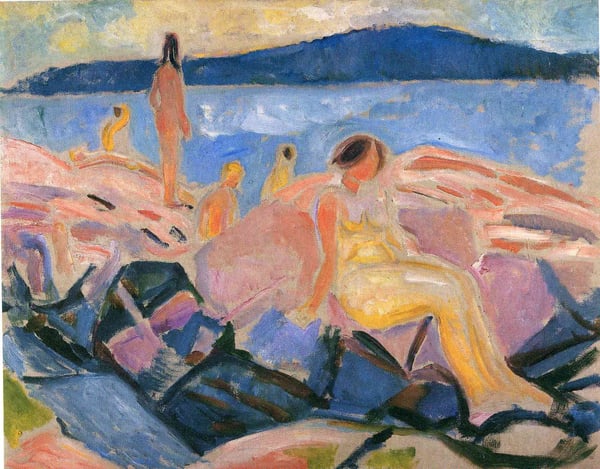
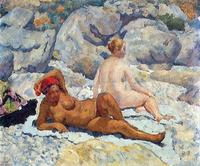
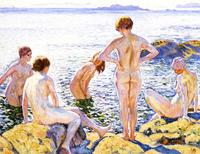
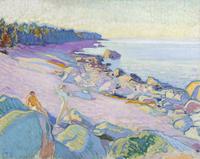
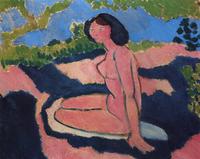
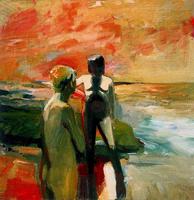
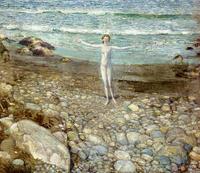
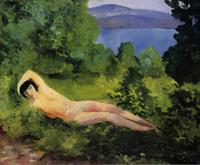
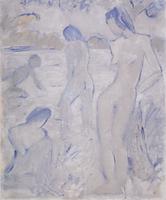
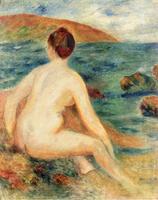
"High Summer II" is a significant late work by Edvard Munch that exemplifies the core tenets of Expressionism through its genre painting subject. As a product of Munch's later period, the artwork marks a departure from his earlier, more anxious themes, channeling the emotional intensity of Expressionism into a sun-drenched, harmonious scene. The genre painting format allows Munch to transform a seemingly ordinary moment of everyday life into a powerful, subjective experience—emphasizing mood and feeling over realistic depiction. This shift toward a calmer, more luminous palette and composition highlights the evolution of Munch's style, making "High Summer II" a key example of how Expressionism could be applied not only to psychological turmoil but also to moments of serenity and natural vitality.