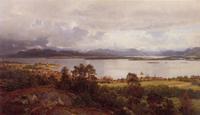
Expert Analysis: "Landscape. Maridalen by Oslo" by Edvard Munch
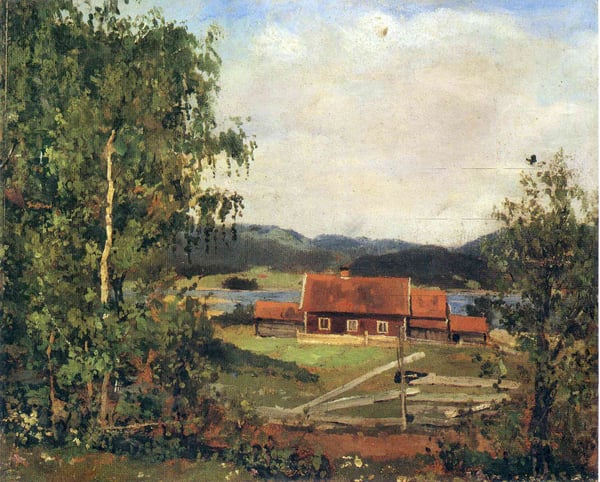
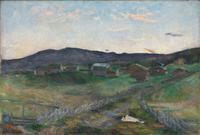
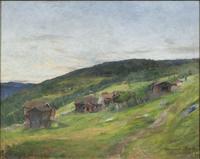
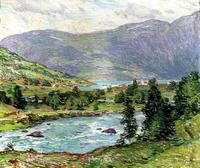
This early work by Edvard Munch, executed in a Realist style, is significant as a foundational piece that reveals the artist’s roots in meticulous observation of nature before his later, more famous Expressionist breakthroughs. Painted during Munch’s formative years, the work exemplifies his engagement with landscape as a genre, capturing the specific topography of Maridalen, a rural valley near Oslo.
The painting’s importance lies in its technical discipline: Munch adheres to Realist conventions—faithful rendering of light, atmosphere, and spatial depth—while subtly hinting at the emotional undercurrents that would later define his mature style. The controlled brushwork and muted palette reflect his academic training, yet the composition’s stark, almost melancholic quietude foreshadows his eventual shift from external reality to inner psychological states.
As a document of Munch’s early works, this landscape stands as a counterpoint to the explosive color and distorted forms of The Scream and The Dance of Life. It shows that even a master of modern angst began with the patient observation of the natural world, grounding his later innovations in a solid understanding of Realist tradition. For art historians, the piece is a crucial touchstone: it marks the precise moment when Munch was absorbing the lessons of Naturalism before deliberately breaking from them to forge a new, emotionally charged visual language.