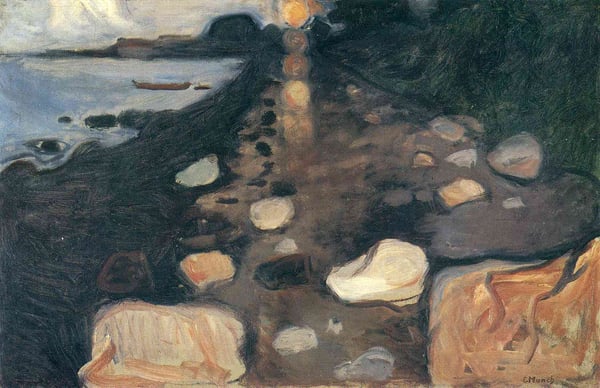
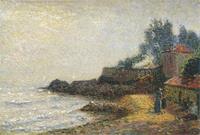
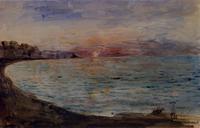
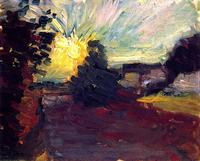
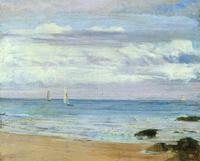
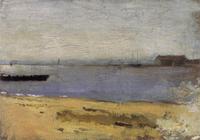
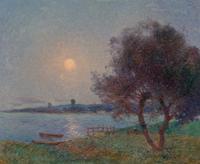
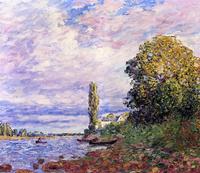
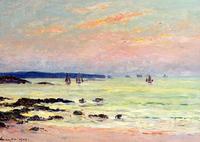
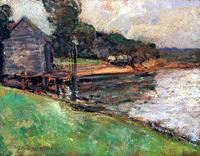
In Edvard Munch’s Moonlight on the Shore, the artist deploys the landscape genre as a vehicle for Symbolist introspection. The scene is not a literal depiction of a coastal night but a psychological landscape—moonlight becomes a conduit for solitude, mystery, and emotional resonance. As a work from Munch’s European period, it aligns with the Symbolist movement’s rejection of naturalistic representation in favor of subjective mood and inner experience. The shore, a liminal space between land and sea, mirrors the Symbolist fascination with boundaries between the conscious and unconscious, the tangible and the ethereal. This painting’s significance lies in how it transforms a conventional landscape into a meditation on human isolation and the sublime—a hallmark of Munch’s broader oeuvre and a key achievement of European Symbolism.