The Storm
Dettagli
Analisi esperta di The Storm di Edvard Munch
Stile: Expressionism · Genere: genre painting
Expert Analysis of "The Storm" by Edvard Munch
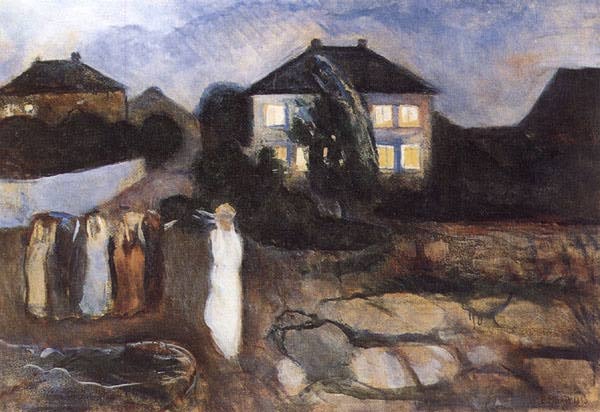
Edvard Munch’s The Storm (1893) is a pivotal work within the Expressionist movement and a masterful example of genre painting that transcends mere narrative. Executed during his European period, the painting depicts a group of figures huddled together on a pier under a turbulent, dark sky—a literal storm that mirrors an inner psychological tempest.
Significance within Expressionism:
What makes The Storm significant is Munch’s radical departure from naturalistic representation. Rather than capturing a mere meteorological event, he uses the storm as a vehicle for emotional and existential anxiety. The swirling, ominous clouds and the stark contrast between the pale faces of the figures and the deep blues and blacks of the sky create a visceral sense of dread. This aligns with Expressionism’s core goal: to externalize internal states. The figures are not individuals but archetypes of vulnerability, huddled together yet isolated—a theme Munch would later perfect in The Scream.
Genre Painting as Psychological Drama:
Though classified as a genre painting (a scene from everyday life), The Storm subverts the tradition. Instead of a cheerful or moralizing anecdote, Munch presents a moment of collective fear. The composition forces the viewer to focus on the tension between the natural world and human fragility. The pier juts into the churning water, suggesting a precarious boundary between safety and chaos.
Historical and Artistic Context:
Created in the same year as The Scream, The Storm demonstrates Munch’s early mastery of symbolic color and expressive brushwork. It also reflects his lifelong fascination with themes of anxiety, death, and the overwhelming power of nature. The painting’s significance lies in its role as a bridge between 19th-century naturalism and 20th-century modernism—a raw, emotional canvas that anticipates the psychological depth of later Expressionists like Ernst Ludwig Kirchner.
Conclusion:
The Storm is not merely a depiction of weather but a landmark in Munch’s exploration of the human condition. Its significance rests on its ability to transform a conventional genre scene into a profound, unsettling meditation on fear and unity, making it a cornerstone of early Expressionist art.
Museum / Gallery
Visivamente simili
20 opere con composizione e palette affini
Berény Róbert , Borús Táj
Berény Róbert
Houses in the Trees
Pierre-Auguste Renoir
Working the field
Constant Permeke
Czene Béla, Badacsonyi Alkony 1960
Czene Béla
Landscape at Dusk
Istvan Farkas
Segment of a Street in Nagybánya
Kmetty János
Berény Róbert, Falusi Utca
Berény Róbert
Curved Street at Szentendre
Kmetty János
Landscape at Essoyes
Pierre-Auguste Renoir
Bretons on the way
Maxime Maufra
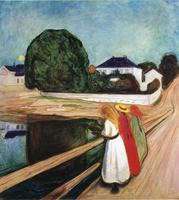
The Girls on the Bridge
Edvard Munch
Man and Woman beneath a Tree
Edouard Vuillard
Berény Róbert, Gyümölcs Szedők
Berény Róbert
Meadow at Moritzburg
Max Pechstein
Red Virginia Creeper
Edvard Munch
Red Creeper
Edvard Munch
Meadow with Village in Background
Egon Schiele
Galimberti Sánador, Nagybányai Motivumok 1911
Galimberti Sándor
Night Scene
Istvan Farkas
Sunset at Giverny
Claude Monet