
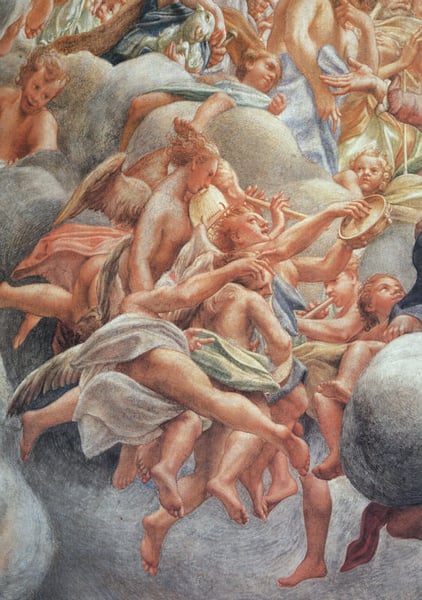
Analyse experte de The Assumption of the Virgin (detail) de Correggio
Style : Mannerism (Late Renaissance) · Genre : religious painting
Expert Analysis: "The Assumption of the Virgin (detail)" by Correggio
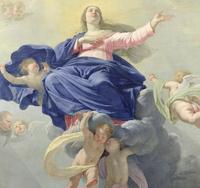
As a hallmark of Mannerism—the late Renaissance style that deliberately broke from the idealized balance of the High Renaissance—Correggio’s work on this detail from The Assumption of the Virgin is profoundly significant for its radical treatment of space, movement, and emotional intensity.
Break from Tradition: While High Renaissance masters like Raphael composed with serene, stable geometries, Correggio here embraces the Mannerist penchant for disegno interno (inner vision) over naturalistic restraint. The detail likely captures the soaring Virgin surrounded by a swirling host of angels, executed with a dizzying di sotto in sù (from below upward) perspective. This illusionistic foreshortening pulls the viewer’s gaze directly into the heavens, dissolving the architectural boundary of the dome and merging the physical church with the divine realm—a technique that would later inspire Baroque ceiling painting.
Dynamic Energy: Correggio’s figures are not calm or static; they twist, spiral, and overlap in a virtuosic display of contrapposto and foreshortening. The Virgin’s upward ascent is rendered with a palpable momentum, her drapery billowing as if caught in a celestial wind. This restless energy, typical of Mannerist aesthetics, prioritizes emotional and spiritual fervor over classical poise. The angels’ ecstatic expressions and exaggerated poses amplify the drama, inviting the faithful into a visionary experience rather than a didactic narrative.
Light and Color: Correggio employs a soft, sfumato-like modeling—a legacy of Leonardo—but charges it with a luminous, almost phosphorescent quality. The warm golden light that envelops the Virgin suggests divine radiance, while cooler tones in the background create atmospheric depth. This chiaroscuro of heaven versus earth underscores the religious theme: the Virgin’s assumption is not a mere historical event but a transcendent, glorious mystery.
Significance within Mannerism: This detail epitomizes Mannerism’s turn toward the subjective and the virtuosic. Where earlier Renaissance artists anchored figures firmly in measurable space, Correggio defies gravity and perspective, making the viewer’s own position feel unstable—a deliberate emotional disorientation that heightens spirituality. His work directly influenced the theatrical illusionism of the Baroque (e.g., Lanfranco’s cupolas), marking a crucial shift from description to affetti (passionate expression).
In summary, Correggio’s Assumption of the Virgin (detail) is a tour de force of Mannerist innovation: it redefines ceiling painting as a portal to the divine, prioritizes ecstatic movement over physical logic, and sets the stage for the Baroque’s grand celestial visions.
Museum / Gallery
Visuellement similaire
20 œuvres à la composition et à la palette proches
The Vision of St. John in Patmos
Correggio
Glory of Santa Cecilia in Santa Cecilia (Rome)
Sebastiano Conca
The Vision of St. John in Patmos
Correggio
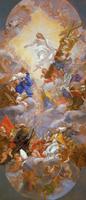
Cristo in Gloria Con Apostoli E Santi Francescani
Giovanni Battista Gaulli
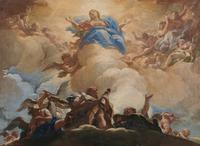
The Asumption of the Virgin
Luca Giordano
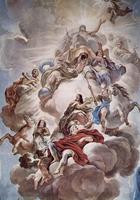
Triumph of the Medici in the Clouds of Mount Olympus
Luca Giordano
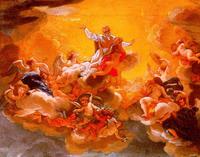
The Apotheosis of St. Ignatius
Giovanni Battista Gaulli
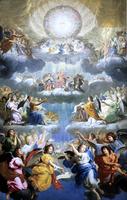
Les Neuf chœurs des Esprits célestes
Louis Licherie de Beurie
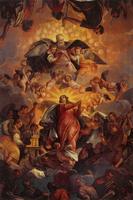
Assumption
Paolo Veronese
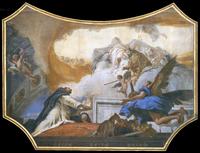
The Virgin Appearing to St Dominic
Giovanni Battista Tiepolo
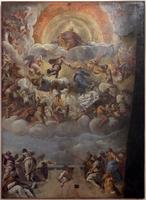
Assunzione della Vergine
Palma il Giovane

A Concert of Angels
Philippe de Champaigne
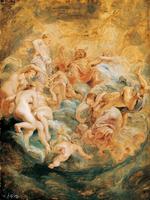
Psyche Taken up into Olympus
Peter Paul Rubens
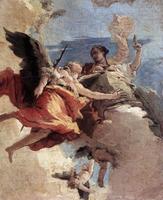
Allegory of Strength and Wisdom
Giovanni Battista Tiepolo
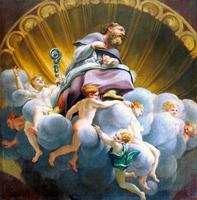
Saint Bernard Surrounded by Angels (copy of the fresco in the cupola of Parma Cathedral)
Correggio
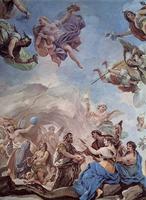
The Creation of Man (detail of decorative ceiling)
Luca Giordano
The Assumption of the Virgin
Philippe de Champaigne
Apostles and Angels at the Assumption
Correggio
Coronation of the Virgin
El Greco

The Apostles Peter and Paul
Correggio