Expertenanalyse zu Caravaggios Christ on the Mount of Olives
Stil: Baroque, Tenebrism · Genre: religious painting
Expert Analysis: Christ on the Mount of Olives by Caravaggio
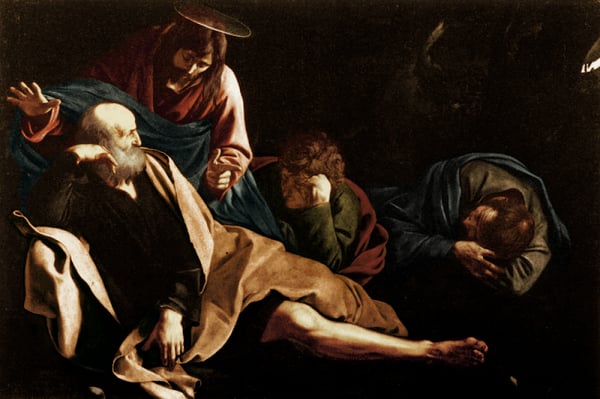
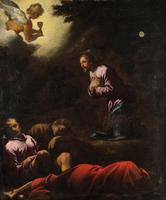
Caravaggio’s Christ on the Mount of Olives stands as a defining example of early Baroque religious painting, elevated by the artist’s revolutionary use of tenebrism. This extreme chiaroscuro—where deep, enveloping darkness is pierced by a single, sharply focused light source—transforms the biblical narrative into a profound psychological and spiritual drama. The scene depicts Christ in the Garden of Gethsemane, moments before his betrayal, isolated in anguished prayer. Caravaggio eschews idealized divinity, instead presenting a weary, very human Christ overwhelmed by his impending fate.
Significance within the Baroque and Tenebrist Style:
-
Emotional Realism through Tenebrism: The stark light rakes across Christ’s face and hands, illuminating his sweat, furrowed brow, and clasped fingers. The surrounding darkness swallows all extraneous detail, forcing the viewer’s gaze onto the raw, private moment of agony. This technique heightens the emotional intensity and reflects the Counter-Reformation church’s desire for art that evoked direct, visceral piety.
-
Humanizing the Sacred: Caravaggio’s Christ is not a remote, triumphant figure. He is slumped, vulnerable, and deeply troubled—a radical departure from Renaissance depictions. The tenebristic contrast reinforces this: the divine light that usually signifies holiness here reveals exhaustion and fear, making Christ’s sacrifice feel immediate and tangible.
-
Compositional Innovation: The absence of a halo or supernatural glow is deliberate. Instead, the light functions as both a natural source (perhaps from a lantern or moon) and a metaphor for divine awareness. By placing Christ in a dark, claustrophobic space, Caravaggio compresses the composition, creating an intimate, almost claustrophobic encounter that draws the viewer into the saint’s solitude.
In short, Christ on the Mount of Olives exemplifies Caravaggio’s genius for merging tenebristic drama with uncompromising realism, making the sacred story a powerful, personal crisis of faith. This work not only defined Baroque religious painting but also laid the groundwork for later artists—from Rembrandt to Georges de La Tour—who would explore the spiritual resonance of light and shadow.
Museum / Gallery
Visuell ähnlich
20 Werke mit ähnlicher Komposition und Farbpalette
Sacrifice of Isaac
Caravaggio
Saint John Reproaching Herod
Mattia Preti
The Liberation of St Peter
Guercino
The Liberation of Saint Peter
Mattia Preti
A Mother Entrusting Her Sons to Christ
Mattia Preti
Inspiration of Saint Matthew
Caravaggio
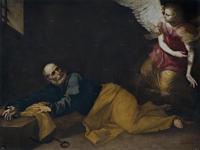
St. Peter Freed by an Angel
Jusepe de Ribera
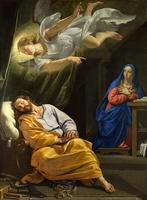
The Dream of Saint Joseph
Philippe de Champaigne
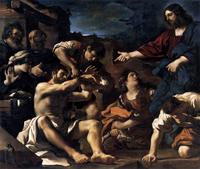
Raising of Lazarus
Guercino
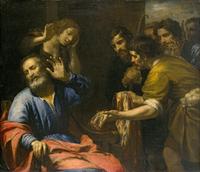
Joseph's Coat Brought to Jacob
Domenico Fiasella
The Supper at Emmaus
Peter Paul Rubens
Death of Saint Joseph
Giuseppe Maria Crespi
The Four Evangelists
Peter Paul Rubens
The Capture of Christ with the Malchus Episode
Dirck van Baburen
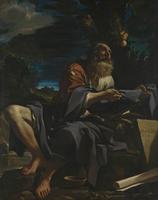
Elijah fed by Ravens
Guercino
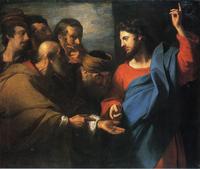
The Tribute Money
John Singleton Copley
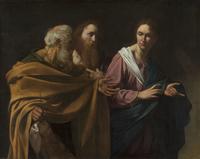
The Calling of Saints Peter and Andrew
Caravaggio
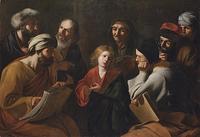
Christ among the Doctors
Bartolomeo Manfredi
Agony in the Garden
Tintoretto
The Flagellation
Tintoretto