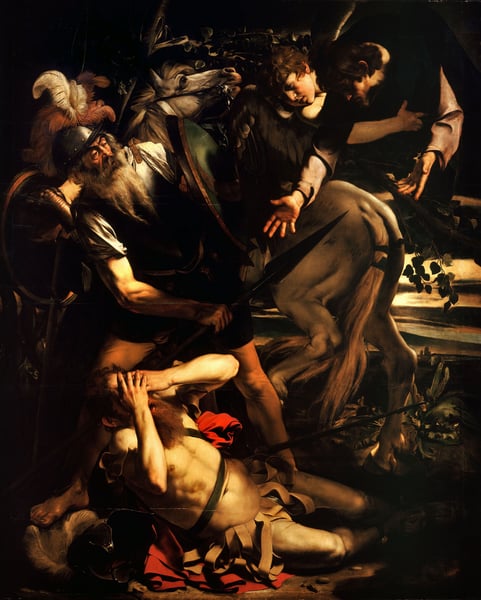
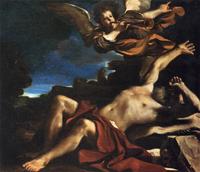
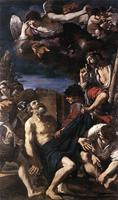
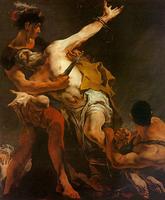
Conversion of Saint Paul is a Baroque religious painting by Caravaggio that exemplifies Tenebrism. The work strips the biblical narrative down to its most dramatic moment, using extreme contrasts of light and shadow to spotlight the fallen Paul while plunging the horse and the surrounding space into near-total darkness. This technique amplifies the psychological intensity of the conversion, focusing attention on the blinding light from above and the saint’s vulnerable, outstretched posture.
Within the Baroque period, the painting rejects idealization in favor of raw, unmediated realism—Paul’s coarse features, the horse’s solid mass, and the lack of celestial trappings all ground the miracle in a tangible, human reality. The tenebristic style here does not merely decorate but drives the narrative: light becomes the divine agent of transformation, making the spiritual event feel immediate and physically overwhelming.