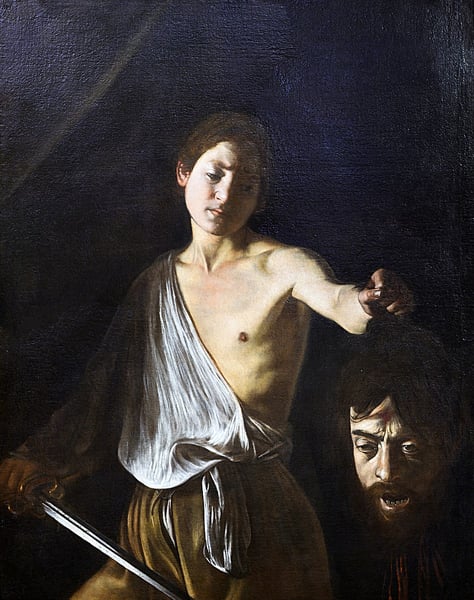
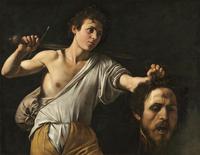
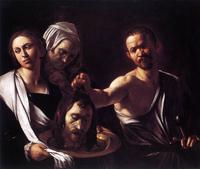
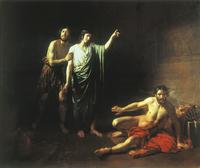
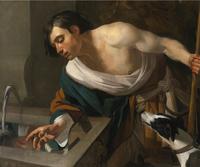
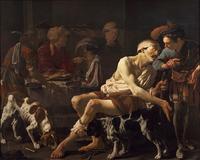
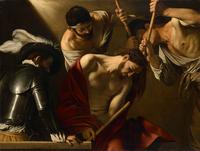
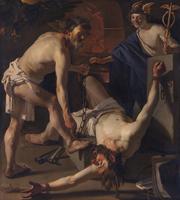
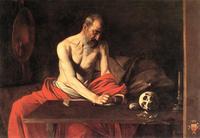
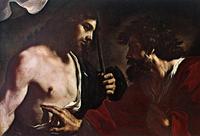
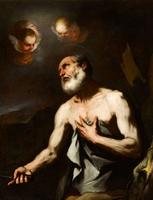
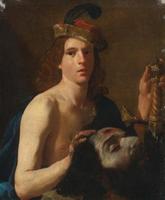
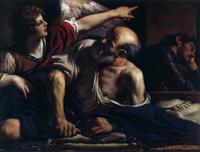
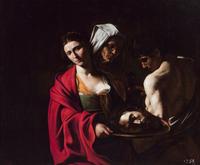
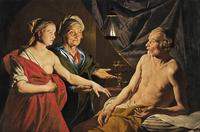
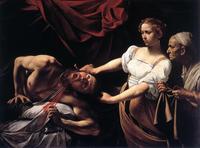
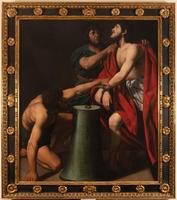
This painting is a masterful example of Baroque religious art, distinguished by Caravaggio’s signature use of tenebrism—an extreme contrast of light and shadow that heightens psychological drama. The stark, directional light isolates the figures from a dark background, forcing the viewer to confront the raw, human moment of victory and its moral weight. Within the Baroque period, Caravaggio revolutionized religious painting by refusing idealized beauty; here, the figures are tangible, even gritty, which makes the biblical narrative feel immediate and visceral. The deep shadows and sharp highlights not only create sculptural volume but also evoke the tension between divine grace and human sin, a core concern of Counter-Reformation spirituality. This work is significant because it embodies how tenebrism could transform a conventional subject into a profound meditation on mortality, guilt, and redemption—hallmarks of Caravaggio’s groundbreaking contribution to the Baroque era.