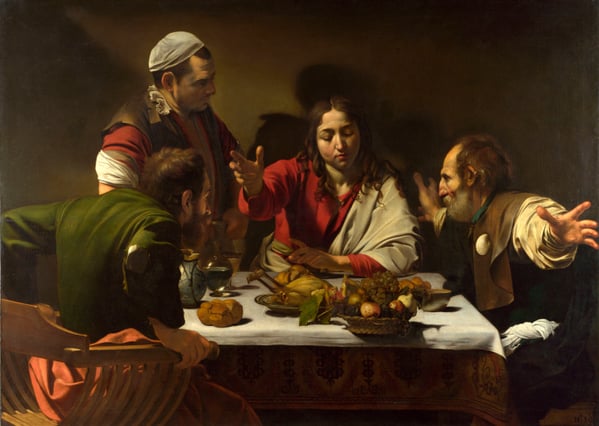
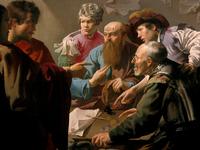
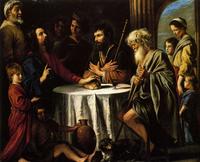
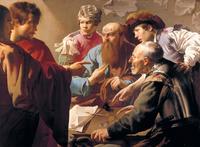
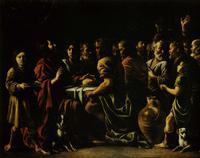
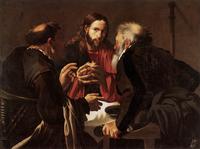
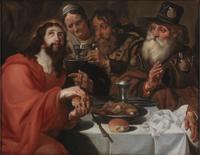
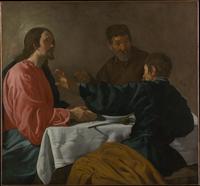
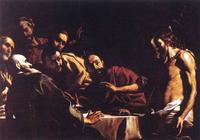
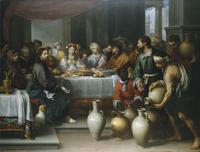
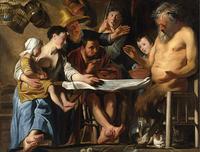
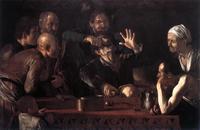
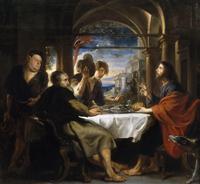
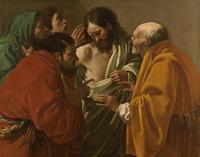
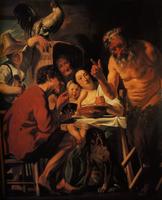
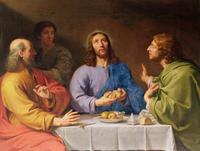
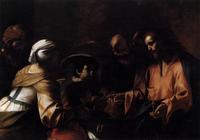
Supper at Emmaus is a Baroque religious painting by Caravaggio, executed in the tenebrist style. The work exemplifies Caravaggio’s signature Tenebrism, where stark contrasts of light and shadow isolate the biblical figures in a dramatically lit, almost theatrical space, heightening the emotional immediacy of the moment Christ reveals himself to the disciples. Within the Baroque tradition, this painting grounds a sacred narrative in tangible, human realism—the disciples’ gestures, the still-life details of the meal, and the intense chiaroscuro invite the viewer into the hushed, miraculous recognition.
By merging the spiritual with the quotidian through extreme light effects, Caravaggio transforms a conventional religious scene into a visceral encounter, a hallmark of his radical departure from idealized religious imagery. The work’s significance lies in how it deploys Tenebrism not merely as a stylistic flourish but as a means to direct the viewer’s focus squarely on the psychological climax of the story, making the divine feel startlingly present.