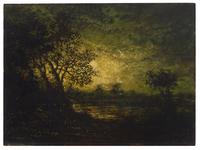
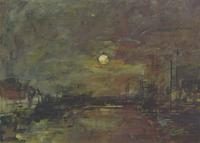
Expert Analysis: "Riverbank in Moonlight" by Charles-Francois Daubigny
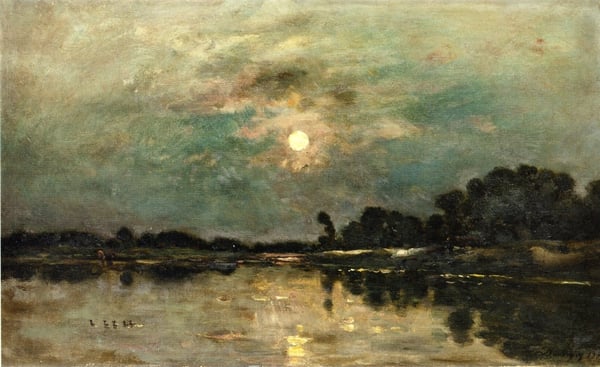
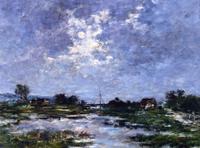
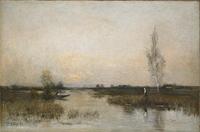
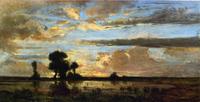
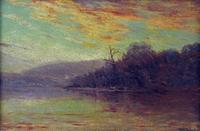
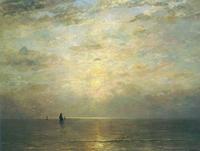
As a work of Realism, Charles-Francois Daubigny’s Riverbank in Moonlight holds a pivotal place in the transition from Romanticism to Impressionism. Daubigny, a leading figure of the Barbizon school, was celebrated for his plein air practice—direct observation of nature—which he applied to nocturnal scenes with unprecedented fidelity.
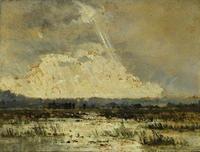
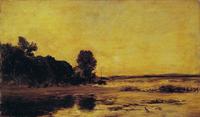
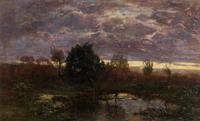
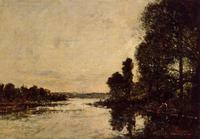
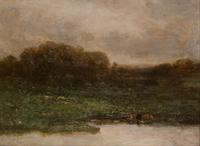
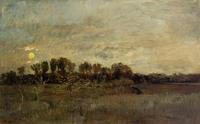
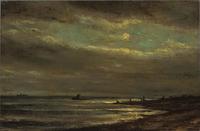
In this landscape and cloudscape, Daubigny rejects the idealized, dramatic moonlight of the Romantics in favor of a subdued, scientifically observed atmosphere. The realism lies in his treatment of light: the moon’s glow is not theatrical but diffused through a veil of clouds, creating subtle tonal shifts across the riverbank and water. The cloudscape dominates, rendered with soft, broken brushstrokes that anticipate the Impressionists’ interest in fleeting atmospheric effects. Daubigny’s focus on the momentary quality of natural light—capturing how moonlight transforms shadows, reflections, and the texture of the sky—marks a crucial step away from studio conventions.
Significantly, Daubigny influenced younger painters like Monet and Pissarro by demonstrating that even a quiet, moonlit riverbank could be a subject worthy of honest, unembellished depiction. Riverbank in Moonlight exemplifies how Realism expanded landscape art beyond mere topography into a study of transient natural phenomena, paving the way for the modernist obsession with light and perception.