Expert Analysis: "The River Seine at Mantes" by Charles-François Daubigny
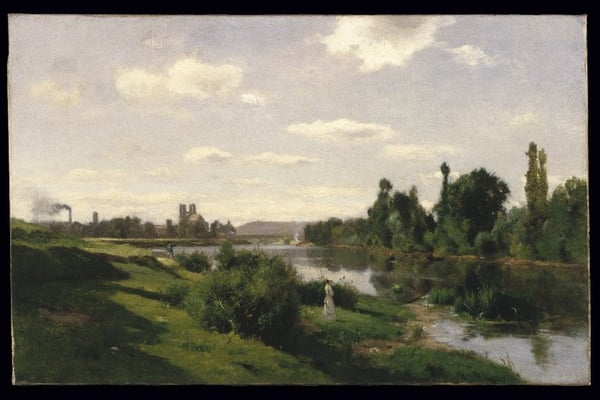
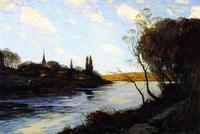
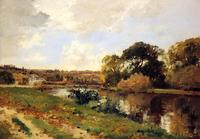
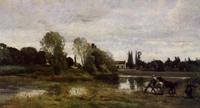
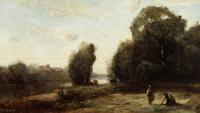
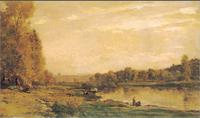
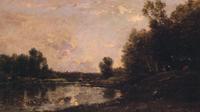
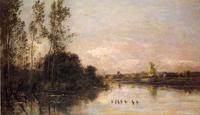
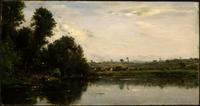
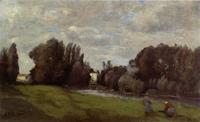
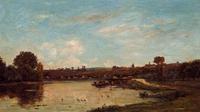
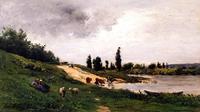
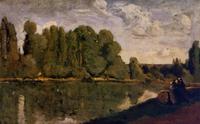
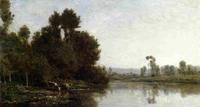
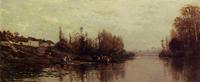
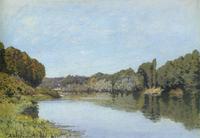
This work is a quintessential example of the Realist landscape tradition, a genre in which Daubigny was a pioneering force. Painted during a period when the Barbizon school was shifting attention from idealized nature to direct observation, Daubigny’s scene of the Seine at Mantes forgoes dramatic composition in favor of an unvarnished, everyday view of the riverbank.
Significance within Realism:
Daubigny’s importance lies in his commitment to plein air painting. In this piece, the subdued, silvery light and the broad, fluid brushwork capture the transient effects of atmosphere on water and sky—prefiguring the concerns of the Impressionists. The choice of a modest, unmonumental stretch of the Seine (rather than a grand vista) reflects the Realist insistence on the beauty of the ordinary. His handling of the river’s surface, using rapid strokes to suggest rippling reflections, demonstrates a masterful synthesis of empirical observation and painterly economy.
Historical Impact:
Daubigny was a direct influence on Claude Monet, who later painted the same motif at Mantes. By treating the landscape as a subject worthy of purely visual study—free of literary or moralizing narrative—Daubigny helped legitimize landscape as a high-art genre and cleared the path for the radical experiments of the later 19th century. The River Seine at Mantes stands as a quiet manifesto of the Realist ethos: truth to nature, captured in the moment.