Expert Analysis of Rogier van der Weyden’s Crucifixion
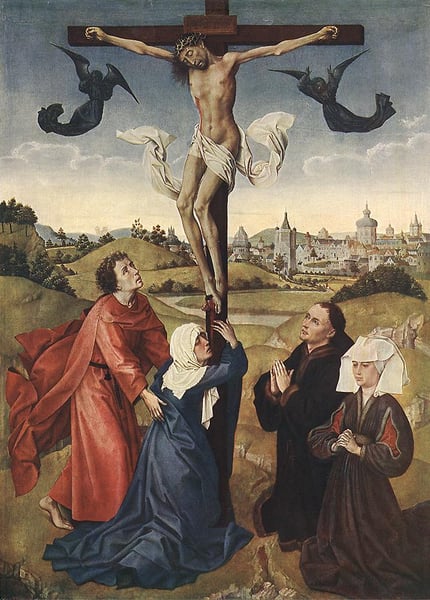
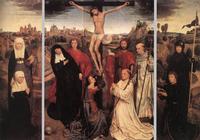
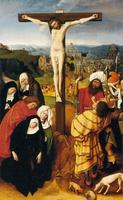
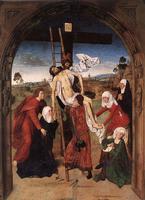
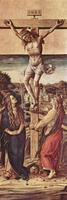
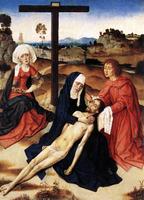
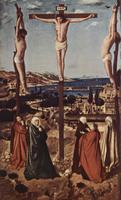
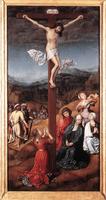
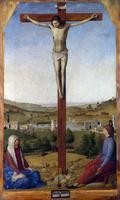
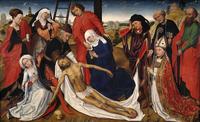
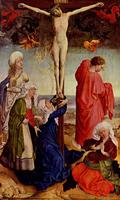
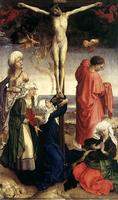
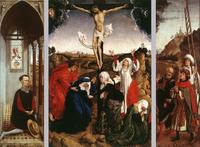
Rogier van der Weyden’s Crucifixion stands as a masterwork of the Northern Renaissance, a period defined by its meticulous naturalism, luminous oil technique, and profound emotional depth. This religious painting depicts the pivotal moment of Christ’s death on the cross, a subject central to Christian devotion.
Significance within the Northern Renaissance:
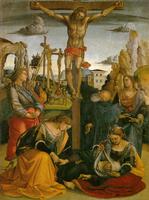
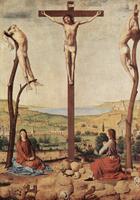
Van der Weyden elevates the Crucifixion from a mere narrative scene to a gripping meditation on human suffering and divine sacrifice. Unlike earlier, more static representations, his composition channels intense psychological realism—a hallmark of Northern Renaissance art. The figures are not idealized but palpably human: Christ’s contorted body conveys agony, while the Virgin Mary and Saint John are rendered with tear-streaked faces and clasped hands, their grief almost tangible. This focus on individual emotion and physical detail reflects the era’s shift toward direct, empathetic engagement with sacred stories.
Innovations in Technique and Form:
Van der Weyden employs the Northern Renaissance’s signature oil paint to achieve breathtaking luminosity. The blood on Christ’s side gleams with wet clarity, the sky fades into a mournful twilight, and the landscape unfolds with crisp, jewel-like precision. His use of rhythmic line—the diagonal of the cross, the swaying drapery of the mourners—guides the viewer’s eye toward Christ, while the tight framing eliminates extraneous narrative, focusing on the stark, silent drama of the moment.
Enduring Impact:
This work exemplifies how Northern Renaissance artists transformed the Crucifixion into an intimate, emotionally charged encounter. Van der Weyden’s ability to marry meticulous naturalism with profound pathos helped define the devotional power of religious painting in the 15th century, influencing generations of artists across Europe.