Eugene Delacroix の Apollo Slays Python の専門的な分析
スタイル:Romanticism · ジャンル:quadratura, mythological painting
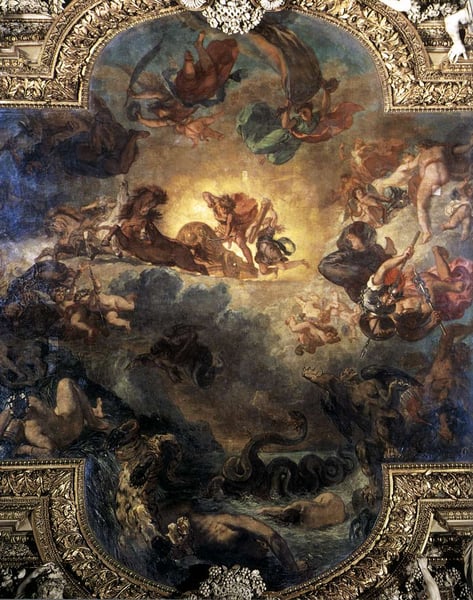
The painting Apollo Slays Python (1850–1851) by Eugène Delacroix is a defining masterpiece of French Romanticism and a virtuosic example of quadratura, the illusionistic ceiling painting technique that blends architecture and perspective to create a dramatic, immersive space. Executed as the central panel of the ceiling in the Louvre’s Galerie d’Apollon, the work marks Delacroix’s triumphant return to official state patronage after years of controversy—and it stands as one of the most significant mythological ceilings of the 19th century.
Romanticism in full force: Delacroix rejects the calm, idealized forms of Neoclassicism in favor of explosive motion, violent contrast, and emotional intensity. The composition is a swirling maelstrom of figures: the god Apollo, radiant and victorious, drives his chariot through the sky as his arrows pierce the monstrous serpent Python, which writhes in agony below. The diagonal thrust of the horses, the billowing drapery, and the twisted, tormented body of Python create an almost cinematic sense of action. Delacroix’s characteristic broken brushwork and vivid, complementary colors—golden light against deep shadows, vermilion against cool blues and greens—heighten the drama and evoke the sublime terror of the myth. Here, Romanticism’s fascination with nature’s power, the heroic individual, and the struggle between order and chaos finds its ideal vehicle.
Quadratura as baroque illusionism: The painting is not merely a ceiling decoration; it is a quadratura tour de force. Delacroix designed the entire Galerie d’Apollon ceiling to appear as if the architectural framework opens to the heavens. The viewer, standing below, sees Apollo’s chariot bursting through a painted cloud-filled sky, surrounded by allegorical figures and engaged in dynamic foreshortening. This illusionistic tradition—rooted in Baroque ceiling painting by artists like Pietro da Cortona—is here revitalized with Romantic energy. Delacroix employs steep perspectival undercutting (di sotto in sù) so that the forms seem to hover above the viewer, breaking the plane of the ceiling. The result is a theatrical experience: the room itself becomes a stage for cosmic conflict, merging architecture, myth, and emotion into a unified sensory event.
Mythological significance: The subject—Apollo slaying the serpent Python at Delphi—is not merely a decorative myth. It symbolizes the triumph of light (civilization, reason, art) over darkness (primeval chaos, ignorance, tyranny). For Delacroix, this was also a personal and political metaphor: painted just after the tumultuous revolutions of 1848, the work reflects his belief in the artist as a heroic, Apollo-like force who brings order through creative struggle. The composition’s unrestrained energy, however, also hints at the cost of that triumph—Python’s suffering is rendered with visceral sympathy, a Romantic ambiguity that resists simple moral clarity.
Legacy: Apollo Slays Python is significant because it synthesizes Delacroix’s lifelong themes—movement, color, conflict, and the sublime—within the demanding genre of ceiling painting. It demonstrates how Romanticism could embrace and transform baroque illusionism, creating an experience that is at once intellectually rigorous and emotionally overwhelming. For visitors to the Louvre, it remains one of the gallery’s most breathtaking and influential works, a testament to Delacroix’s belief that painting should “shake the soul” through color and gesture.
Museum / Gallery
視覚的に類似
構図やパレットが近い作品 20 件
The Chariot of Apollo
Charles de La Fosse
Le Soir Ou Morphée
Charles Le Brun
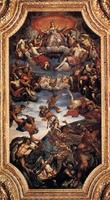
Triumph of Venice
Tintoretto
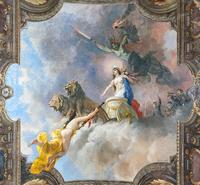
Capitole Toulouse. Toulouse coopérant à la défense nationale
Jean-André Rixens
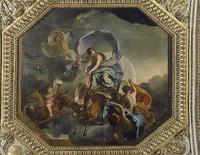
La Nuit Ou Diane
Charles Le Brun
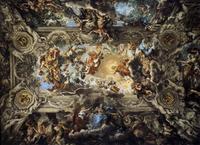
The Triumph of Divine Providence
Pietro da Cortona
Defence of Brescia
Tintoretto
Providence Presiding over the Virtues and Faculties of Man (fresco detail)
Francisco Bayeu y Subias
Glory of Santa Cecilia in Santa Cecilia (Rome)
Sebastiano Conca
Siege of Scutari
Paolo Veronese
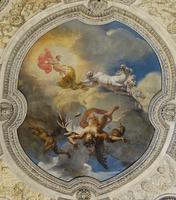
The fall of Icarus
Merry Joseph Blondel
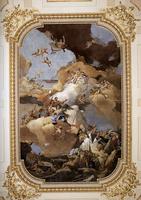
Venus and Vulcan
Giovanni Battista Tiepolo
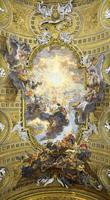
Triumph of the Name of Jesus
Giovanni Battista Gaulli
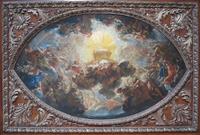
Adorazione Dell'Agnello
Giovanni Battista Gaulli
Ceiling Fresco with Medici Coat of Arms
Pietro da Cortona
Apotheosis of Hercules
François Lemoyne
Landing of the Trojans at the Mouth of Tiberis
Pietro da Cortona
Great Staircase, Triumph of Semele, Ceiling
Antonio Verrio
Allegory of Divine Providence and Barberini Power
Pietro da Cortona
Ceiling paintings
Paolo Veronese