Analisi esperta di Medea di Eugene Delacroix
Stile: Romanticism · Genere: mythological painting
Expert Analysis: "Medea" by Eugène Delacroix
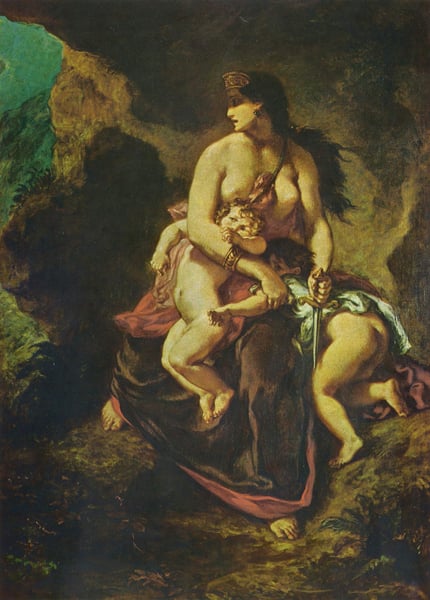
As a defining work of Romanticism in the mythological painting genre, Delacroix’s Medea exemplifies the movement’s core preoccupations: raw emotion, dramatic tension, and the sublime power of human passion. The painting’s significance lies in how it transforms a classical myth into a vehicle for Romantic intensity.
Key Romantic Traits:
- Emotional Exaggeration: The subject—Medea’s moment of vengeful fury as she prepares to kill her children—is chosen precisely for its extreme emotional pitch. Romanticism rejected neoclassical restraint in favor of such tragic, psychologically charged narratives.
- Dramatic Composition & Color: Delacroix’s use of bold, contrasting colors and dynamic, swirling brushwork heightens the scene’s violence and turmoil. The painting’s energy and lack of static harmony are hallmarks of Romanticism’s break with academic order.
- Exoticism & Moral Ambiguity: Medea herself is a “barbarian” sorceress, a figure of untamed nature and irrationality. Romanticism frequently explored such “otherness” and the darker, mysterious aspects of the human psyche, rejecting Enlightenment logic.
Significance within the Period: This painting stands as a masterful synthesis of Romantic ideals: it prioritizes subjective feeling over objective form, celebrates the heroic (if horrific) individual, and embraces the sublime terror of uncontrollable emotion. By choosing a mythological subject, Delacroix did not merely illustrate a story; he used the classical framework to stage a quintessentially Romantic drama of passion, revenge, and despair—a vivid testament to the movement’s belief that art’s highest purpose is to move the soul.
Museum / Gallery
Visivamente simili
20 opere con composizione e palette affini
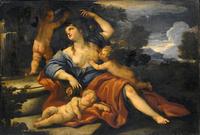
An Allegory of Christian Charity
Luca Giordano
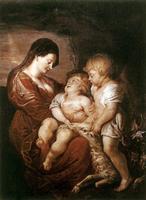
Virgin and Child with the Infant St. John
Peter Paul Rubens
Holy Family with John the Baptist and An Angel
Giulio Cesare Procaccini
Jupiter and Antiope Palma
Giovanni Battista Piranesi
Portrait of Wigbold Slicher and Elisabeth Spiegel as Paris Handing Venus the Appel
Ferdinand Bol
Hope feeding love
Karl Bryullov
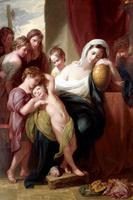
Agrippina and Her Children Mourning over the Ashes of Germanicus
Benjamin West
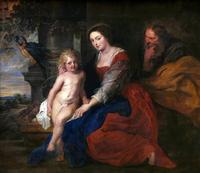
Holy Family with Parrot
Peter Paul Rubens
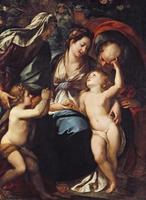
Heilige Familie
Giulio Cesare Procaccini
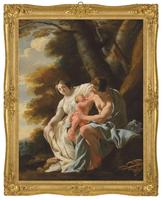
The Education of Cupid
Michel Dorigny
Maria Mit Kind, Dem Johannesknaben Und Einem Engel
Giulio Cesare Procaccini
The Toilet of Venus
Guido Reni
Charity
Andrea del Sarto
The Toilet of Venus
Guercino
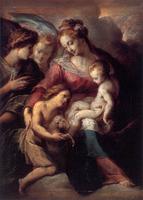
The Virgin and Child with the Infant St John the Baptist and Attendant Angels
Giulio Cesare Procaccini
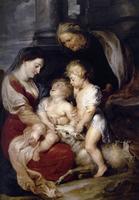
The Virgin and Child with St. Elizabeth and the Infant St. John the Baptist
Peter Paul Rubens
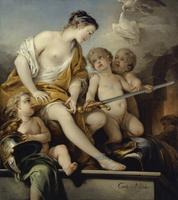
Venus and Cupids with the Arms of Mars
Charles-Andre van Loo (Carle van Loo)
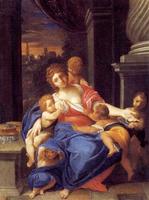
Allegoria dellAbbondanza
Ludovico Carracci
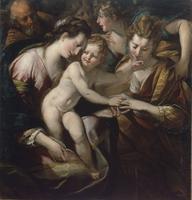
The Mystic Marriage of St Catherine
Giulio Cesare Procaccini
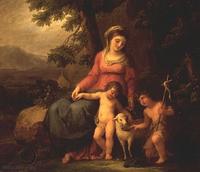
Virgin Mary with the Christ Child and St John the Baptist
Angelica Kauffman