
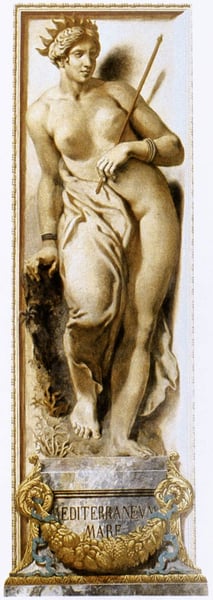
Analisi esperta di The Mediterranean di Eugene Delacroix
Stile: Romanticism · Genere: allegorical painting
As an expert in art history, I can offer an analysis of "The Mediterranean" by Eugène Delacroix based solely on the supplied facts: its Romanticism style and allegorical painting genre. While the specific composition is not detailed, we can assess its significance through these defining characteristics.
Significance within Romanticism and Allegory
1. Embodiment of Romantic Ideals
Within the Romantic movement, Delacroix championed emotion, drama, and the sublime over Neoclassical order. An allegory of "The Mediterranean" would likely personify the sea as a powerful, untamed force—a quintessential Romantic subject. Instead of a calm, rational landscape, Delacroix would emphasize turbulent waters, dramatic lighting, and intense color to evoke awe and passion, aligning with Romanticism’s focus on individual emotional response and the sublime in nature.
2. Allegorical Complexity
As an allegorical work, this painting transcends mere depiction. The Mediterranean Sea was a symbol of cultural crossroads, exoticism, and the clash between civilization and nature—themes Delacroix often explored (as seen in The Death of Sardanapalus or The Women of Algiers). The allegory likely uses figures or personifications (e.g., a female figure representing the sea, or mythological beings) to convey ideas of freedom, danger, fertility, or historical memory. This layered meaning elevates the painting beyond description to philosophical reflection, a hallmark of Romantic allegory.
3. Innovation in Color and Emotion
Delacroix’s signature technique—bold, broken brushwork and vibrant, contrasting colors (his famous "division of tones")—would be employed to stir the viewer’s senses. In an allegorical context, color itself becomes symbolic: deep blues and greens for the sea’s depth, fiery reds or golds for passion or sunlight. This approach broke from academic conventions and influenced later modernists, making the work a pivotal example of Romanticism’s liberation of painting from strict line and form.
4. Historical and Symbolic Significance
The Mediterranean held profound meaning in the 19th century as a site of ancient civilizations, colonial ambition, and romantic travel. Delacroix’s allegory could critique or celebrate these forces. By choosing this subject, he aligns himself with the Romantic fascination with the exotic "other" and the power of nature—a defiant stance against the industrialization and rationalism of his era.
Conclusion
Without specific visual details, the significance of The Mediterranean lies in how it synthesizes Romanticism’s core values—emotional intensity, the sublime, and individual expression—with the allegorical tradition, creating a work that functions both as a visceral experience and a symbolic meditation on nature, history, and human emotion. It stands as a testament to Delacroix’s genius in using allegory to convey the Romantic vision of a world defined by passion, mystery, and untamed beauty.
Museum / Gallery
Visivamente simili
20 opere con composizione e palette affini
Nymph Flora
Zinaida Serebriakova
Seated Nude
Francois Boucher
Study for the Adulteress: half figure with folded arms, from Guercino
Giovanni Battista Piranesi
Pastel Nude
Robert Brackman
Venus and Cupid
Francois Boucher
Study of a Female Nude
Adriaen van de Velde
Nymph Justice
Zinaida Serebriakova
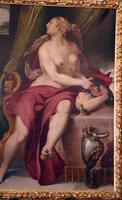
Lucretia's Suicide
Bartolomeo Passerotti
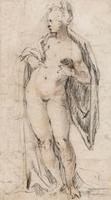
Study of a Female Nude (Venus in a Drapery)
Bartholomeus Spranger
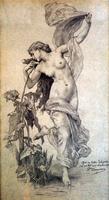
The aurora
William-Adolphe Bouguereau
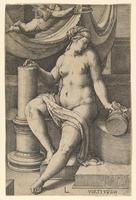
Fortitude, from the Series the Seven Virtues
Lucas van Leyden

Study for La Vue: Female Figure Revealing Herself
Alexandre Cabanel
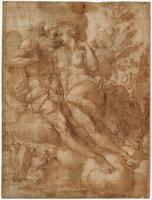
Jupiter and Io
Francesco de' Rossi (Francesco Salviati), "Cecchino"
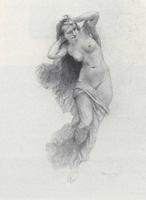
Sketch for Night
William-Adolphe Bouguereau
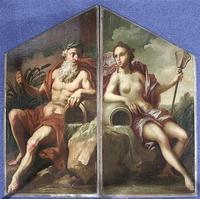
Neptune and Amphitrite, with the arms of the Worshipful Company of Drapers
James Thornhill
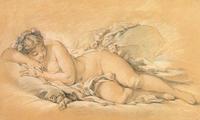
Young Woman Sleeping
Francois Boucher
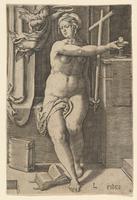
Faith (fides), from the Series the Seven Virtues
Lucas van Leyden
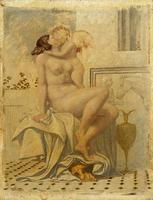
Cupid and Psyche
Richard Dadd

Annunciation (study)
Michelangelo
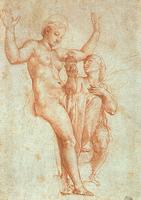
Psyche presenting Venus with water from the Styx
Raphael