Analisi esperta di Crystal Ball di John William Waterhouse
Stile: Romanticism · Genere: genre painting
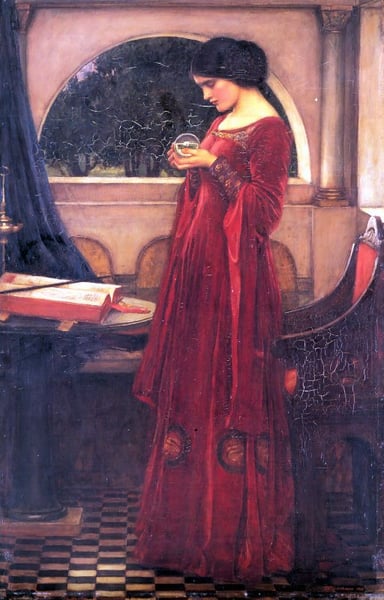
"Crystal Ball" by John William Waterhouse is a compelling example of Romanticism’s fascination with the mysterious, the supernatural, and the inner emotional life. Although classified as a genre painting—a scene from everyday or intimate life—the work transcends mere domesticity by focusing on a woman engaged in divination, a theme that aligns with Romanticism’s embrace of the irrational, the spiritual, and the sublime. Waterhouse, best known for his Pre‑Raphaelite‑infused mythological and literary subjects, brings to this piece his hallmark sensitivity to mood, texture, and psychological depth. The crystal ball itself functions as a symbol of hidden knowledge and female mystique, echoing Romanticism’s interest in the unknown and the power of the imagination. The work’s significance lies in how it merges the immediacy of genre painting with the symbolic and emotional intensity of Romanticism, creating an intimate yet profound meditation on fate, mystery, and the human yearning for revelation.
Visivamente simili
20 opere con composizione e palette affini
The Crystal Ball
John William Waterhouse
Destiny
John William Waterhouse
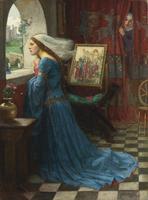
Fair Rosamund (study)
John William Waterhouse
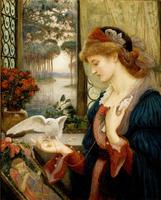
Love's Messenger
Marie Spartali Stillman
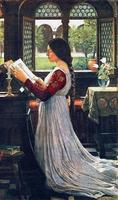
The Missal
John William Waterhouse

Isabella and the Pot of Basil
John William Waterhouse
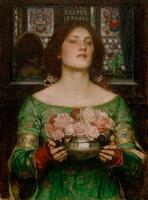
Gather Ye Rosebuds While Ye May (study)
John William Waterhouse

Abelard and His Pupil Heloise
Edmund Blair Leighton
Laura reading
Walter Crane

The Enchanted Garden
John William Waterhouse

La belle Iseult
William Morris
Mariana in the South
John William Waterhouse

Fair Rosamund and Eleanor
Frank Cadogan Cowper

The Briar Rose (triptych, centre panel)
Walter Crane
Sybil Waller in a Red and Gold Dress
George Washington Lambert
The Deceitfullness of Riches
Eleanor Fortescue-Brickdale
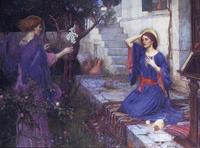
The Annunciation
John William Waterhouse
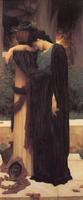
Lachrymae
Frederic Leighton
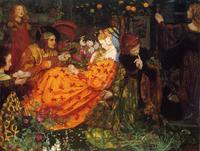
The Deceitfullness of Riches
Eleanor Fortescue-Brickdale
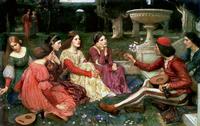
A Tale from the Decameron
John William Waterhouse