Analisi esperta di The carnival Chiarina di Leon Bakst
Stile: Art Nouveau (Modern) · Genere: design
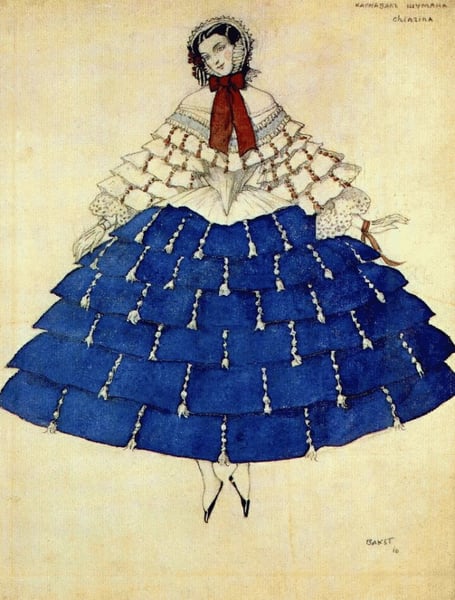
As an expert art historian, I will analyze "The Carnival Chiarina" by Leon Bakst strictly within the framework of the provided facts: its style is Art Nouveau (Modern) and its genre is design. The significance of this work lies in its embodiment of the Art Nouveau aesthetic as applied to the design genre, where decorative elegance, fluid lines, and a modern sensibility converge.
Within the Art Nouveau movement, design—whether for theater, fashion, or interiors—was not merely functional but a total work of art. Bakst’s piece epitomizes this through its likely use of sinuous, organic forms, asymmetrical composition, and vibrant, expressive color harmonies—hallmarks of the style that broke from historical revivalism. As a design work, "The Carnival Chiarina" would have been intended for applied use (e.g., costume or set design), and its significance rests in how it elevates utilitarian objects into high art, reflecting the modern embrace of beauty in everyday life. The title suggests a carnivalesque or theatrical subject, aligning with the era’s fascination with exoticism and spectacle, while the artist’s treatment of line and pattern exemplifies Art Nouveau’s rejection of rigid symmetry in favor of dynamic, nature-inspired rhythms. This fusion of fine art and applied design marks Bakst’s contribution as a key moment in the modern redefinition of artistic boundaries.
Visivamente simili
20 opere con composizione e palette affini
Zhivoiedova
Boris Kustodiev
"The Сarnival" - Estrella
Leon Bakst
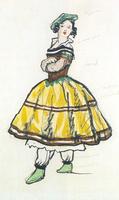
Ballerina. Costume design
Alexandre Benois
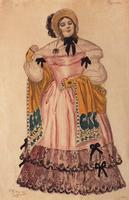
Furnacheva
Boris Kustodiev
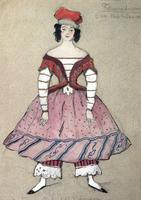
Ballerina. Costume design for Tamara Karsavina
Alexandre Benois
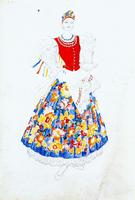
Costume design for bride
Natalia Goncharova
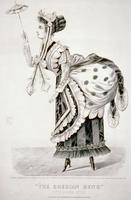
The Grecian Bend
Currier and Ives
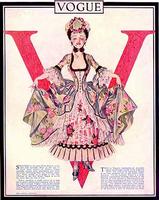
Vogue
Frank Xavier Leyendecker
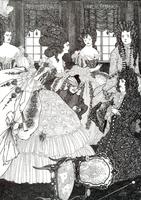
The Battle of the Beaux and the Belles
Aubrey Beardsley
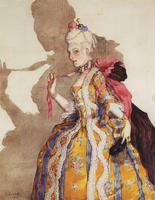
Design of Costume for Awnings T. Karsavina (To Dance to Music by Mozart)
Konstantin Somov
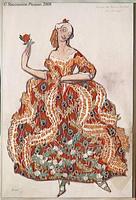
Portrait of a Lady
Leon Bakst
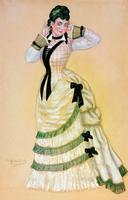
Sketch of Kupavina for Ostrovsky's play "Wolves and Sheep"
Boris Kustodiev
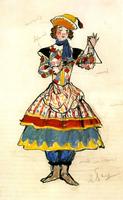
Street Dancer. Costume design
Alexandre Benois
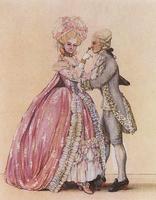
How Dressed in the Old Days (Lady and Cavalier)
Konstantin Somov
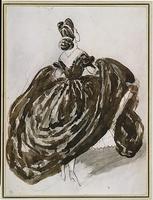
Parisienne Seen from the Back
Constantin Guys
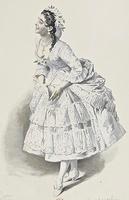
Suzanne, from ''The marriage of Figaro''
Émile Bayard
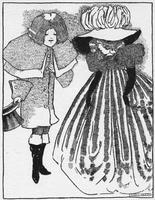
Illustration from In Childhoods Country (Moulton)
Ethel Reed
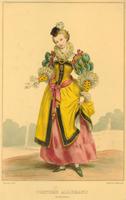
16th century German costume
Achille Devéria
Portrait of Princess Leopoldine Karoline Palffy
Josef Kriehuber
Mujer Con Fular Abanico Y Flores
Rosario Weiss Zorrilla