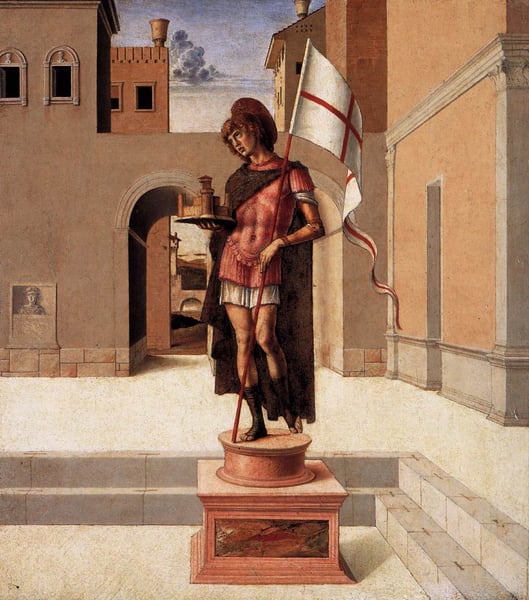
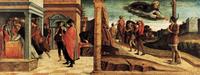
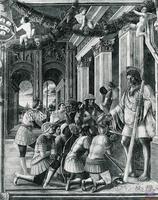
Based solely on the provided structured facts—Pesaro Altarpiece (predella) by Giovanni Bellini, Early Renaissance style, religious painting genre—this work’s significance stems from its position within a pivotal moment of art history and the specific function of its format.
As a predella (the lower horizontal panel of an altarpiece), it represents the integration of narrative and devotional imagery typical of Early Renaissance religious painting. Giovanni Bellini was a central figure in the development of the Venetian Early Renaissance, known for refining the altarpiece format by unifying sacred figures with a more naturalistic, atmospheric setting. Even without specific details of the predella’s scenes, its very existence as part of a larger altarpiece highlights the period’s emphasis on storytelling within a liturgical context, and Bellini’s mastery of oil painting allowed for richer color and light that enhanced the spiritual and emotional resonance of religious subjects. This combination—pioneering technique, narrative structure, and devotional purpose—marks the predella as significant within Bellini’s oeuvre and the broader shift from Gothic to Renaissance ideals.