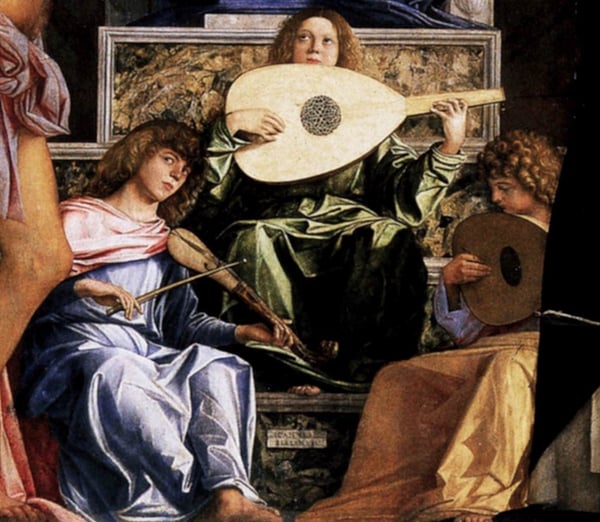
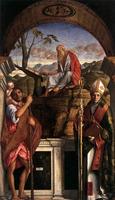
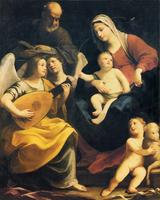
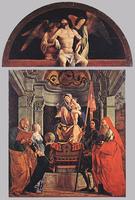
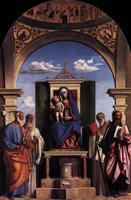
Based solely on the provided structured facts, the significance of this artwork within the Early Renaissance period lies in its demonstration of Giovanni Bellini’s pioneering approach to religious painting. The detail of Music Making Angels from the San Giobbe Altarpiece exemplifies Bellini’s mastery of atmospheric perspective and luminous color, which softened the traditional stiffness of sacred subjects. The angels, engaged in making music, reflect the Early Renaissance ideal of blending naturalism with divine harmony—emphasizing the earthly beauty of sound and light as a pathway to spiritual experience. Bellini’s work here influenced the Venetian school by prioritizing emotional warmth and a unified, airy composition over the more rigid, linear styles of earlier Florentine painting. This detail, in particular, highlights his ability to infuse a conventional religious theme with a serene, humanistic lyricism that became hallmarks of the Early Renaissance in Venice.