Saul Reproved by Samuel for Not Obeying the Commandments of the Lord
Details
Expertenanalyse zu John Singleton Copleys Saul Reproved by Samuel for Not Obeying the Commandments of the Lord
Stil: Neoclassicism · Genre: history painting
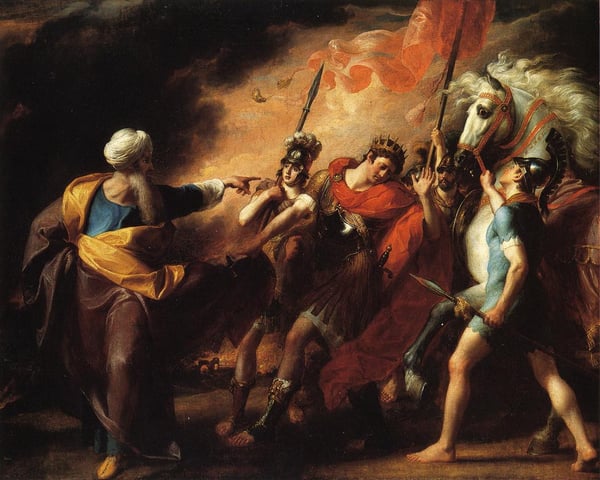
John Singleton Copley’s Saul Reproved by Samuel for Not Obeying the Commandments of the Lord is a compelling example of Neoclassical history painting, a genre that sought to elevate moral and civic virtue through scenes from antiquity or scripture. Executed during Copley’s mature period in London, the work demonstrates his mastery of theatrical composition and psychological intensity—traits that distinguish his contribution to the Neoclassical movement.
The painting’s significance lies in its dramatic juxtaposition of divine judgment and human frailty. Copley captures the precise moment of confrontation: the prophet Samuel, stern and immovable, delivers God’s rebuke to King Saul, who gestures defensively, his posture betraying a mixture of defiance and despair. The composition is carefully balanced—Samuel’s upright, commanding presence contrasts with Saul’s bowed, almost recoiling figure—emphasizing the moral hierarchy central to Neoclassical ideals. Copley’s use of clear, sculptural forms and a restrained palette aligns with the period’s preference for clarity and order, yet he infuses the scene with a palpable emotional tension that makes the biblical lesson feel immediate and urgent.
What sets this work apart within Copley’s oeuvre is his ability to blend the grand manner of European Neoclassicism with a distinctly American sensibility—a commitment to narrative legibility and moral instruction. The painting not only illustrates a scriptural lesson about obedience but also serves as a visual sermon on the dangers of pride and the necessity of humility before divine or civil authority. By doing so, Copley elevates a specific biblical episode into a timeless meditation on leadership, conscience, and justice, reinforcing the Neoclassical belief that art should both delight and instruct. This work thus stands as a testament to Copley’s ambition to rival the great history painters of his day while remaining grounded in the storytelling traditions that made his art accessible to a broad public.
Visuell ähnlich
20 Werke mit ähnlicher Komposition und Farbpalette
Alexander the Great founding Alexandria
Placido Costanzi
King Lear Weeping over the Dead Body of Cordelia
James Barry
David Vencedor De Goliat
Palma il Giovane
The Apotheosis of Emperor Joseph II
Heinrich Friedrich Fuger
The Conversion of Saint Paul
Karel Dujardin
The Consequences of War
Peter Paul Rubens
De Vredesonderhandelingen Tussen Claudius Civilis En Quintus Petillius Cerealis Op De Afgebroken Brug
Ferdinand Bol
Queen Zenobia before Emperor Aurelianus
Giovanni Battista Tiepolo
The Dismissal of the Lictors
Peter Paul Rubens
The wives of Darius before Alexander the great
Pompeo Batoni
The Combat of Mars and Minerva
Jacques-Louis David
Aeneas Carrying Anchises
Charles-Andre van Loo (Carle van Loo)
David and Abigail
Jan Cossiers
San Giacomo Nella Battaglia Di Compostela
Giulio Cesare Procaccini
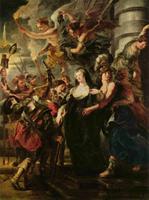
17. The Flight from Blois
Peter Paul Rubens
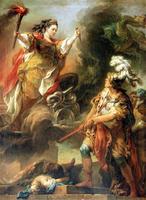
Mlle Clairon en Médée
Charles-Andre van Loo (Carle van Loo)
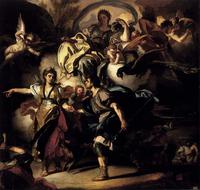
The Royal Hunt of Dido and Aeneas
Francesco Solimena
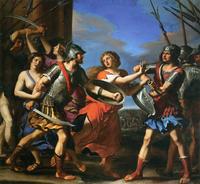
Hersilia Separating Romulus and Tatius
Guercino
The Death of Lucretia
Gavin Hamilton
Aeneas Rescues Anchises From The Burning Troy
Charles-Andre van Loo (Carle van Loo)