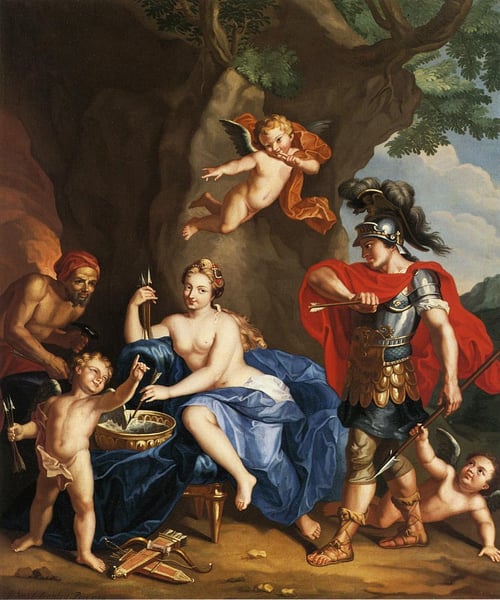
Expert analysis of John Singleton Copley’s The Forge of Vulcan
Style: Neoclassicism · Genre: mythological painting
Expert Analysis of "The Forge of Vulcan" by John Singleton Copley
This work by John Singleton Copley stands as a notable example of Neoclassical mythological painting. Although Copley is best known for his masterful portraits of colonial American figures, this piece demonstrates his engagement with the grand tradition of European history painting—a genre considered the highest ambition for an artist in the 18th century.
Significance within Neoclassicism:
As a Neoclassical work, "The Forge of Vulcan" embodies the movement’s core values: clarity of line, balanced composition, and a moral or intellectual narrative drawn from classical antiquity. Copley applies these principles to the mythological subject of Vulcan’s forge, a scene lifted from Ovid or Virgil. The painting likely emphasizes idealized forms and rational order—hallmarks of Neoclassicism—even while rendering the physicality of the god’s labor. This tension between the muscular, tactile world of the forge and the cool, intellectual restraint of the Neoclassical style is a key feature of the work’s significance.
Genre and Cultural Context:
As a mythological painting, the work aligns with the Enlightenment interest in reviving ancient stories as allegories for contemporary virtue. Copley would have been competing directly with European masters like Jacques-Louis David, who similarly used classical myth to comment on duty and craftsmanship. For an American-born artist such as Copley, tackling this subject was a bold declaration of his ambition to join the international Neoclassical movement—a step beyond his celebrated portraiture.
Legacy:
The painting’s importance lies in its bridging of two worlds: the American colonial tradition of keen observation (evident in Copley’s early work) and the European academic ideal of history painting. While not as famous as his portraits, "The Forge of Vulcan" reveals Copley’s skill in adapting Neoclassical conventions to a vivid, narrative scene—marking him as a pioneering figure who brought American art into the orbit of European classicism.
Museum / Gallery
Visually similar
20 works with related composition and palette
Mars and Venus United by Love
Paolo Veronese
Perseus Frees Andromeda
Theodoor van Thulden
Aeneas Receiving a New Set of Armour from Venus
Ferdinand Bol
Dido and Aeneas
Pompeo Batoni
harles and Ubalde, surrounded by nymphs on their way to rescue Renaud from the Palais d'Armide
Louis Jean Francois Lagrenee
Rinaldo and Armida
Sebastiano Conca
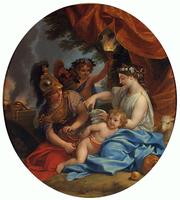
Venus Clipping Cupid’s Wings
Charles Le Brun
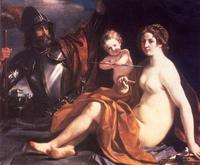
Venus, Mars and Cupid
Guercino
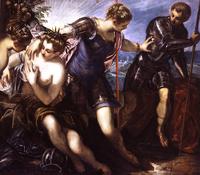
Pallas Athena Drives Away Mars
Tintoretto
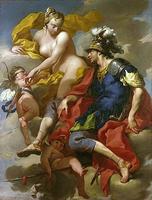
Venus and Mars
Giambattista Pittoni
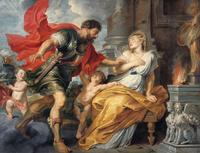
Mars and Rhea Silvia
Peter Paul Rubens
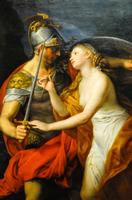
Peace and War
Pompeo Batoni
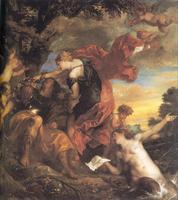
Rinaldo and Armida
Anthony van Dyck
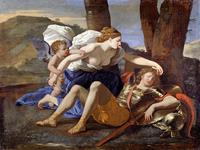
Rinaldo and Armida
Nicolas Poussin
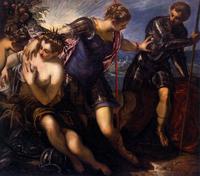
Minerva Sending Away Mars from Peace and Prosperity
Tintoretto
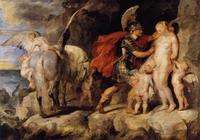
Perseus Freeing Andromeda
Peter Paul Rubens
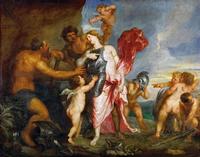
Thetis Receiving the Weapons of Achilles from Hephaestus
Anthony van Dyck
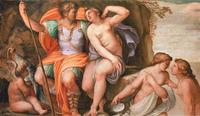
Venus and Mars
Agostino Carracci
An Allegory of Love
Benvenuto Tisi
Venere Tenta Di Trattenere Adone Dall'andare a Caccia
Giovanni Battista Gaulli