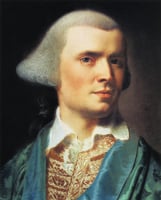
Analisi esperta di Charles Pelham di John Singleton Copley
Stile: Neoclassicism · Genere: portrait
As an expert art historian, I offer the following analysis of "Charles Pelham" by John Singleton Copley, based solely on the supplied structured facts:
Analysis of "Charles Pelham" by John Singleton Copley (c. 1765–1770, Neoclassicism, Portrait)
John Singleton Copley’s "Charles Pelham" is a compelling example of Neoclassical portraiture that bridges the rigorous order of classical form with the intimate psychological realism for which the artist is renowned. While Copley is often celebrated as a master of colonial American portraiture, this work demonstrates his full integration of Neoclassical ideals—clarity, restraint, and dignified composition—into a genre that typically demands direct engagement with the sitter’s character.
Significance within Neoclassicism:
Unlike the theatrical dynamism of the Baroque, Neoclassical portraiture emphasized harmony, balance, and moral virtue. In "Charles Pelham", Copley achieves this through a controlled structure: the sitter’s posture is upright and poised, with a clear silhouette that evokes classical statuary. The composition likely employs a strong vertical axis and minimal background distraction, directing focus to Pelham’s face and bearing—a hallmark of the period’s belief that calm reason and personal integrity should be visible in portraiture.
Significance within the Portrait Genre:
Copley’s significance lies in his ability to merge Neoclassical formality with a distinct naturalism. The rendering of Pelham’s features avoids idealization; instead, Copley captures specific flesh tones, subtle modeling, and a direct, contemplative gaze that suggests individual intellect and social standing. This dual emphasis—on classical order and verisimilitude—places the work at a pivotal moment when portraiture moved from mere likeness to an embodiment of Enlightenment ideals: the rational, self-possessed individual.
Overall Importance:
"Charles Pelham" stands as a testament to Copley’s mastery of Neoclassical principles while simultaneously anticipating the psychological depth that would define later portraiture. Its significance is not merely stylistic but also conceptual: it uses the language of classical calm to articulate the sitter’s personal dignity and social role, making the work both a period-defining artifact and a timeless study of character.
Museum / Gallery
Visivamente simili
20 opere con composizione e palette affini
William Murray, 1st Earl of Mansfield
Jean-Baptiste van Loo
Anthony Champion
Charles Turner
Retrato de caballero
Antoine-Francois Callet
Portrait of John Simpson, of Bradley Hall, Northumberland
Joshua Reynolds
The Rt. Honorable Stephen Poyntz, of Midgeham, Berkshire
Jean-Baptiste van Loo
Portrait of an Unknown Man (possibly General Hugh Warburton, 1695–1771)
Henry Pickering
Manuel De Roda Y Arrieta
Pompeo Batoni
Epes Sargent II
John Singleton Copley
John Adams
William Williams
Peregrine Cust (1723–1785), MP
George Romney
Percivall Pott (1713–1788)
George Romney
Captain Henry Osborn
Claude Arnulphy
Portrait of a Gentleman (said to be William Pitt the Elder, 1st Earl of Chatham, 1708–1780)
Joseph Highmore
Portrait of an Unknown Young Gentleman in a Grey Coat and Light Blue Waistcoat
Henry Pickering
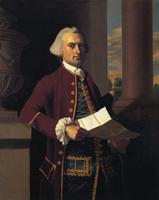
Woodbury Langdon
John Singleton Copley
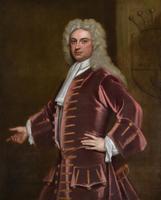
William Coventry, 5th Earl of Coventry (1676-1751)
Godfrey Kneller
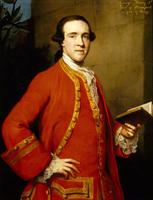
George Harry Grey, 5th Earl of Stamford
Anton Raphael Mengs
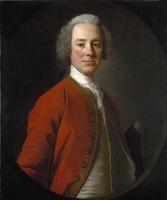
John Campbell, 4th Earl of Loudoun
Allan Ramsay
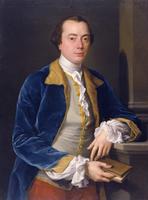
Joseph Henry of Straffan
Pompeo Batoni
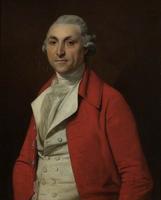
Charles Dumergue (1739–1814)
Johann Zoffany