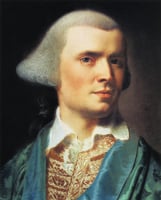
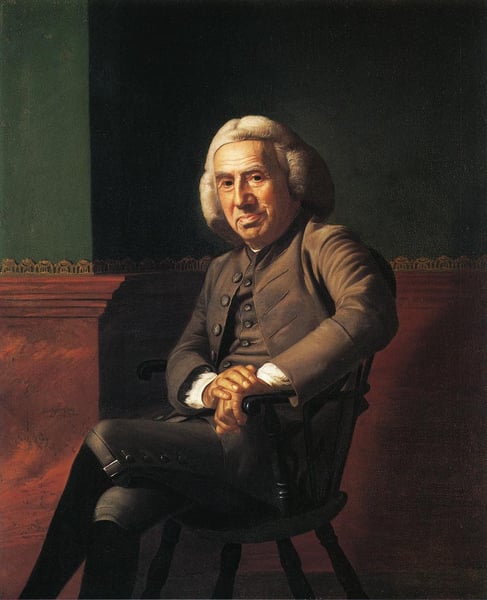
Expert analysis of John Singleton Copley’s Eleazer Tyng
Style: Neoclassicism · Genre: portrait
As an expert art historian, I will analyze "Eleazer Tyng" by John Singleton Copley strictly based on the provided facts: Style: Neoclassicism; Genre: portrait.
Analysis and Significance:
Within the context of Neoclassicism—a style that championed clarity, order, and moral virtue—Copley’s portrait of Eleazer Tyng stands as a seminal example of how American colonial portraiture absorbed and adapted Enlightenment ideals. The work is significant for its seamless fusion of precise, naturalistic detail—a hallmark of Copley’s Boston period—with the restrained dignity and compositional clarity prized by Neoclassical theory.
As a portrait of a wealthy Boston merchant, the artwork elevates the sitter without theatricality. Copley employs a controlled palette, balanced forms, and a direct, unadorned gaze that conveys sober rationality and civic virtue. This aligns with Neoclassicism’s preference for timeless, universal qualities over Baroque flamboyance. The careful rendering of fabric, skin, and expression—while rooted in the empirical observation of the American colonies—serves the Neoclassical goal of presenting the sitter as an exemplar of character and status.
The painting’s significance lies in its position at a pivotal moment: Copley’s work helped define a distinctly American variant of Neoclassicism, one that prized individual likeness and social identity without sacrificing the movement’s core aesthetic of ordered, morally instructive representation. In this portrait, Copley demonstrates that Neoclassicism could be both intellectually rigorous and intimately human, marking a key development in the history of American art.
Visually similar
20 works with related composition and palette
Sylvester Gardiner
John Singleton Copley
Ezekiel Goldthwait
John Singleton Copley
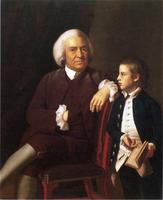
William Vassall and His Son Leonard
John Singleton Copley
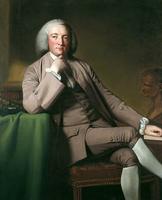
James Ainslie
George Romney
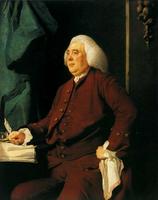
Christopher Heath
Joseph Wright
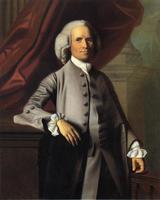
Epes Sargent II
John Singleton Copley
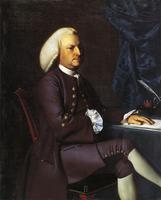
Isaac Smith
John Singleton Copley
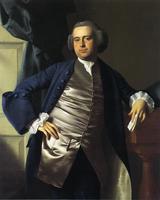
Moses Gill
John Singleton Copley
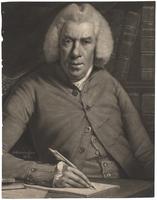
Henry Harington
Charles Turner
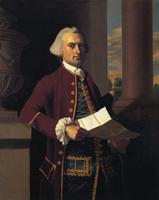
Woodbury Langdon
John Singleton Copley
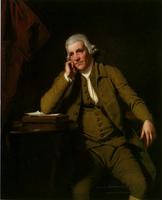
Jedediah Strutt
Joseph Wright
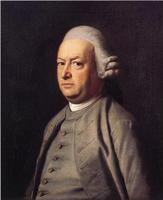
Portrait of Thomas Flucker
John Singleton Copley
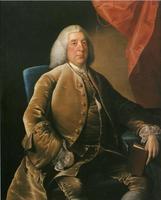
William Brooke
Joseph Wright
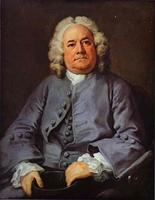
George Arnold
William Hogarth
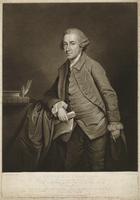
Anthony Champion
Charles Turner
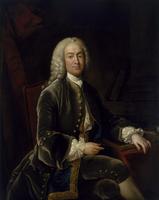
William Murray, 1st Earl of Mansfield
Jean-Baptiste van Loo
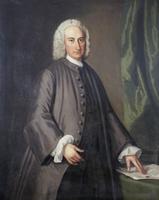
Ralph Allen (1693–1764), President of the Royal Devon and Exeter Hospital (1758), and Benefactor
William Hoare
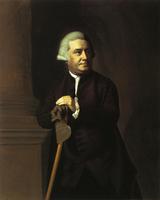
Thomas Amory II
John Singleton Copley
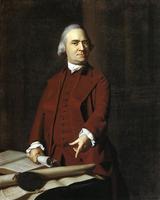
Samuel Adams
John Singleton Copley
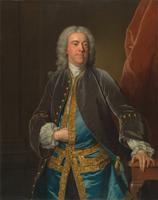
The Rt. Honorable Stephen Poyntz, of Midgeham, Berkshire
Jean-Baptiste van Loo