Expert analysis of Francois Boucher’s Pan and Syrinx
Style: Rococo · Genre: mythological painting
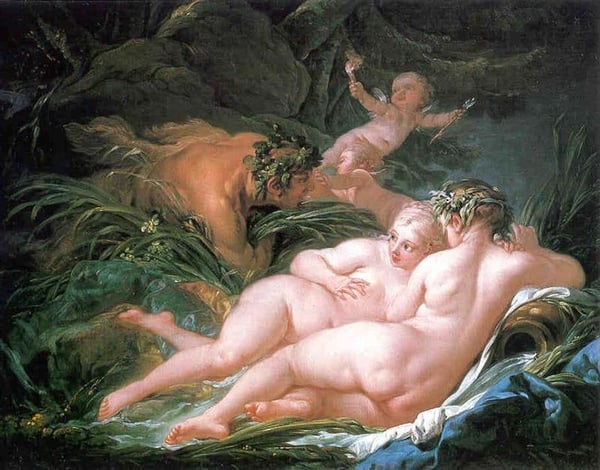
François Boucher's Pan and Syrinx exemplifies the Rococo style through its playful, sensual treatment of a classical mythological subject. The painting draws from Ovid's Metamorphoses, depicting the woodland god Pan’s pursuit of the nymph Syrinx, who famously escapes by transforming into reeds. Boucher transforms this dramatic narrative into a lighthearted, decorative scene, characteristic of Rococo’s preference for pleasure over pathos.
The work’s significance lies in how it embodies the Rococo fascination with mythological painting as an excuse for eroticized, pastoral fantasy. Boucher softens the myth’s violent chase into an elegant, almost coquettish encounter, emphasizing sinuous curves, delicate pastel hues, and a lush, idyllic landscape. The figures are idealized and refined, with Pan’s rustic goat-legs and Syrinx’s flowing drapery rendered in the fluid, decorative lines typical of the period. Rather than moralizing or heroic, the painting invites a sophisticated, aristocratic audience to delight in sensual beauty and playful flirtation—a hallmark of Rococo’s celebration of leisure, love, and artifice. In this, Pan and Syrinx stands as a quintessential example of how the style elevated mythological genre painting into a vehicle for exquisite, worldly charm.
Visually similar
20 works with related composition and palette
Classical Copy
Georgi Mashev
Venus and Love discovered by a satyr
Correggio
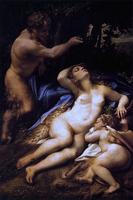
Venus, Satyr and Cupid
Correggio
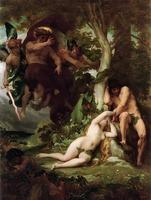
The Expulsion of Adam and Eve from the Garden of Paradise
Alexandre Cabanel
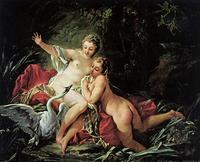
Leda and the Swan
Francois Boucher
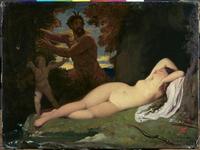
Jupiter and Antiope
Jean Auguste Dominique Ingres
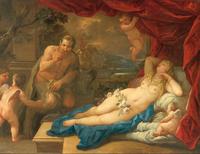
Jupiter and Antiope
Luca Giordano
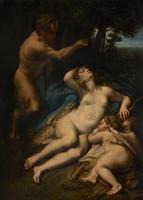
Jupiter and Antiope
Correggio
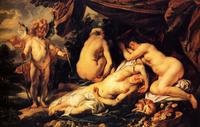
Love of Cupid and Psyche
Jacob Jordaens
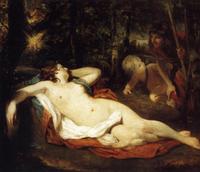
Cimon and Iphigenia
Joshua Reynolds
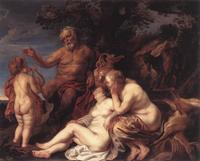
Education of Jupiter
Jacob Jordaens
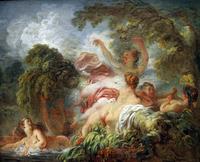
The Bathers
Jean-Honore Fragonard
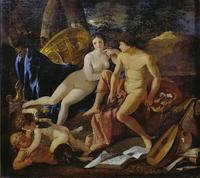
Venus and Mercury
Nicolas Poussin
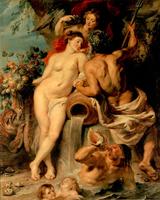
The Union of Earth and Water
Peter Paul Rubens
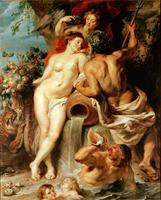
The Union of Earth and Water Antwerp and the Scheldt
Peter Paul Rubens
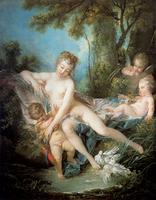
Venus comforts Amor
Francois Boucher
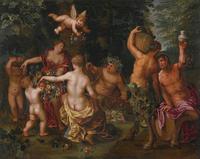
The Feast of Bacchus
Jan Brueghel the Younger
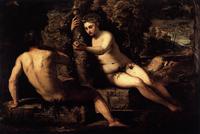
The Temptation of Adam
Tintoretto
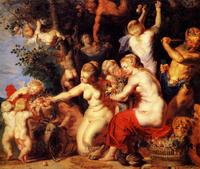
Homage to Pomona
Jacob Jordaens
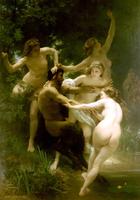
Nymphs and Satyr
William-Adolphe Bouguereau