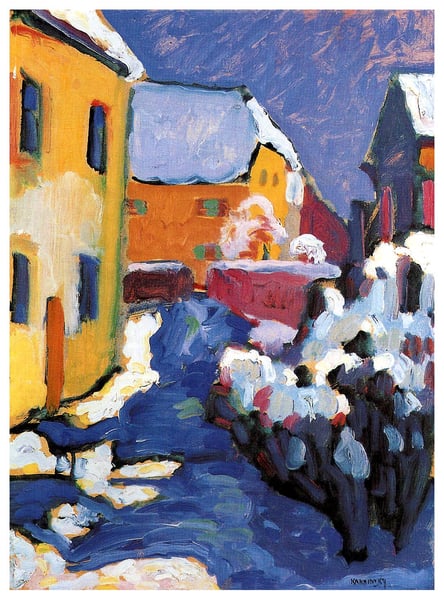
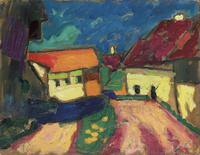
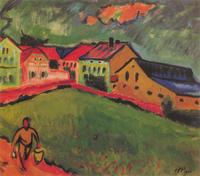
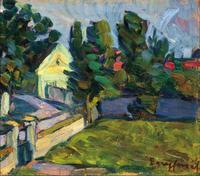
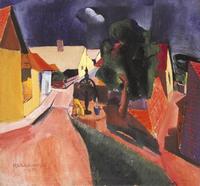
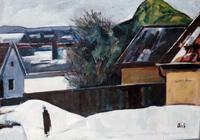
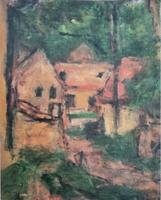
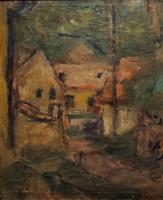
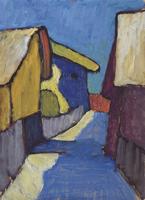
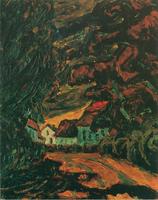
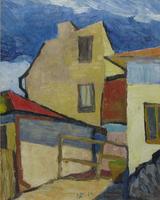
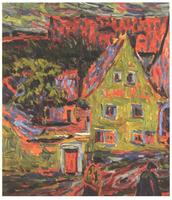
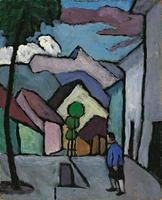
This artwork, "Cemetery and vicarage in Kochel" by Wassily Kandinsky, is significant as an early Expressionist cityscape that embodies the movement’s core principles. Painted during Kandinsky’s transition toward abstraction, it uses the subject of a cemetery and vicarage not for topographical accuracy but as a vehicle for emotional and spiritual expression. The work’s style—Expressionism—is defined by a deliberate departure from naturalistic representation: forms are simplified, spatial relationships are distorted, and color is employed for its psychological impact rather than its descriptive function. As a cityscape, it transforms a mundane rural scene into a charged, subjective vision, reflecting Kandinsky’s belief that art should convey inner necessity rather than outer reality. This piece thus marks a crucial step in his move away from figurative painting, helping to establish Expressionism as a means of accessing deeper, non-material truths through bold, anti-naturalist composition.