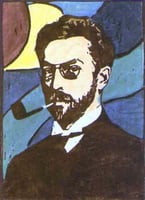
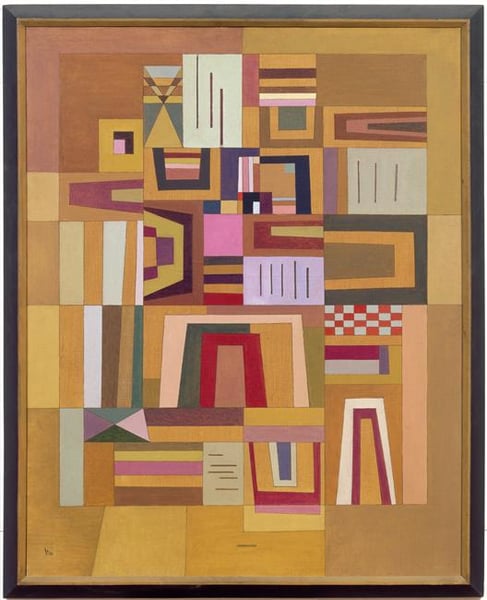
Compensation rose
Dettagli
Analisi esperta di Compensation rose di Wassily Kandinsky
Stile: Abstract Art · Genere: abstract
Artwork: Compensation Rose
Artist: Wassily Kandinsky
Style/Period: Abstract Art (Bauhaus period, early 20th century)
Genre: Abstract
Expert Analysis
Wassily Kandinsky is widely regarded as a foundational figure in abstract art, and Compensation Rose exemplifies his mature, theoretical approach to non-representational painting. Created during his tenure at the Bauhaus (where he codified his ideas in Concerning the Spiritual in Art and Point and Line to Plane), this work embodies his belief that abstract forms and colors could directly communicate spiritual and emotional truths.
Significance within Abstract Art:
- Color as Emotion: Kandinsky assigned specific spiritual values to colors. The titular “rose” likely refers not to a literal flower but to a nuanced balance of warm pinks, reds, and whites—hues he associated with tenderness, energy, and purity. The “compensation” in the title suggests a deliberate interplay of opposing forces: perhaps cool blues or greens offset the warmth, creating a dynamic equilibrium.
- Geometric and Organic Tensions: Typical of his Bauhaus period, the composition likely juxtaposes precise geometric shapes (circles, lines, triangles) with looser, painterly gestures. This duality mirrors Kandinsky’s search for a universal visual language—one that could reconcile the rational with the intuitive.
- Synesthetic Ambition: Kandinsky approached painting as akin to music. Compensation Rose may function as a visual chord: the central rose hue acts as a “tonic,” while surrounding forms and colors modulate tension and release. This synesthetic quality advanced the concept of “absolute painting,” where subject matter is entirely internal.
Why It Matters:
Compensation Rose demonstrates how abstraction evolved from pure expression to a disciplined system of visual grammar. It challenges viewers to experience color and form as autonomous realities—not depictions of the visible world, but windows into the spiritual. In the context of early modernism, works like this redefined what painting could communicate: not a story or a landscape, but a direct, visceral encounter with beauty and meaning.
Museum / Gallery
Visivamente simili
20 opere con composizione e palette affini
Untitled
Ad Reinhardt
Composition No. 4 (Leaving The Factory)
Bart van der Leck
Untitled
Bart van der Leck
Composition XIII
Theo van Doesburg
Relational Painting
Fritz Glarner
Untitled
Adolf Fleischmann
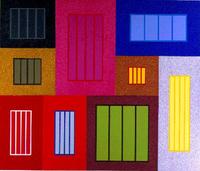
The Time Machine
Peter Halley
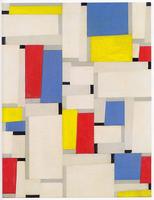
Relational Painting
Fritz Glarner
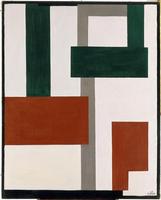
Mural
Fernand Leger
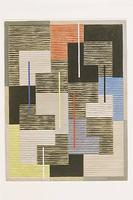
Untitled
Adolf Fleischmann
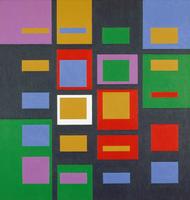
Untitled
Verena Loewensberg
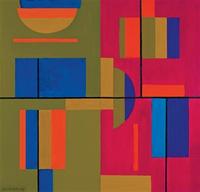
Untitled
Ilya Bolotowsky
Untitled
Ilya Bolotowsky
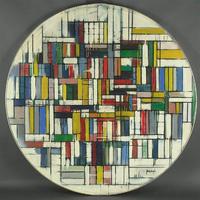
Circle III
Robert Goodnough
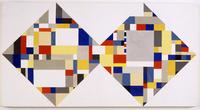
Double Diamond
Ilya Bolotowsky
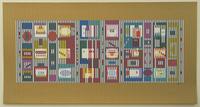
Coordination II
Yaacov Agam
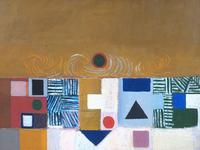
Square Motif, Blue and Gold: The Eclipse
Victor Pasmore
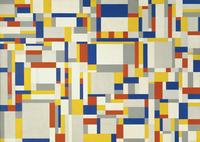
Large Architectural
Ilya Bolotowsky
Legendary Landscape (Azul y Naranja)
Gunther Gerzso
Self Portrait
Luchita Hurtado