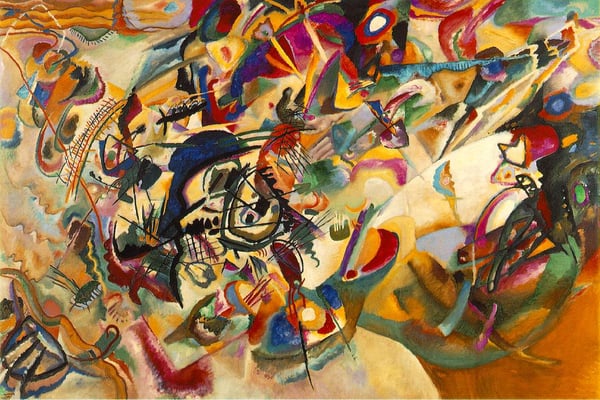
Composition VII
Details
Expert analysis of Wassily Kandinsky’s Composition VII
Style: Abstract Art · Genre: abstract
Expert Art Historical Analysis: "Composition VII" by Wassily Kandinsky
Based solely on the provided data, "Composition VII" is a quintessential work of the Abstract Art movement, specifically falling under the abstract genre. Its significance lies in how it embodies the core principles of abstraction at a pivotal moment in early 20th-century modernism.
Key Significance within Abstract Art:
-
Pioneering Non-Objectivity: As an abstract work, "Composition VII" deliberately renounces any recognizable subject or narrative. This was a radical break from centuries of Western art tradition, which had always depicted the visible world. Kandinsky’s painting instead presents pure form, line, and color as the sole subjects, asserting that art can be as self-sufficient as music.
-
Synthesis of Chaos and Order: The painting epitomizes the tension between explosive, dynamic energy and rigorous compositional structure—a hallmark of Kandinsky’s “Compositions” series. The visual complexity—swirling shapes, intersecting lines, and bursts of color—is not random but carefully organized according to an internal logic. This demonstrates that abstract art could achieve the same balance and depth of expression as representational painting, but through non‑mimetic means.
-
Expression of Inner Necessity: Within the Abstract Art style, Kandinsky championed the idea that colors and forms carry emotional and spiritual resonance. "Composition VII" is significant for how it deploys chromatic contrasts (bright yellows against deep blues, reds, and blacks) and rhythmic forms to convey a sense of turbulent energy—often interpreted as a metaphor for cosmic creation, conflict, or spiritual awakening. It stands as a landmark of abstraction’s claim to convey profound meaning without relying on literal imagery.
-
Defining Moment for the Style: Created during a period when abstract art was still emerging, "Composition VII" is widely regarded as one of the most complex and masterful examples of early abstraction. It consolidates Kandinsky’s earlier experiments with color and form into a sprawling, orchestrated composition that would influence generations of abstract and non‑objective artists.
In summary, the artwork’s significance within the Abstract Art movement derives from its uncompromising commitment to non‑figurative form, its demonstration that abstraction can achieve compositional unity and emotional depth, and its role as a foundational statement that helped define the possibilities of abstract painting as a serious, autonomous artistic language.
Museum / Gallery
Genre
Style
Visually similar
20 works with related composition and palette
Study for "Composition VII"
Wassily Kandinsky
The last judgment
Wassily Kandinsky
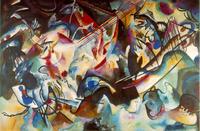
Composition VI
Wassily Kandinsky
My Grandmother's Lorgnette
Endre Rozsda
En quete de l'image
Andre Lanskoy
Creation of the world
Carloluigi Colombo
-
Karel Appel
untitled
Evan Magar
Toujours vivre
Andre Lanskoy
Fugue
Wassily Kandinsky
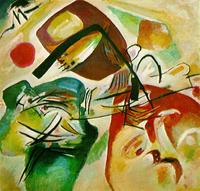
Picture with a black arch
Wassily Kandinsky
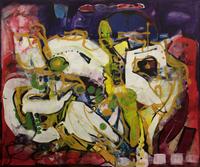
Armageddon
Artin Demirci
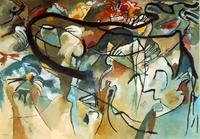
Composition V
Wassily Kandinsky
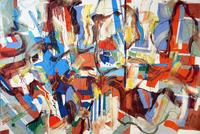
Invasion of the Colors (from the series Memory Pyramid)
Romul Nutiu
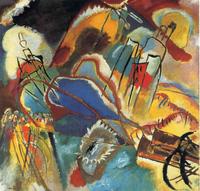
Improvisation 30 (Cannons)
Wassily Kandinsky
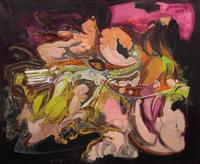
Armageddon
Artin Demirci
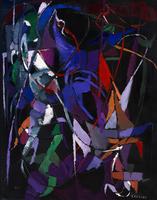
L'eclair magique
Andre Lanskoy
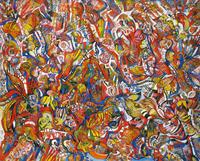
Hommage à Stravinsky
Endre Rozsda
Untitled
Willem de Kooning
In Grey
Wassily Kandinsky