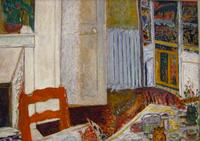
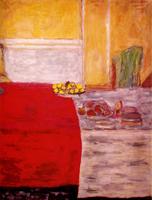
Expert Analysis: "Interior (My dining room)" by Wassily Kandinsky
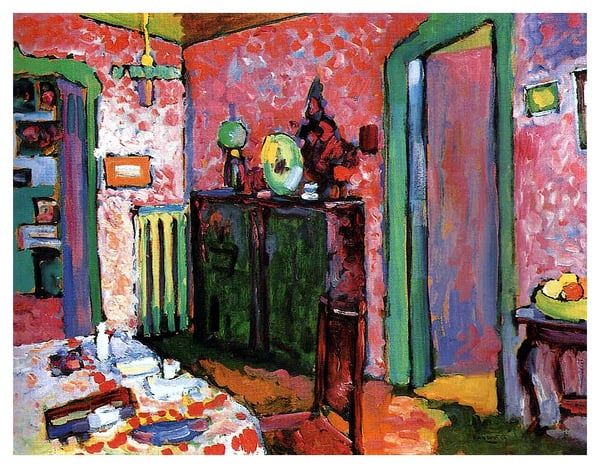
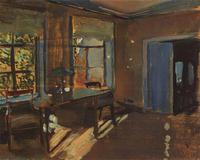
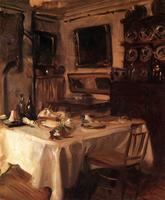
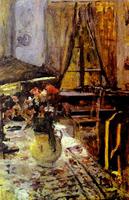
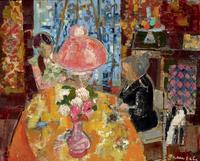
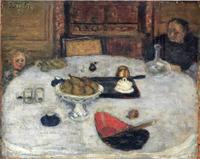
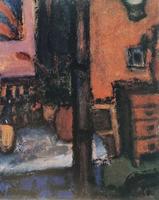
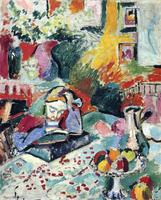
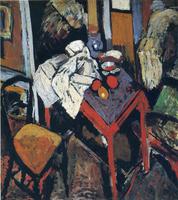
This work, an interior scene by Wassily Kandinsky, is significant as a pivotal example of early Expressionism—a movement that prioritized emotional intensity over literal representation. Painted before his shift to pure abstraction, it captures a domestic space through the lens of subjective experience.
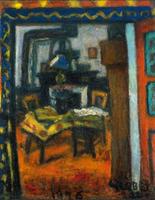
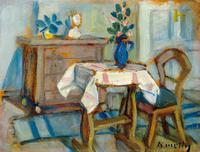
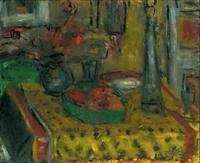
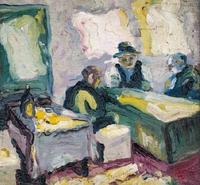
Kandinsky’s dining room is not a documentary record but a psychological projection. The style is marked by bold, non-naturalistic color and simplified, distorted forms, typical of Expressionist interiors that sought to convey the artist’s inner state rather than objective reality. By choosing a private, everyday space, Kandinsky elevates the mundane into a vehicle for deep emotion—a hallmark of Expressionist philosophy.
The significance lies in its bridging of representational and abstract tendencies: recognizable elements (table, chairs, room) are reduced to essential shapes and vibrant contrasts, demonstrating Kandinsky’s growing interest in the expressive power of color and form independent of subject matter. This interior is thus a crucial step toward his later groundbreaking abstract works, where color and line would become the sole carriers of meaning.
Within the period, this piece exemplifies how Expressionist artists transformed the traditional interior genre into a site for exploring psychological tension and spiritual resonance, paving the way for modernist explorations of perception and subjectivity.