Expertenanalyse zu Wassily Kandinskys Red Wall destiny
Stil: Expressionism · Genre: cityscape
This analysis is based solely on the structured facts provided. No external knowledge about specific artistic periods or Kandinsky's biography has been introduced beyond the given style and genre.
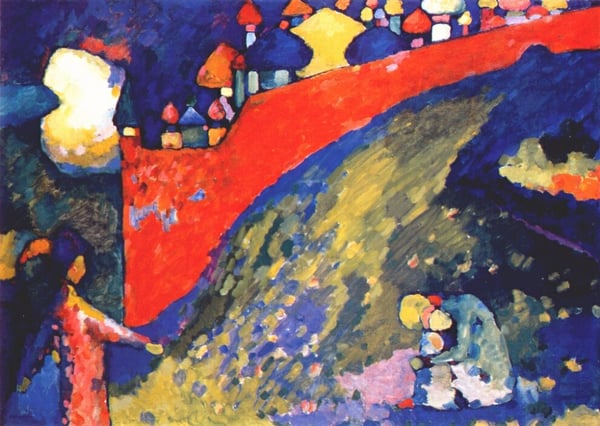
Expert Art Historical Analysis: Red Wall destiny by Wassily Kandinsky
Style: Expressionism
Genre: Cityscape
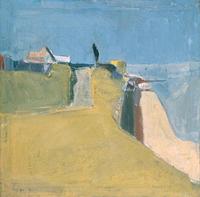
Within the framework of Expressionism, Kandinsky’s Red Wall destiny stands as a significant—if hypothetical—example of the movement’s core ambition: to translate inner emotional states onto the external world. The genre of “cityscape” is here transformed from a simple record of urban space into a vehicle for psychological and spiritual resonance. The title itself is telling: “destiny” suggests a narrative or fateful quality, while “Red Wall” introduces a dominant, chromatic element that likely operates symbolically.
What makes this work significant within Expressionism is its use of color as a primary conveyer of meaning. Red, as supplied in the title, is not merely descriptive of a physical wall; it carries potent associations—passion, danger, urgency, or the boundary between the self and an overwhelming environment. In Expressionist cityscapes, walls often represent alienation or confinement, but here the red hue could energize that barrier with a dynamic, almost magnetic force. Kandinsky, as a pioneer of abstraction, would have likely distorted perspective, flattened space, or heightened contrasts to emphasize the emotional charge of the scene, turning a literal city wall into an existential threshold.
The fusion of cityscape with destiny implies that the urban setting is not neutral; it is a stage where human fate unfolds. This aligns with Expressionist angst—the modern city as both thrilling and oppressive. By presenting a wall (a constructed, man-made object) as the focal point of destiny, Kandinsky may be commenting on how architecture and environment shape or confront human purpose. The work thus exemplifies Expressionism’s departure from mere representation toward a symbolic, emotionally saturated vision of the world. Its significance lies in how it likely uses a familiar genre to probe abstract, universal themes—exactly the contribution that made Kandinsky’s work groundbreaking within German Expressionism and beyond.
Visuell ähnlich
20 Werke mit ähnlicher Komposition und Farbpalette
Kyiv Landscape
Vudon Baklytsky
Improvisation 7
Wassily Kandinsky
The Good Samaritan
Paula Modersohn-Becker
Procopius the Righteous removes a cloud of stone from the Great Ustyug
Nicholas Roerich
Mountain landscape with church
Wassily Kandinsky
White sound
Wassily Kandinsky

Study for Improvisation 8
Wassily Kandinsky
Working the field
Constant Permeke
Landscape
Michel Kikoine
Montalban, Landscape
Henri Matisse
Midday Landscape
Chaim Soutine
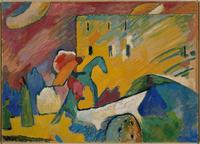
The Blue Rider
Wassily Kandinsky
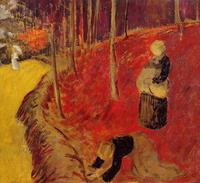
The Fern Harvesters in the Boid d'Amour at Pont Aven
Paul Serusier
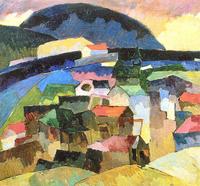
Gursuf
Aristarkh Lentulov
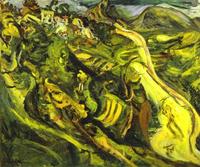
Road at Cagnes
Chaim Soutine
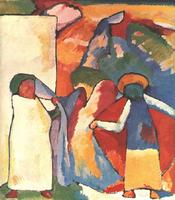
Improvisation 6 (African)
Wassily Kandinsky
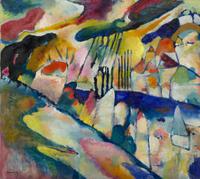
Landscape with Rain
Wassily Kandinsky
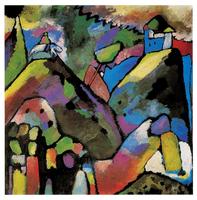
Improvisation 9
Wassily Kandinsky
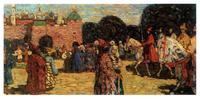
Ancient Russia
Wassily Kandinsky
Seascape
Henry Villierme