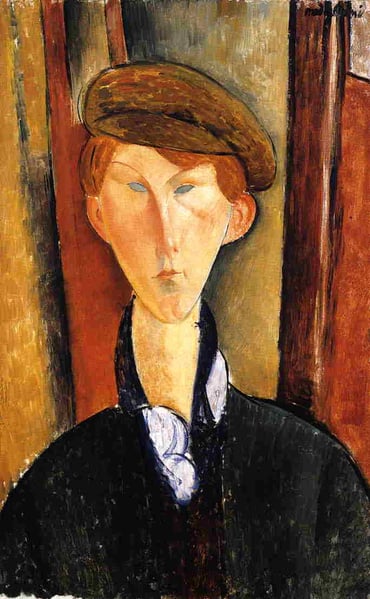
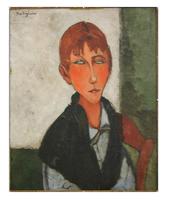
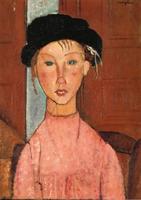
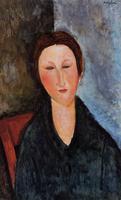
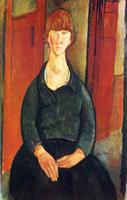
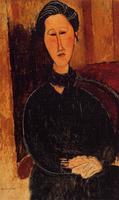
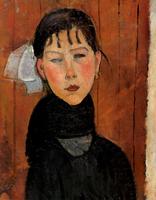
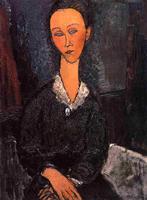
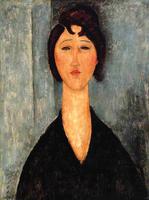
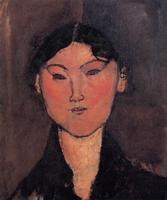
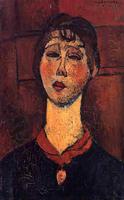
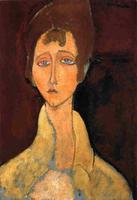
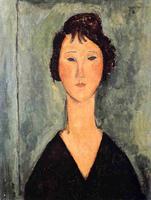
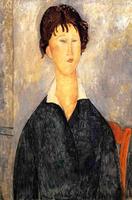
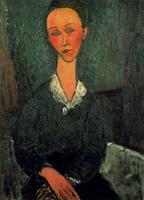
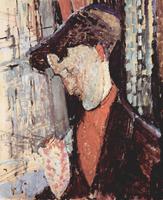
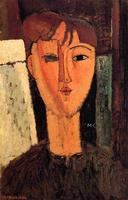
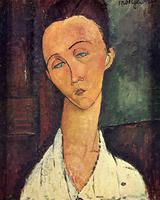
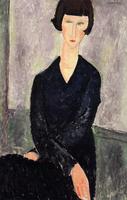
In Amedeo Modigliani’s Young Man with Cap, the artist distills the essence of Expressionist portraiture through radical formal simplification. Working within the genre of portraiture, Modigliani abandons naturalistic proportion in favor of an elongated, mask-like face, a hallmark of his mature style. The young man’s sloping shoulders, sinuous neck, and almond-shaped eyes—set slightly askew—convey a psychological intensity that transcends mere likeness. The cap itself becomes a geometric anchor, framing a face that seems both intimate and remote.
What makes this work significant is how Modigliani synthesizes influences from African sculpture, Italian trecento painting, and the emotive distortions of Expressionism into a singular, haunting vision. The result is a portrait that does not record a sitter but rather constructs an inner world—melancholic, detached, yet profoundly human. In Young Man with Cap, Modigliani demonstrates that the expressive power of a face lies not in precision, but in the eloquent rhythm of line and the suggestive power of simplified form.