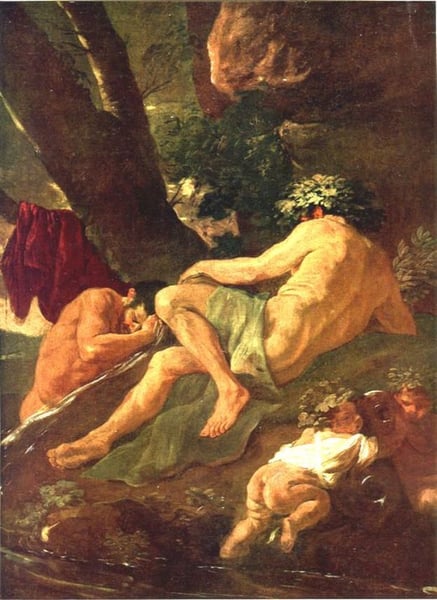
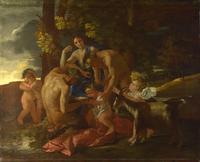
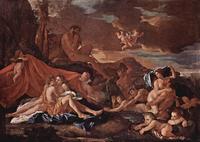
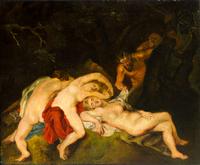
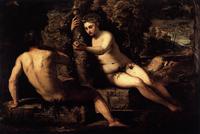
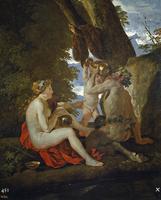
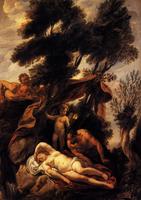
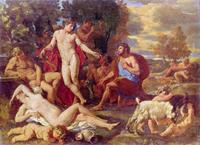
Nicolas Poussin’s Midas washing at the source of the River Pactolus is a quintessential example of Classicism in mythological painting, celebrated for its intellectual clarity, compositional harmony, and moral restraint. The work depicts the moment from Ovid’s Metamorphoses when King Midas, cursed with the golden touch, seeks to purify himself in the Pactolus River—a scene that embodies the classicist ideal of using ancient myth to convey a rational, didactic message about human folly and redemption.
Poussin’s significance within the Classical style lies in his rigorous adherence to order, balance, and narrative legibility. The composition is structured with geometric precision: the figure of Midas is placed at a calm, symmetrical riverbank, his gesture of washing rendered with measured grace rather than dramatic agitation. The landscape is idealized—serene trees, luminous sky, and flowing water—all subordinated to the story’s moral core. Unlike the emotional turbulence of Baroque treatments of myth, Poussin emphasizes stoic reason: Midas’s act is not a frantic plea but a dignified ritual of cleansing.
The work also exemplifies Poussin’s role in defining French classicism, where mythological subjects serve as allegorical lessons. Here, the river’s golden sands (explaining the Pactolus’s wealth) become a symbol of the dangers of greed—a theme that aligns with Classicism’s focus on virtue, clarity, and universal human truths. Through its serene composition and restrained storytelling, the painting establishes Poussin as a master who advanced the classical tradition by transforming myth into a visual meditation on order, morality, and the enduring power of ancient narratives.