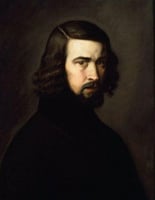
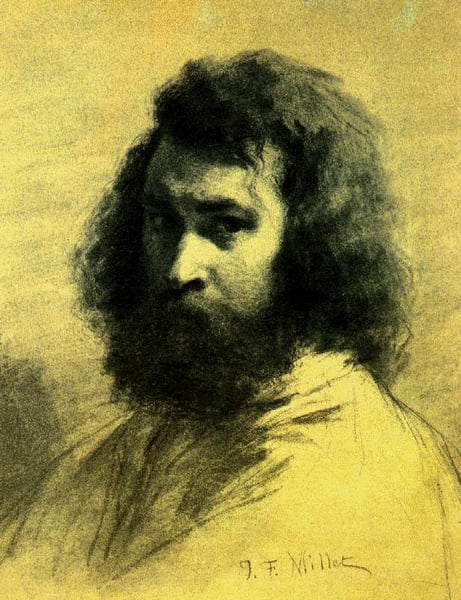
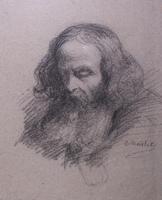
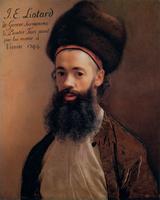
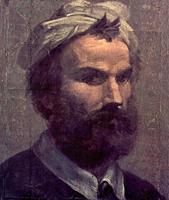
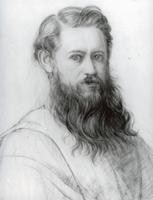
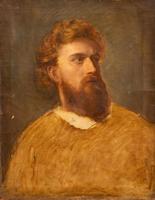
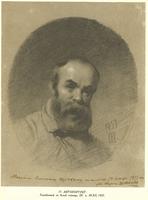
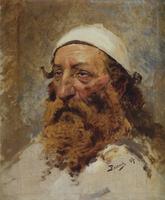
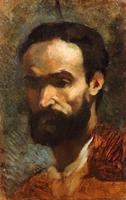
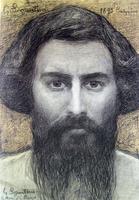
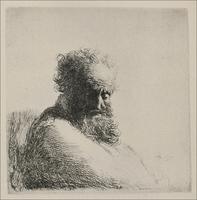
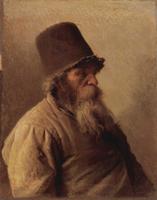
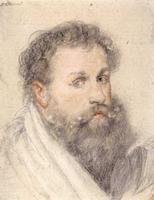
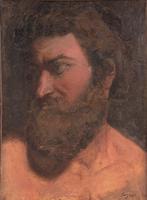
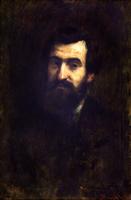
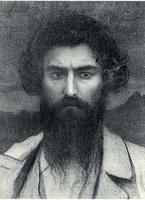
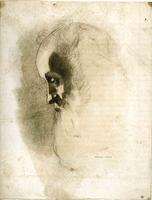
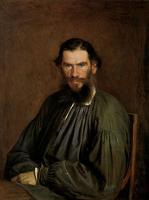
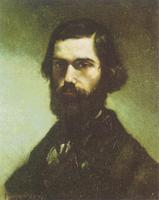
This self-portrait by Jean-François Millet is a defining example of Realism’s commitment to unidealized truth, applied directly to the artist’s own image. As a Realist work, it rejects the romanticized, heroic self-presentation common in earlier self-portraiture. Instead, Millet presents himself as a sober, working figure—an observer rather than a genius. The direct, unflinching gaze and subdued palette strip away theatricality, emphasizing authenticity over vanity.
Significantly, this portrait anchors Millet’s reputation as the painter of peasant life. By depicting himself with the same matter-of-fact gravity he afforded his rural subjects, he aligns his artistic identity with the dignity of labor. The work thus becomes a manifesto: the artist is not a privileged visionary but a chronicler of the real, equally subject to the quiet weight of existence. In the context of the Realist movement, this self-portrait stands as a powerful statement that even the artist’s own face deserves the same honest scrutiny as a field worker’s.