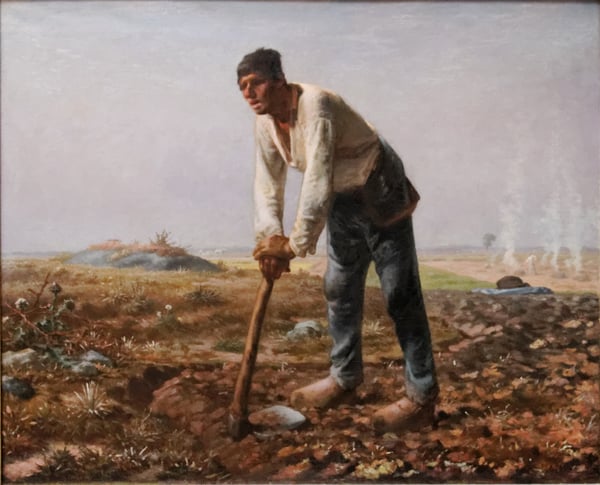
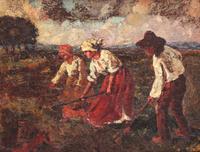
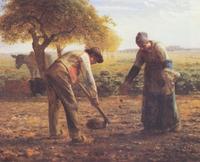
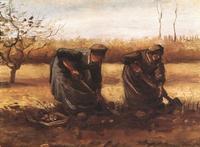
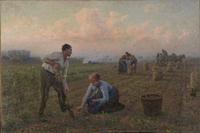
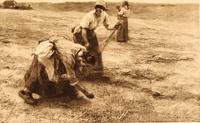
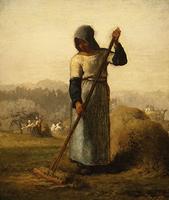
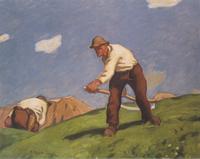
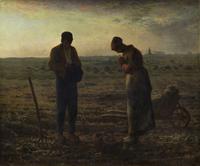
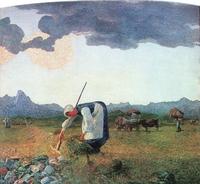
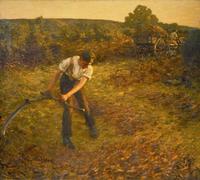
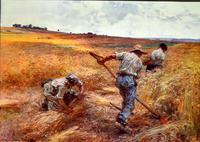
Jean-François Millet’s The Man with the Hoe is a defining work of the Realist movement and a landmark in genre painting. Its significance lies in its uncompromising depiction of rural labor as both heroic and tragic. Millet elevates a peasant—often invisible in art—to the scale and solemnity of a monumental figure. The painting’s raw, unidealized realism strips away pastoral sentiment; the man’s stooped posture, weathered hands, and exhausted expression silently critique the harshness of agricultural life. By focusing on the physical and psychological weight of manual work, Millet challenges academic conventions that reserved grandeur for historical or religious subjects, asserting that the dignity (and burden) of common labor is worthy of serious artistic contemplation. This work became a touchstone for later social realists and a potent symbol of the human condition under industrial and agrarian change.