Expertenanalyse zu Mary Cassatts The Two Sisters
Stil: Impressionism · Genre: portrait
Expert Analysis: "The Two Sisters" by Mary Cassatt
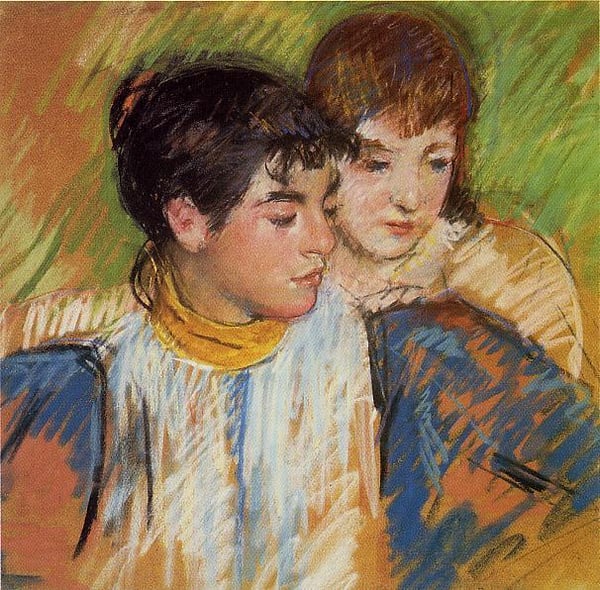
Mary Cassatt’s The Two Sisters (c. 1885) stands as a quintessential example of Impressionist portraiture, but its true significance lies in how the artist subverts conventional expectations of the genre. Working within the fluid, light-drenched idiom of Impressionism, Cassatt transforms a simple depiction of two young girls into a profound meditation on intimacy, the private sphere, and the modern female gaze.
Break from Tradition: Unlike conventional formal portraits of the era—which often emphasized status, stiff poses, and idealized beauty—Cassatt employs a candid, snapshot-like composition. The two sisters are captured in a moment of quiet connection, their faces close, with one arm draped affectionately across the other. This casual, everyday intimacy was a hallmark of Impressionism’s interest in modern life, but Cassatt deepens it by centering the emotional bond between the subjects rather than their social standing.
Technical Mastery of Impressionism: The painting is a tour de force of the Impressionist palette and brushwork. Cassatt uses soft, dappled strokes to model the girls’ faces and clothing, allowing light to shimmer across the canvas. The background is deliberately loose and suggestive—a wash of warm tones that avoids distracting from the figures. This handling of paint places the viewer in a fleeting, sensory moment, as if catching a passing gesture. At the same time, Cassatt’s composition is more grounded than that of many of her male contemporaries; her forms are sturdy and expressive, a quality she honed through her study of Japanese prints (visible in the flattened planes and asymmetrical balance).
Significance within Cassatt’s Oeuvre: The work exemplifies her lifelong dedication to portraying the lives of women and children with dignity and authenticity. As a female Impressionist working in a male-dominated Parisian art world, Cassatt brought a unique perspective to the theme of sisterhood. The Two Sisters avoids sentimentality; instead, it presents the girls as self-possessed, their gazes meeting (or one looking slightly away) in a way that suggests a shared secret. This psychological depth—achieved through subtle gestures and soft modeling—raises the portrait beyond mere likeness to a study of human connection.
Legacy: In the context of Impressionism, The Two Sisters demonstrates how the movement could elevate the ordinary into a subject worthy of serious artistic consideration. Cassatt’s focus on the private, domestic realm—often dismissed as trivial by her male peers—is here rendered with the same bold brushwork and sensitivity to light as Monet’s haystacks or Renoir’s picnics. The painting remains a key work in understanding how Impressionism expanded portraiture to include the emotional lives of its subjects, particularly those of women.
Visuell ähnlich
20 Werke mit ähnlicher Komposition und Farbpalette
Clissa Turned Left with Her Hand to Her Ear
Mary Cassatt
Portrait of a Young Woman
Mary Cassatt
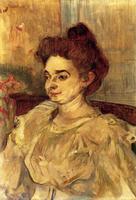
Mademoiselle Beatrice Tapie de Celeyran
Henri de Toulouse-Lautrec
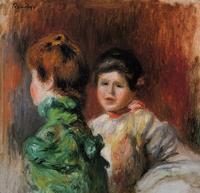
Study Two Women s Heads
Pierre-Auguste Renoir
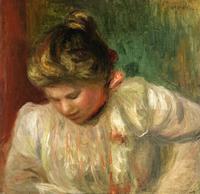
Bust of a Girl
Pierre-Auguste Renoir
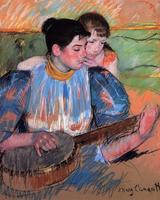
The Banjo Lesson
Mary Cassatt
Graziella
Pierre-Auguste Renoir
Head of Julie, Looking Down
Mary Cassatt
Women Admiring a Child
Mary Cassatt
Portrait of the Artist's Daughter
James Charles
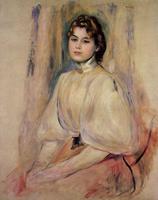
Seated Young Woman
Pierre-Auguste Renoir
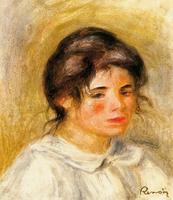
Portrait of Gabrielle
Pierre-Auguste Renoir
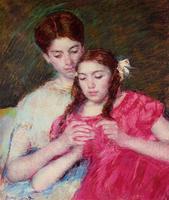
The Crochet Lesson
Mary Cassatt
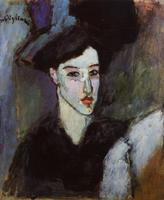
The Jewish Woman
Amedeo Modigliani
At the Milliner`s (study)
Pierre-Auguste Renoir
Study Portrait of Woman
Olga Boznańska
Woman`s Head, The Thinker
Pierre-Auguste Renoir
Portrait of Marcelle
Henri de Toulouse-Lautrec
Miss Reynolds
Berthe Morisot
Jeannie Gobillard
Berthe Morisot