Analisi esperta di The Visit di Mary Cassatt
Stile: Japonism · Genere: genre painting
Expert Analysis: "The Visit" by Mary Cassatt
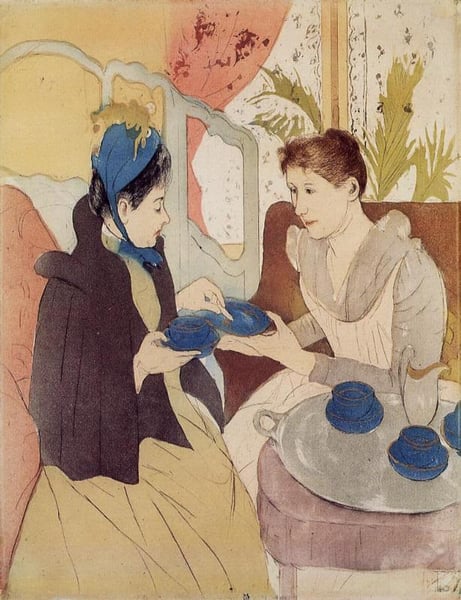
Mary Cassatt’s "The Visit" is a quintessential example of Japonism applied to Western genre painting, and its significance lies in how Cassatt synthesizes Japanese aesthetic principles with a distinctly modern, intimate subject matter. Executed in the late 19th century, the work reflects Cassatt’s deep engagement with ukiyo-e woodblock prints, particularly the works of Hokusai and Utamaro, which she encountered in Paris.
Compositional Innovation:
Cassatt adopts the flattened pictorial space and asymmetrical cropping typical of Japanese prints. Figures are cut off at the edges of the canvas, creating a snapshot-like, candid immediacy. The use of bold, linear outlines and broad areas of unmodulated color—often in soft pastels or muted earth tones—further echoes the woodblock technique, while the diagonal lines of the architecture or furniture lead the viewer’s eye in a manner borrowed from Japanese scroll painting.
Thematic Significance:
As a genre painting, "The Visit" depicts a private, domestic ritual: a mother and child receiving a guest (or perhaps a mother visiting a child). Cassatt elevates this everyday moment by infusing it with the quiet dignity and emotional depth characteristic of her work. The Japanese influence is not merely decorative but structural—the figures’ poses, the careful arrangement of negative space, and the subtle interplay of pattern (e.g., fabric, wallpaper) all align with the Japanese emphasis on harmony and suggestion rather than full narrative.
Cultural Hybridity and Modernity:
Cassatt’s Japonism is distinctive because she does not simply exoticize Japanese motifs; she uses them to challenge traditional Western perspective and to assert a new, modern vision of femininity and private life. "The Visit" thus stands as a pivotal work in the cross-cultural dialogue of the late 19th century, demonstrating how Impressionist and Post-Impressionist artists absorbed non-Western aesthetics to break free from academic conventions.
In summary, "The Visit" is significant as a masterful fusion of Japonist form and Impressionist content, showcasing Cassatt’s ability to transform a humble domestic scene into a serene, formally radical statement about perception, space, and the quiet power of women’s lives.
Museum / Gallery
Visivamente simili
20 opere con composizione e palette affini
Princesses Elise and Fanny Liechtenstein
Peter Fendi
The Fitting
Mary Cassatt
Poster for La Maison Moderne, Paris
Georges Lemmen
Spanish Dancer (Danseuse Espagnole)
Jacques Villon
Couples between red borders
Raphael Kirchner
Husdan recognizes his master
Arthur Rackham
Picking Daisies in a Field
Mary Cassatt
Girl with Straw Hat, Sitting in the Wheat
Vincent van Gogh
Interior of a Tramway Passing a Bridge
Mary Cassatt
In the artist's studio
Leon Bakst
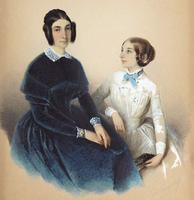
Portrait of a mother with her daughter
Carl Haag
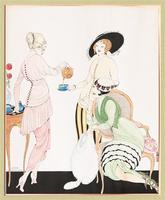
Three Ladies: Teatime
Gerda Wegener
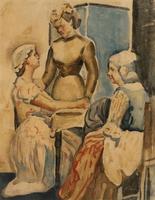
Crawford Card Party
Dorrit Black
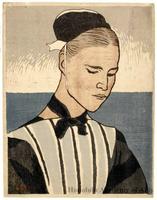
Woman of Brittany
Kanae Yamamoto
Single Ladies
George Barbier
Modern Girls
Raphael Kirchner
Portrait of M. B.
James Tissot
Dress with Hand Embroidered Ruffles
Gerda Wegener
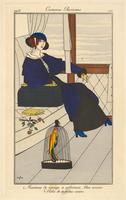
Costumes Parisiens. Manteau De Voyage À Pélerinez
George Barbier
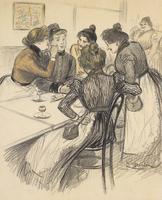
Brasserie Original drawing
Theophile Steinlen