Expert Analysis: "Four Breton Women" by Paul Gauguin
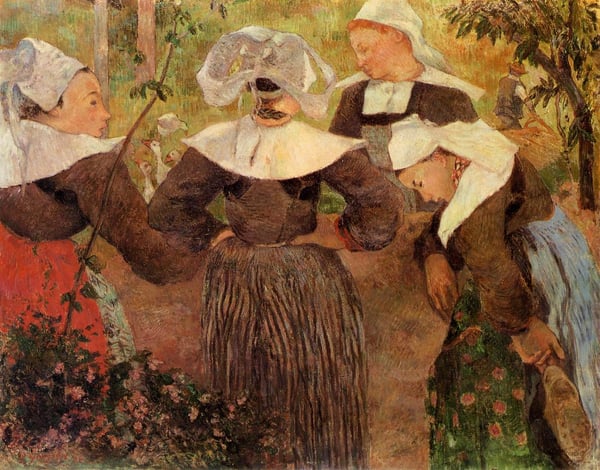
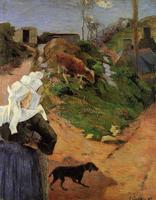
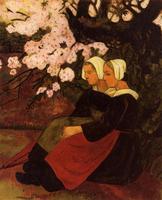
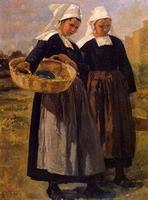
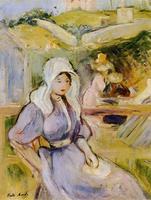
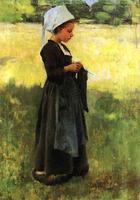
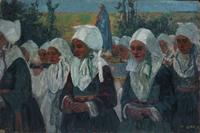
As a work from Gauguin’s Breton period, this painting reflects his pivotal shift away from Impressionism toward a more symbolic, flattened, and expressive style that would define Post-Impressionism. The genre scene—four local women—is not merely a documentary record but a deliberate compositional study in form, color, and cultural identity. Gauguin simplifies figures into bold, almost geometric shapes, eschewing naturalistic detail in favor of rhythmic lines and intense, non-local color (e.g., dark outlines, vivid blues or reds). This approach emphasizes emotional and spiritual resonance over optical accuracy, a hallmark of his later Synthetist experiments.
The work’s significance lies in how Gauguin uses traditional Breton costume and daily life as a vehicle for modernist innovation. By isolating rural subjects from Parisian modernity, he creates a timeless, almost primitive atmosphere—foreshadowing his Tahitian works. The painting’s static, monumental quality and symbolic weight elevate a humble genre scene into a meditation on human existence, aligning with Post-Impressionism’s broader quest to move beyond surface appearances. In this, “Four Breton Women” stands as a crucial stepping stone from late 19th-century naturalism toward the expressive abstraction of the 20th century.