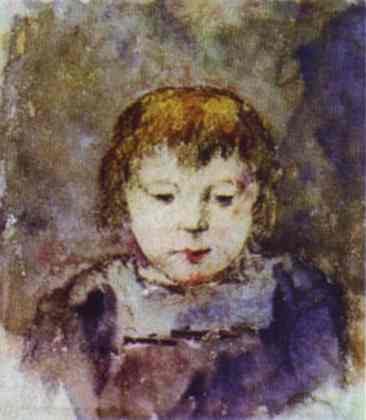
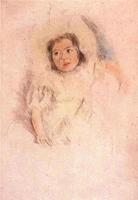
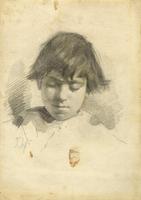
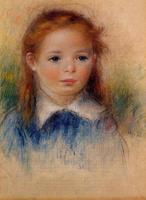
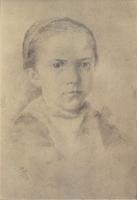
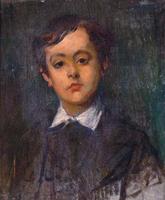
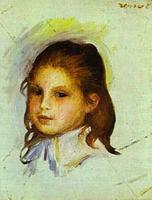
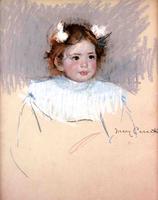
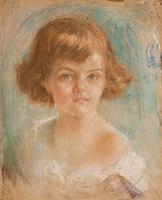
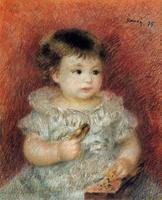
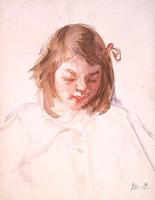
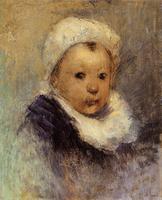
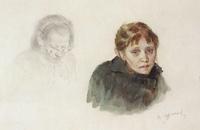
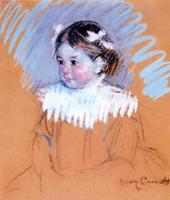
This portrait of Gauguin's daughter Aline belongs to the artist's early works, before he broke away from Impressionism to develop the bold, symbolic style that defined his later career. Painted in an Impressionist mode, the work demonstrates Gauguin’s initial training under Camille Pissarro and his absorption of the movement’s core concerns: capturing the fleeting effects of light, soft brushwork, and a sense of everyday intimacy. Here, Gauguin applies these Impressionist techniques to a deeply personal subject—his own child—rather than the Parisian streets or leisure scenes favored by his contemporaries.
What makes this portrait significant is how it foreshadows Gauguin’s eventual departure from Impressionism. Even within an Impressionist framework, the composition is notably direct and psychologically charged, focusing on Aline’s poignant gaze. The painting is one of the few surviving records of Gauguin’s early family life, and it gains emotional weight from the fact that Aline would die of pneumonia at age 20, a loss Gauguin later referenced in his work. As an early work, it anchors Gauguin’s artistic roots in Impressionism while subtly hinting at the expressive simplification and emotional resonance he would later pursue in Tahiti.