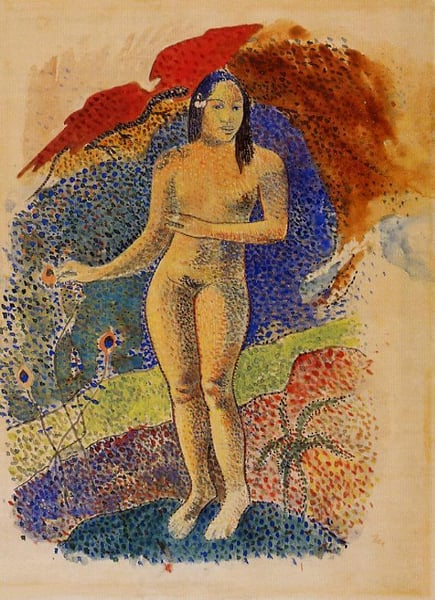
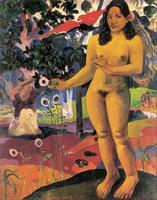
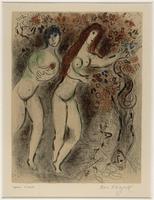
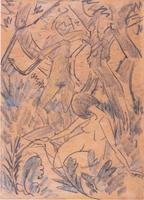
As a Post-Impressionist work from Gauguin's first Tahiti period, Tahitian Eve holds significance for its radical reimagining of the nude genre. Departing from Western classical ideals, Gauguin replaces the traditional European Eve with a Tahitian figure, synthesizing the naturalism of the local environment with the symbolic, anti-naturalistic color and form characteristic of Post-Impressionism. This painting exemplifies the period's break from observational reality, using flattened space and vibrant, non-local color to evoke a primal, spiritual essence—making it a pivotal work in Gauguin's quest for an authentic, pre-colonial paradise.