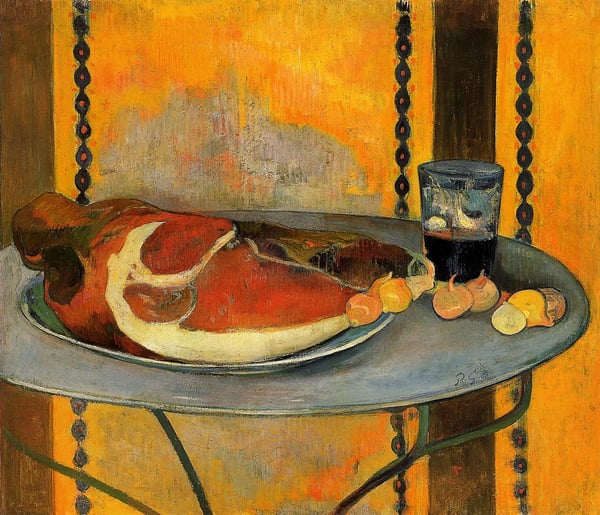
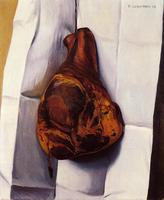
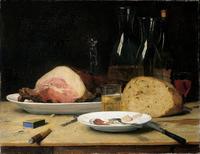
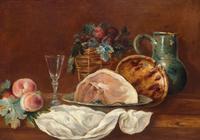
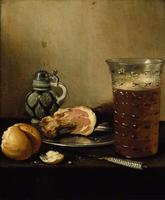
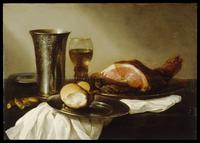
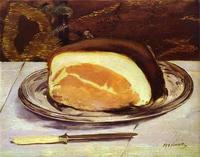
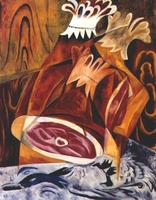
In Paul Gauguin’s The Ham, the artist transforms a humble still-life subject into a significant expression of Post-Impressionist ideals during his Breton period. The work moves beyond mere representation, employing flattened forms and a deliberate departure from naturalistic color—hallmarks of the Post-Impressionist style. Painted while Gauguin lived in rural Brittany, the piece reflects his fascination with the region’s primitive, unspoiled life, elevating an ordinary kitchen item to a symbol of rustic authenticity. Its significance lies in how it bridges the everyday and the symbolic, using the still-life genre to explore mood, structure, and the artist’s personal vision of a simpler, more spiritual world.