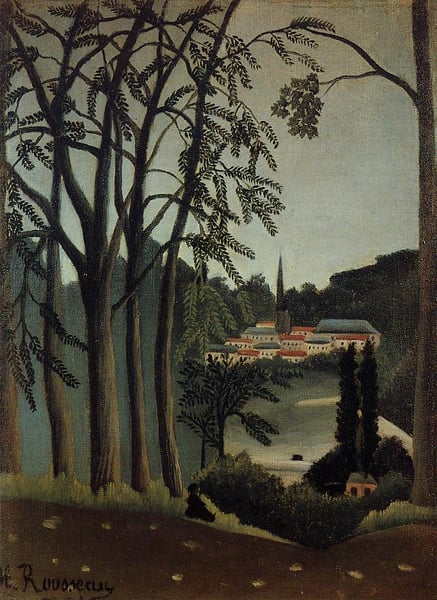
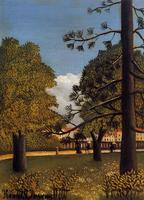
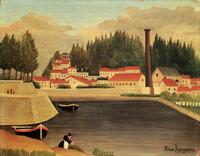
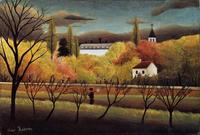
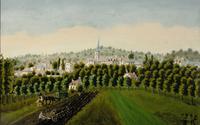
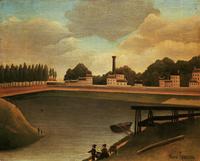
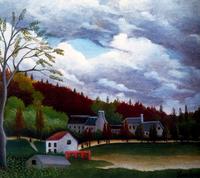
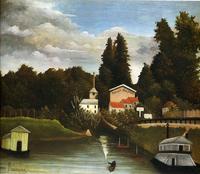
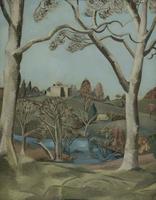
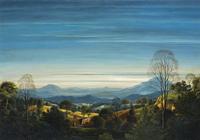
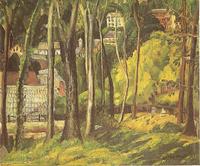
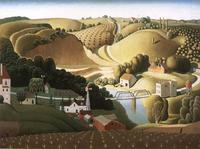
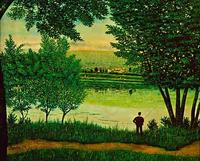
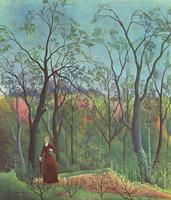
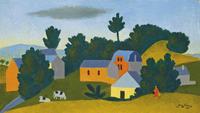
Henri Rousseau’s View of Saint Cloud is a quintessential example of Naïve Art (Primitivism) within the landscape genre. Its significance lies in how it embodies the core principles of the style—a self‑taught, intuitive approach that rejects academic conventions. The painting’s flat, highly detailed depiction of the natural scene, with its bold outlines and vivid, unmodulated colors, creates a dreamlike, almost otherworldly atmosphere. Rousseau ignored traditional perspective and shading, instead arranging foliage and architecture in a deliberate, decorative pattern that feels both meticulous and innocent. This work stands as a pure expression of Rousseau’s unique vision, where the landscape becomes a personal, fantastical realm rather than a literal transcription. It exemplifies how Naïve Art redefines representation through sincerity and imagination, making the ordinary appear extraordinary.