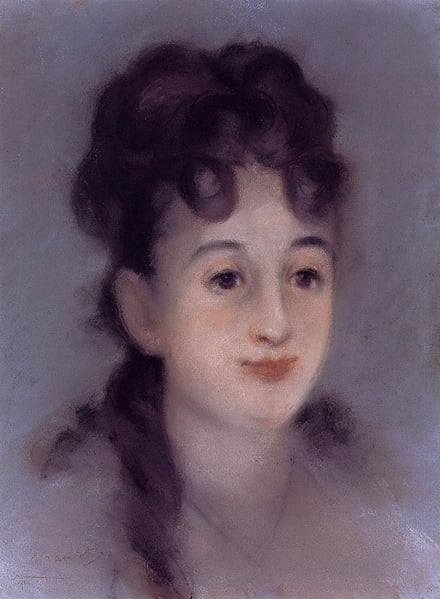
"Eva Gonzales" by Édouard Manet is a masterful Realist portrait that captures both the individuality of its sitter and the broader ambitions of the Realist movement. Painted in 1870, the work depicts Gonzales—a fellow artist and Manet’s only formal pupil—as a composed, modern figure, presented without idealization or allegorical pretense. As a portrait within the Realist style, it eschews the smooth finishes and heroic poses of academic painting in favor of direct observation and a palpable sense of lived presence. Manet’s handling of light and shadow, along with the candid, outward gaze of Gonzales, emphasizes an unvarnished truthfulness that is central to Realism. The painting’s significance lies in its refusal to flatter or mythologize; instead, it asserts the dignity and seriousness of a contemporary female artist, making it a key example of how Realism expanded portraiture beyond mere likeness into a statement about modern life and artistic identity.