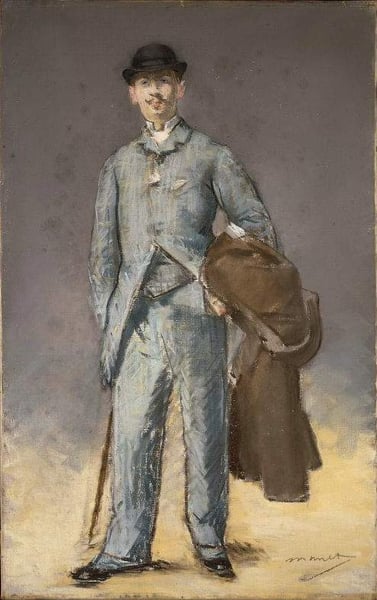
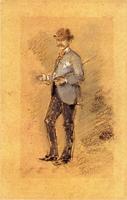
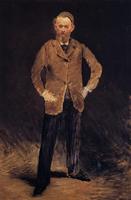
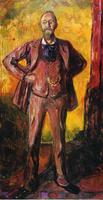
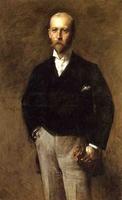
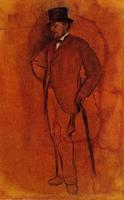
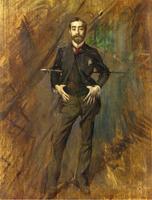
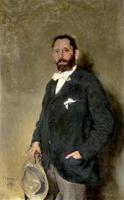
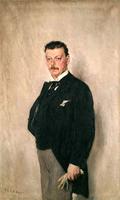
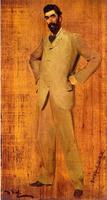
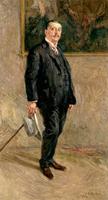
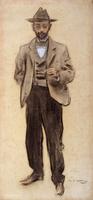
Edouard Manet’s René Maizeroy, created within the context of Impressionism as a portrait, holds significance as a bridge between academic tradition and the radical new vision of the movement. Though we have no further specifics about the sitter or the painting’s composition, Manet’s portraits from his Impressionist period are notable for their rejection of idealized formal portraiture in favor of capturing the sitter’s immediate presence—a hallmark of Impressionism’s focus on modern life and fleeting visual moments. The work can be understood as a key example of how Manet applied the style’s loose brushwork, reduced modeling, and emphasis on the play of light and shadow to the traditionally staid genre of portraiture, thereby elevating everyday subjects and fleeting impressions to the level of fine art. Its significance lies in this very act: through a portrait, Manet challenges the viewer to see a person not as a static symbol of status, but as a living, observable presence embedded in the contemporary world—a defining achievement of Impressionist portraiture.